Ergonomics for Employees
Work comfortably. Reduce strain. Prevent injury.
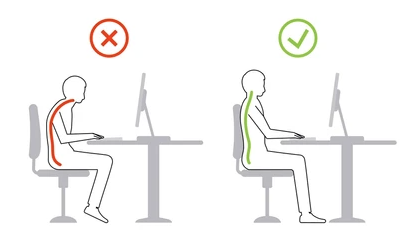
Ergonomics is the practice of fitting work tasks, tools and workspaces to the person performing the work. A properly arranged workstation can reduce discomfort, fatigue and exposure to risk factors associated with work-related musculoskeletal disorders.
Computer Workstation Ergonomics
-
Position the monitor so that the top 1/3 of the screen is at eye level and the monitor is 18-24 inches away from you.
-
If using a laptop, a separate keyboard and mouse are recommended so that the laptop screen can be adjusted to eye level.
-
Elbows and knees should be at a 90-degree angle or slightly greater with arms resting underneath shoulders and legs planted firmly on the ground. Use a footrest if needed.
-
Sit all the way back in your seat to support your back and legs.
-
The keyboard and mouse should be next to each other on the same level surface and close to the body. Frequently used items should also be kept close to the body to minimize reaching and twisting.
-
Take micro breaks every 30 minutes and rotate tasks as possible.
What do I do if I am in need of an assessment?
- Try adjusting your workstation by:
- Reviewing the Healthy Workstation Guidelines and additional resources found on this web page.
- If a Zoom or in-person assessment is still needed:
- Inform your supervisor. It is important that your supervisor is aware you plan to request an assessment.
- Sacramento State is currently partnering with Stan State to conduct employee workstation assessments via Zoom; if needed, you may submit an Ergonomic Evaluation Request.
Telecommuting
Telecommuting—also known as working from home, working remotely, or e-commuting—is a pre-approved work agreement in which the employee works outside the office. Be sure to consider ergonomic needs for your workstation while telecommuting.
Additional Information
Resources
Office Posters
Note: Workstation needs vary by employee, job duties, equipment, and work environment. Employees experiencing persistent or serious symptoms should report them promptly to their supervisor and seek appropriate professional guidance.
Updated: July 29, 2026