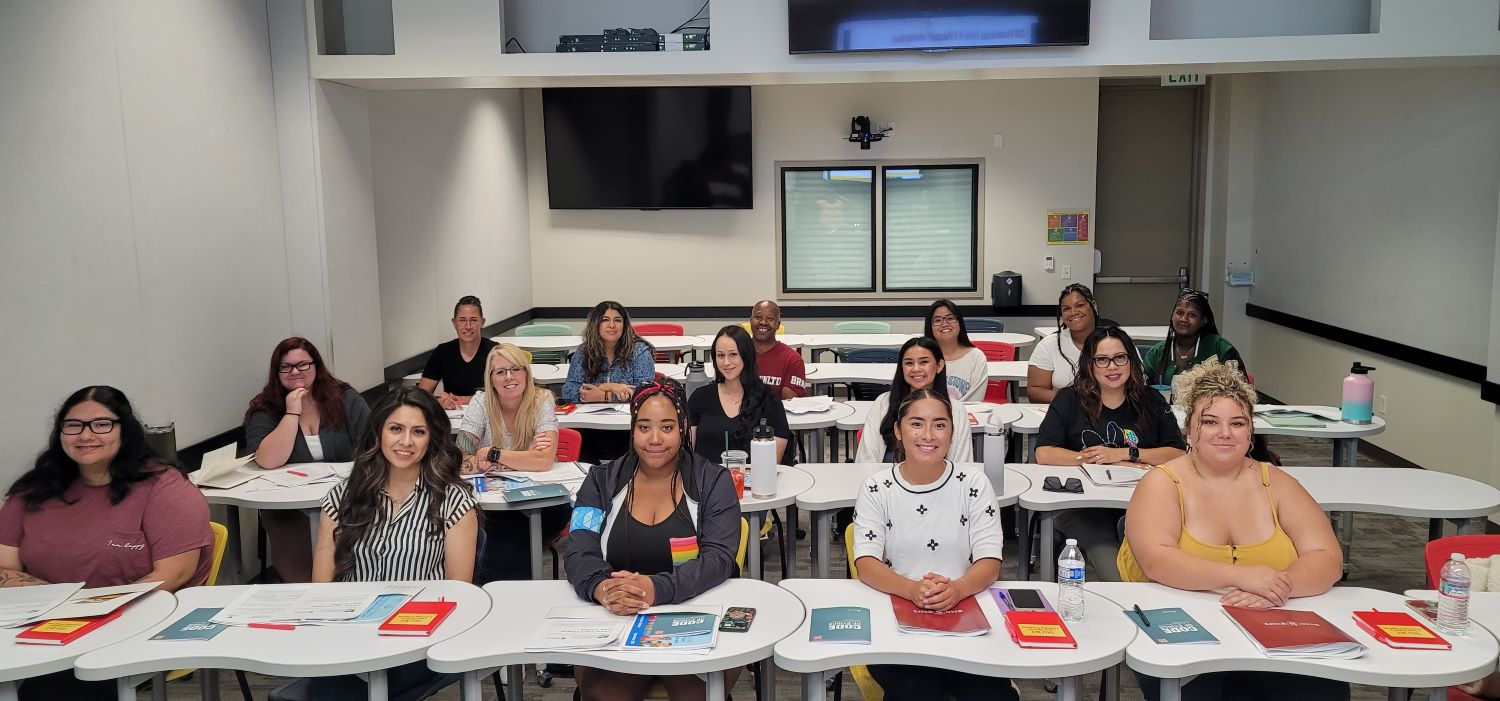
Welcome to the California Title IV-E Child Welfare Training Project!
The California Title IV-E Stipend Application is now available through Cal State S4. If you want to be considered for the Title IV-E program, you must complete the application through S4 concurrently to completing the MSW application. However, Title IV-E applications will not be considered or reviewed until an applicant has been accepted into the Master of Social Work Program. If you would like additional information regarding the Title IV-E Stipend, please email our Title IV-E Inbox at titleive@csustan.edu.
The Application Period for Fall 2027 is open from October 1, 2026 through February 1, 2027.
Students admitted to the two year MSW stateside program, who qualify, will receive an award of $50,000 spread over two years. In addition, students must demonstrate a commitment to a career in public child welfare through a separate application process.
Students admitted to the three year MSW program who qualify are current employees of a county, social services, or state human services agency, will receive support in the form of reimbursement for all required educational program costs and qualifying transportation expenses.
- Additional Eligibility Requirement: Students must possess a Valid California Driver's License.
- Note: Students admitted to the MSW Hybrid Program are not eligible for the Title IV-E Child Welfare Stipend.
Only current employees of a county human services agency or Department of Social Services in California can apply for the CW stipend.
If you are applying for the three-year award and plan to continue working for your department of social services you can begin your preparations. The Child Welfare Training Program requires a letter of support from your agency administration if you are selected and awarded the three-year stipend. This letter should clearly affirm the following:
- In accordance with the Title IV-E program general conditions, your agency commits to support you during your education by reducing your paid employment caseload by 2/5 during your first two academic years, while you are required to be placed as an intern for two days a week in a field placement, in your agency, in a unit other than your regular job, that provides a learning experience approved by the MSW Program.
- That the agency will support your attendance in all classes required by the MSW Program to complete your degree, including schedule flexibility and/or other accommodations, to allow you to arrive on time to classes.
- That upon your successful completion of the MSW degree program and continued positive employment reviews that the agency will support your application for employment as a Social Worker IV or a comparable position in the agency if there are positions open.
- If there are no positions offered, that you are freed to apply to other agencies to fulfill your payback requirements (2 years).
If for any reason your employer is unable to support these affirmations please contact the Project Coordinator to discuss your options.
Meet Kelly Weber
Advanced Year Title IV-E Student Representative
Hello! My name is Kelly Weber. I graduated from California State University San Marcos in 2022 with a bachelor’s degree in Psychological Sciences. I am currently in the two-year MSW program at Stanislaus State, with an expected graduation date of May 2026. I truly enjoy being in the MSW program at Stan State and love building meaningful relationships with both my peers and professors. I am excited to continue advancing my education and developing the skills necessary to thrive in the child welfare field. Outside of my studies, I enjoy hiking, going on trips, camping, skiing, and hanging out with my dog! Thank you for the opportunity to represent my peers and this program as the Advanced Year Title IV-E Student Representative.

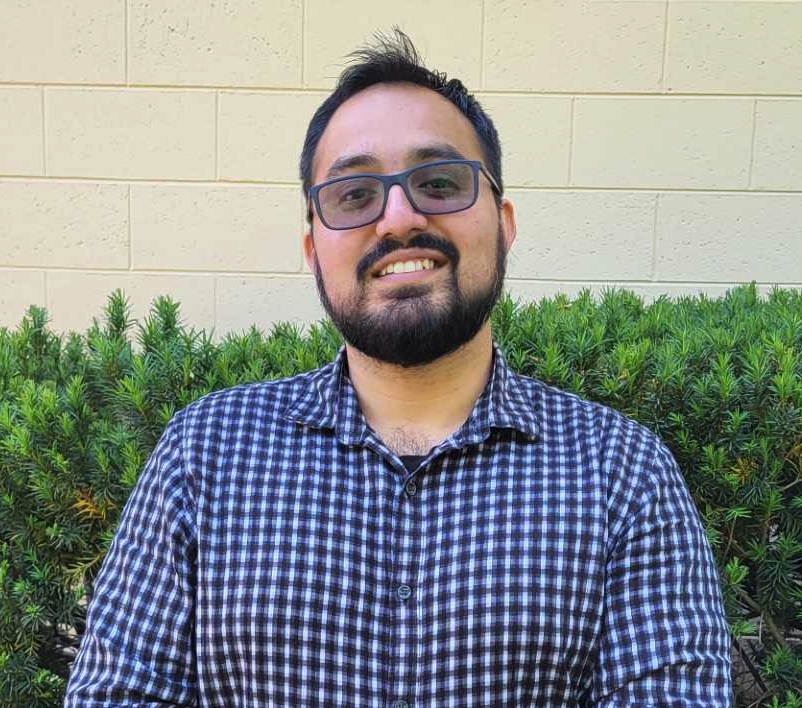
Meet Adam Hernandez
Foundation Year Title IV-E Student Representative
My name is Adam Hernandez. I am a first-generation college student who graduated from the University of San Francisco in 2016 with a Bachelor’s in Psychology and a minor in Chicano Studies. I am currently, enrolled in the three-year program here at Stan State, on the Stockton campus. In my career I have gained valuable experience with various case management roles, ranging from substance abuse clients, individuals on felony probation, and public housing recipients. I currently work as a social worker in child welfare, and I hope to utilize the skills I learn in the MSW program to become a better social worker for the clients I serve. I ultimately want to participate in the positive change that is being made in the field of social work. Outside of my academic and professional career, I am a father and a partner, my family and I love to go out of town to the beach, and to find new places to eat. We love sharing new songs and artists that we listen to. In my personal time, if I’m not listening to new music or watching new shows, I try and write poetry. I am grateful for the opportunity to represent Stan State as the Title IV-E representative and hope we can all come together to make lasting positive change!
External Links
- California Social Work Education Center
- Child Welfare Information Gateway
- California Title IV-E Competencies
Title IV-E Graduates & Employment Obligation
Graduates nearing their employment obligation for time worked must complete an Employment Completion Form (ECF). The ECF is an online form that is generated through the California Title IV-E Education Program system through email. Graduates will receive a personalized link by email when near the 24 month obligation period. To obtain full credit for employment payback obligation graduates must complete the ECF and obtain an agency letter within 31 calendar days of completing employment obligation.
The completion letter on agency letterhead must be in PDF format and include the following:
- Position title
- Employment start date
- Hours per week or FTE
- Employment end date or indication of continued employment
- Indication of termination or layoff, if applicable
- Name & Title of agency signatory
- Signature and date of agency signatory
Petition Instructions for Cal IV-E Participants
Cal IV-E participants (current students receiving Title IV-E financial support and former participants who previously received Title IV-E financial support) may submit a petition to request consideration of an exception to the standard program requirements. Petitions are reviewed on an individual basis in accordance with applicable program policies, grant requirements, and university procedures. Submission of a petition does not guarantee approval. Please carefully review the following sections for the steps required to submit a petition.
You will be asked to provide a written statement that addresses all the following:
- A clear description of the action or exception you are requesting through the petition process.
- A detailed explanation of the circumstances supporting your request.
- The reasons you believe the requested exception should be considered.
- Any specific dates or timeframes associated with your request (for example, if requesting a delay in beginning monetary repayment, indicate the proposed date on which you are requesting repayment to begin).
You will need to gather documentation that supports and substantiates your request, as applicable. Examples may include, but are not limited to:
- Medical documentation
- Employment documentation
- Financial documentation
- Legal or court documents
- Other relevant third-party documentation
Supporting documentation should be relevant to the circumstances described in your Statement of Justification. The Stanislaus State Title IV-E Program, may request additional information or documentation if necessary to complete its review. Be sure to redact personal information (account or social security numbers, etc.) See instructions for redacting below.
- All documents submitted for your petition must be in PDF format.
- Before submitting, please redact (permanently black out or remove) sensitive personal information not required for review, such as full Social Security numbers, bank account numbers, or other identifying financial details.
- Only redact information that is not necessary for processing your petition. If you are unsure if a particular section of information should be redacted, please contact the Title IV-E office.
Option 1: Physical Documents
These steps are recommended if you do not have access to Adobe Acrobat Pro
- Print the document if it isn't already on paper.
- Use a solid black permanent marker (not a highlighter) to completely black out the sensitive information. Mark over sensitive information multiple times to ensure the original text cannot be read through the marker or held up to a light.
- Double-check by holding the page up to a light source to confirm the information underneath is no longer visible.
- Scan the redacted document, or use your phone/computer's "Print to PDF" feature, and save it as a PDF for submission.
Option 2: Digital Documents
Important: Simply covering text with a black box, highlight, or shape does not remove the underlying text on its own — it can often still be selected, copied, or revealed by editing the file. To make the redaction permanent, you'll need to flatten the document using Print to PDF (see below), or use a dedicated redaction tool if you have one.
- Open your document (e.g., in Word, or an image/photo editor) and draw a solid black box or shape over each piece of sensitive information you want to redact.
- Once all sensitive information is covered, use Print to PDF to save the file — select "Print," then choose "Print to PDF" or "Microsoft Print to PDF" as your printer, rather than saving or exporting directly to PDF. This flattens the document, permanently locking the black boxes in place so the covered text cannot be uncovered or removed.
- If you have Adobe Acrobat Pro (the paid version — not the free Adobe Reader), you can instead use its built-in Redact tool to permanently remove sensitive text and images, or delete the sensitive data directly from the document.
- If you don't have Acrobat Pro and aren't comfortable doing this digitally, you can also print the document, physically black out the information with a marker (see Option 1), and scan it.
For Scanned Images or Photos
Use basic photo editing software to draw a solid, opaque black box over the information, then print to pdf to convert it to a PDF.
Reminders
- Never send unredacted account numbers, full Social Security numbers, or similar sensitive data via email.
- Keep a personal copy of your unredacted original for your own records.
- All final submissions must be saved and uploaded as a PDF file.
- If you have questions about what needs to be redacted for your petition, contact the Title IV-E Office at (209) 667-3091.
Please use the Cal IV-E Portal to Submit Petition Request Form.
Once all required petition materials have been received, your petition will be reviewed in accordance with the Stanislaus State Title IV-E Program's established petition review procedures and applicable program policies.
The Stanislaus State Title IV-E Program will make reasonable efforts to notify you of the petition decision within twenty (20) business days after receipt of a complete petition package, including all required supporting documentation. If additional information is needed or circumstances require additional review time, you will be notified accordingly.
If you have questions regarding the petition process or the required documentation, please contact the Stanislaus State Title IV-E Program Coordinator, Jenell Thompson, at 209-667-3205 or via email jthompson22@csustan.edu. You may also contact the Title IV-E office at (209) 667-3091.
Contacts
Dr. Kilolo Brodie-Crumsey, Primary Investigator
Phone: (209) 667-3012
Email: kbrodie1@csustan.edu
Jenell Thompson, Project Coordinator
Phone: (209) 667-3205
Email: jthompson22@csustan.edu
Cheri Thomas-Stevens, Child Welfare Lecturer/Practicum Educator
Email: cthomas1@csustan.edu
Anacani Rocha, Child Welfare Lecturer/Practicum Educator
E-mail: azuno@csustan.edu
Nadine Kent, Title IV-E Grant Analyst
E-mail: nkent@csustan.edu
Kenny Ramirez, Title IV-E Administrative Assistant
E-mail: kramirez20@csustan.edu
Updated: September 23, 2026