Mission Statement
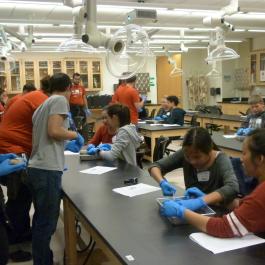
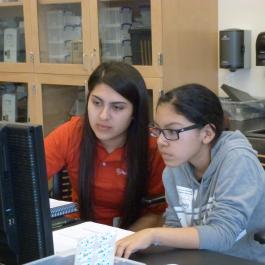
The Stan State Science in Our Community Outreach Program is dedicated to science education and public engagement. This program, supported by volunteer efforts of Stan State students, faculty, and staff, provides STEM activities to educationally and economically disadvantaged students in the campus's service area.
Vision Statements
The Science in Our Community STEM Outreach Program seeks to:
- encourage the community to visit the local campus;
- encourage students to be engaged in STEM subjects (Science, Technology, Engineering, and Mathematics);
- encourage local students to attend Stan State and consider a STEM major, especially those populations underrepresented in the STEM Community (i.e., Hispanics and women);
- allow Stan State students to teach the community about Science and its importance in society today;
- promote Science as lifelong learning for all citizens.
Programs
The STEM Ambassador Program is a substantial volunteer program for undergraduate students in STEM and non-STEM disciplines. This program provides Stan State students the opportunity to develop leadership and teamwork skills and the ability to share their knowledge of Science gained in the classrooms with a K-12 audience. Internships are also available if students desire to earn credit for their participation. In addition, STEM Ambassadors lead classroom activities for the Junior Scientist and Solar Suitcase Program and take the lead in preparing and conducting Science Saturday and Science Day activities.
In person: The open-house environment will feature 10 a.m. to 2 p.m. activities in the Naraghi Hall of Science, the Science 1 Building, the Greenhouse, and the Sustainable Garden. There will also be tours of the Trans-California Pathway, an outdoor arboretum featuring plant communities native to a transect of California from the Central Valley to the High Sierra. With more than 40 activities available, students and their families will receive a “Passport to Science” booklet to track their activities throughout the day.
In person : STEM Ambassadors and other student volunteers take two or more STEM interactive activities to the school site. They work with the K-12 students and the community membe rs on these activities while answering their questions about Science concepts.
Virtual: The program works virtually with Cunningham Elementary, Wakefield Elementary, and Osborn Elementary. In which STEM Ambassador takes the lead on one-hour science lessons free of cost. We also provide the schools with material allowing students hands- on experience. While doing this, we continue to align the in-class curriculum.
In person: Science Saturday involves three hours of exploring one science discipline with two to three activities focused on that discipline. The faculty, staff, and STEM Ambassadors lead these activities.
In person : This program serves students within the Delhi Unified School District who are interested in using their high school experience as a pathway to careers in healthcare. The program targets qualified and motivated high school students. The program's goals are to provide high school students with hands-on experience and practical knowledge. This allows them to explore different career opportunities in the health industry. Its' focus is to assist and support educationally and economically disadvantaged students to successfully prepare for entry-level or post-secondary study positions in health care after graduation. Additionally, it exposes students to colleges and universities at the undergraduate and graduate levels.
In person : Faculty member takes the lead on doing a small Walk around near Naraghi Hall of Science while talking about the Bird species on campus. Along with providing binoculars for the participants for the session to observe the Bird species on campus. These sessions are offered to all ages every semester each month.
In person : The classroom visits involve the faculty, staff, or STEM Ambassadors taking the lead on creating and presenting an activity by going into the classroom in person or virtually.
In person : This program started in Spring 2023 and was led by a STEM Ambassador who worked with fellow students, staff, and faculty members to create multiple STEM activities. These activities were led over a Month, once every week. The program allows the K-12 students to work on multiple topics and build on what they learn over the multiple sessions while learning the techniques they would use as College students (e.g., keeping lab journals, lab safety, and more). The event was held on Stan State campus, allowing students to work in various labs and classrooms.
Volunteers Data
Due to the ongoing pandemic, starting the academic year of 2020-2021, all the Science in our Community activities were presented virtually, such as zoom, the Science in Our Community webpage, and out SIOC Youtube channel. This ensured that we were following the guidelines of The Center for Disease Control and Prevention (CDC) and ensuring the safety of the students, faculty, staff volunteers, and community members. Thus, the Science in Our Community program ahs been conducted virtually for 2020-2022.
Number of Volunteers
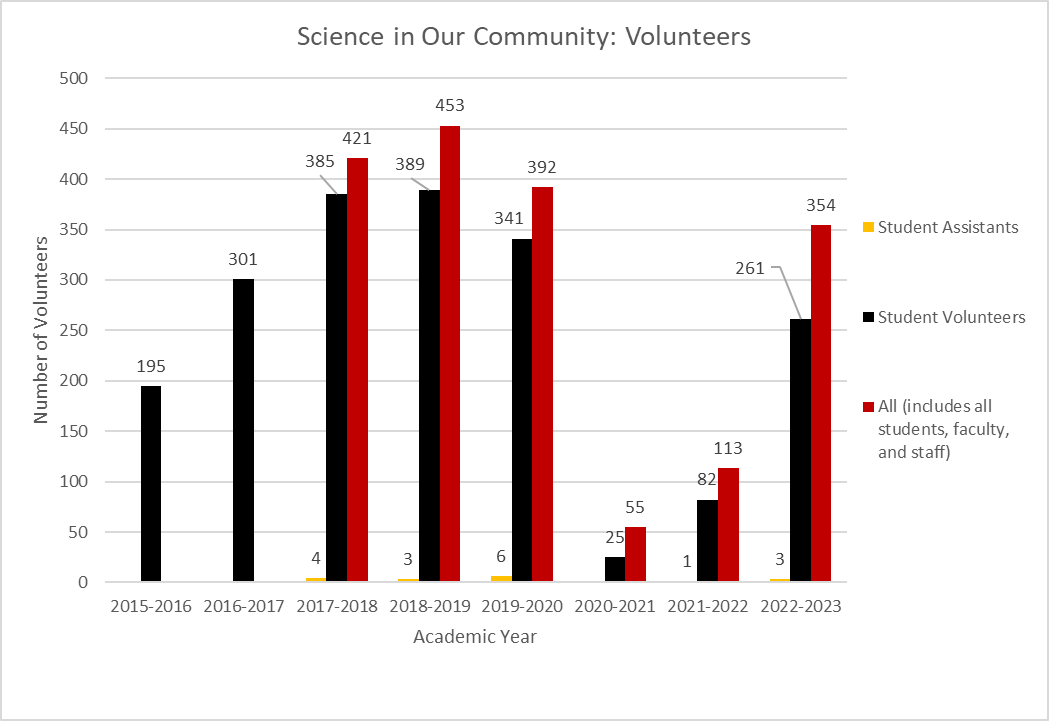
The number of volunteers by academic year was 195 student volunteers in 2015–2016; 301 student volunteers in 2016–2017; 4 student assistants, 385 student volunteers, and 421 total volunteers in 2017–2018; 3 student assistants, 389 student volunteers, and 453 total volunteers in 2018–2019; 6 student assistants, 341 student volunteers, and 392 total volunteers in 2019–2020; 25 student volunteers and 55 total volunteers in 2020–2021; 1 student assistant, 82 student volunteers, and 113 total volunteers in 2021–2022; and 3 student assistants, 261 student volunteers, and 354 total volunteers in 2022–2023.
From the Academic year 2021-2022 to 2022-2023, Science in Our Community increased by more than 213% Stan State student volunteers and 90 college of science professors and staff members.
Volunteers Tracked Hours
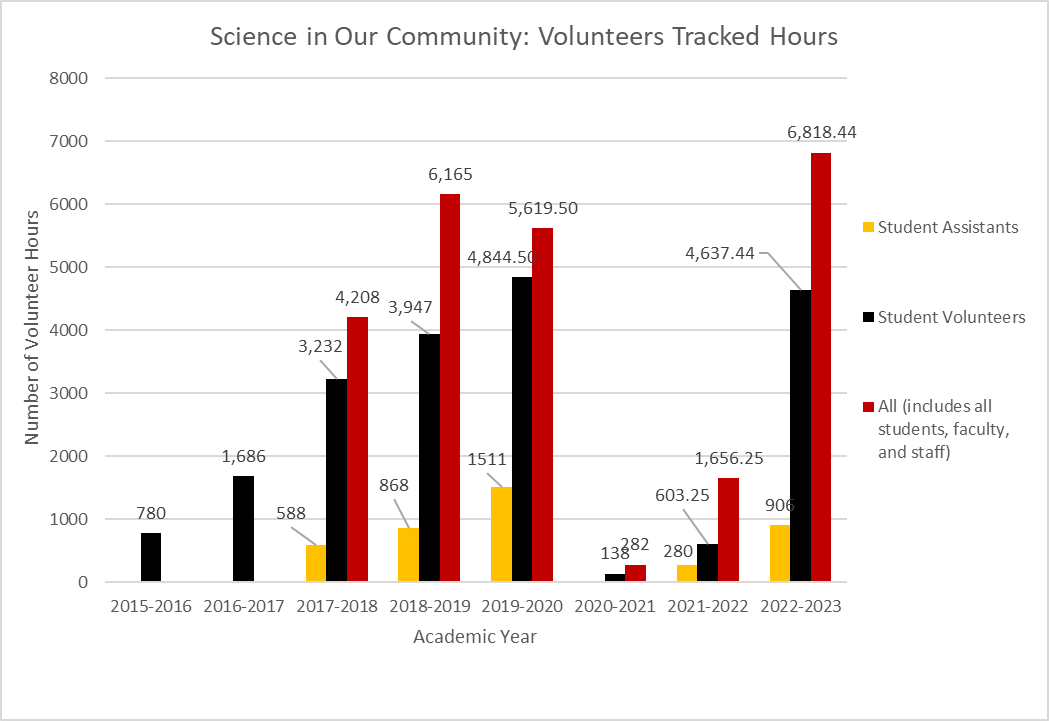
The tracked volunteer hours by academic year were 780 student volunteer hours in 2015–2016; 1,686 student volunteer hours in 2016–2017; 588 student assistant hours, 3,232 student volunteer hours, and 4,208 total hours in 2017–2018; 868 student assistant hours, 3,947 student volunteer hours, and 6,165 total hours in 2018–2019; 1,511 student assistant hours, 4,844.50 student volunteer hours, and 5,619.50 total hours in 2019–2020; 138 student volunteer hours and 282 total hours in 2020–2021; 280 student assistant hours, 603.25 student volunteer hours, and 1,656.25 total hours in 2021–2022; and 906 student assistant hours, 4,637.44 student volunteer hours, and 6,818.44 total hours in 2022–2023.
All volunteers contributed more than 1,656 hours of volunteer time, an increase of over 312% from the previous year. These volunteers contributed about $254,447.76 worth of volunteer time**.
**Value of Volunteer Time Report | Independent Sector Resources
Number and hours of Participants Engaged in STEM Education
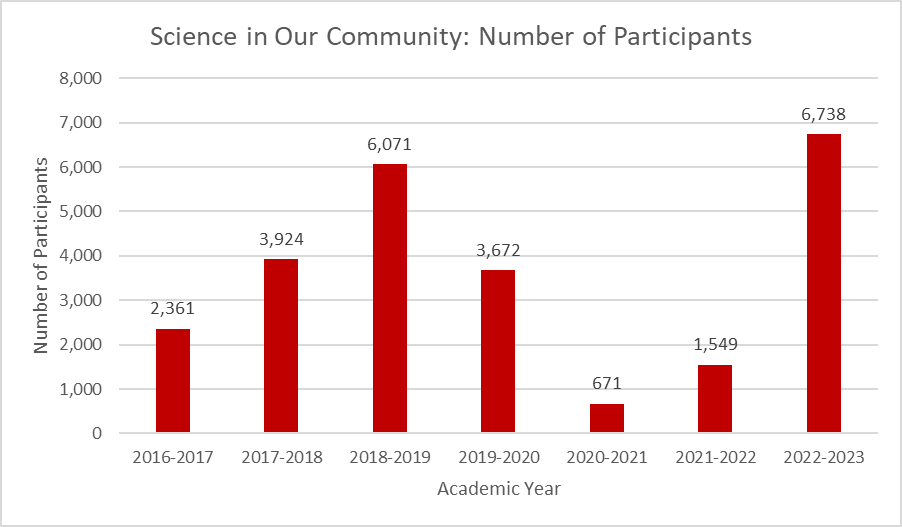
Number of Participants
The number of participants was 2,361 in 2016–2017, 3,924 in 2017–2018, 6,071 in 2018–2019, 3,672 in 2019–2020, 671 in 2020–2021, 1,549 in 2021–2022, and 6,738 in 2022–2023.
Science in Our Community served more than 6,738 participants, which is an increase of more than 335% from the previous year. The number of participants
Represent more than 9% of **Population in Turlock in 2023.
**Turlock, California Population 2023 (Demographics, Maps, Graphs) (worldpopulationreview.com)
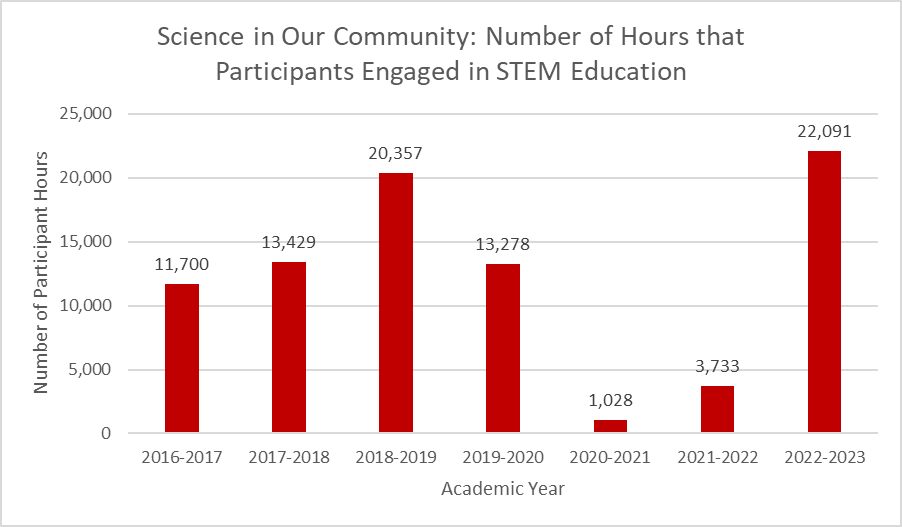
Hours that Participants Engaged in Stem education
The number of hours that participants engaged in STEM education was 11,700 in 2016–2017, 13,429 in 2017–2018, 20,357 in 2018–2019, 13,278 in 2019–2020, 1,028 in 2020–2021, 3,733 in 2021–2022, and 22,091 in 2022–2023.
The participants received more than 22,091 hours of free hands-on STEM instruction. This is an increase of more than 492% free hands-on STEM instruction hours.
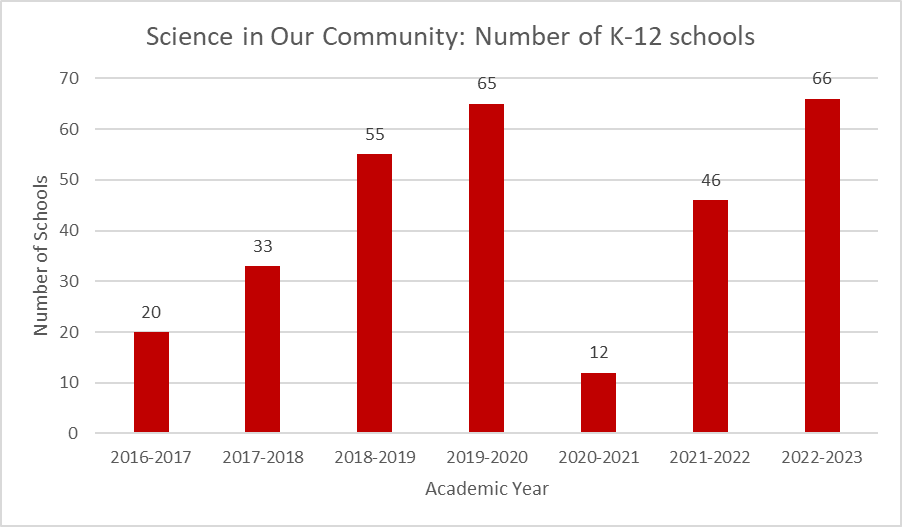
Number of K-12 Schools Served
The number of K–12 schools participating was 20 in 2016–2017, 33 in 2017–2018, 55 in 2018–2019, 65 in 2019–2020, 12 in 2020–2021, 46 in 2021–2022, and 66 in 2022–2023.
The program served over 66 schools in our region.
Activities & Institutions
- ASPIRE 4 PALS: Solar Suitcase
- Junior Scientist-Osborn Elementary School: Make a Marker Man Float
- Junior Scientist-Cunningham Elementary School: Make a Maker Man Float
- Junior Scientist-Wakefield Elementary School: Make a Maker Man Float
- Farmer's Market: How to Make a Marker Man Float
- Farmer's Market: Microscope Organism Display
- Farmer's Market: Coloring Pages
- Junior Scientist-Osborn Elementary School: Waves & Frequency
- Junior Scientist-Cunningham Elementary School: Waves & Frequency
- Junior Scientist-Wakefield Elementary School: Waves & Frequency
- Science Saturday:Fabulous Fibers
- Astronomy Night: Rotating Images and Short Talks
- Astronomy Night: Make Your Own Straw Rocket
- Astronomy Night: Make Your Own Planet
- Astronomy Night: Make Your Astronanut Float
- Astronomy Night: What did hubble see on your birthday?
- Astronomy Night: Diffraction Gratings and Lamps
- Astronomy Night: Cosmic Ray Detector
- Astronomy Night: Scale model of Solar System
- Astronomy Night: Telescopes Outside
- Astronomy Night: Roof Telescope
- Bird Walk 1
- Bird Walk 2
- Delhi Medical Academy: EKG
- Delhi Medical Academy: Cells, Looking Under the Microscope
- Environmental Community Resources Fair: Ozobots
- Environmental Community Resources Fair: Coloring Pages
- Junior Scientist-Cunningham Elementary School: Cell Baggie Model
- Junior Scientist-Osborn Elementary School: Cell Baggie Model
- Junior Scientist-Wakefield Elementary School: Cell Baggie Model
- Bird Walk 3
- Science Day: Video Shorts
- Science Day: Math: to Infinity and Beyond!
- Science Day: Physics Demonstrations
- Science Day: Electricity and Optics Show
- Science Day: The Office of Information on Technology (OIT) Connection
- Science Day: Warrior Fab Lab
- Science Day: Avian Adventure
- Science Day: Palentologist for the Day
- Science Day: Life in Cold Blood
- Science Day: Create your own "Marshmoouth"
- Science Day: The Science Behind Slime
- Science Day: Investigating the Human Body: Learning about your Heart, Lungs, and Skeleton
- Science Day: Cell Alive!
- Science Day: Color of Science
- Science Day: Learn about invasive species
- Science Day: Mosquitoes and Mosquito Diseses
- Science Day: Math Activities
- Science Day: Recycling & Composing
- Science Day: Climate Change and You
- Science Day: Want to Teach Science?
- Science Day: INSITE-The INstitute for Symbiotic, Interactions, Teaching, and Education in the Face of a Changing Climate
- Science Day: How To Judge A Liquid Using Nuclear Magnetic Resonance Spectroscopy
- Science Day: Dart Mass Spectroscopy
- Science Day: Put Your Fabric To The Test
- Science Day: It's Electric
- Science Day: Cheek Cell Slides
- Science Day: Are Your Stronger Than Cotton?
- Science Day: Periodic Table
- Science Day: Chemistry Goes Pop!
- Science Day: Solar Observing
- Science Day: Plant a milkweed on Trans-CA Pathway!
- Science Day: Tour of Pollinator Garden
- Science Day: Pollinator Art
- Science Day: Northern San Joaquin Native Plant Species (CNPS)
- Science Day: Know You Vegetables
- Science Day: Greenhouse Tours
- Science Day: Women in STEM
- Science Day: Coding with Ozobots
- Science Day: 3D Pens
- Science Day: Forensic Biotech Academy
- Science Day: Floating Art
- Science Day: Straw Rockets
- Science Day: The Admissions and Outreach Services office
- Science Day: ASPIRE Grant
- Science Day: Curl up with a good science book!
- Science Day: STEM Ambassadors
- Science Day: Robots in Nursing
- Science Day: Practice makes perfect
- Science Day: Ultrasound, Can You Find My Heart?
- Science Day: Your Lungs Will Blow Your Mind with out make a lung activity!
- Science Day: Intuitive Robot
- Science Day: Squid Dissection
- Science Day: Warrior Youth Program Informational Booth
- Science Day: Let's Make a Bouncy Ball
- Science Day: Chemistry Reactions
- Science Day: Lava Lamp
- Science Day: Density Column
- Science Day: Tornado in Jar
- Science Day: Surface Tension
- Science Day: Getting Psysched about the Science of Psychology
- Science Day: Stanislaus Audubon Society
- Fun with Science Night: Ozobots
- Fun with Science Night: Microscope Organism Display
- Fun with Science Night: STEM Questions
- Fun with Science Night: Coloring Pages
- Family STEAM Night: Ozobots
- Family STEAM Night: Microscope Organism Display
- Family STEAM Night: STEM Questions
- Family STEAM Night: Coloring Pages
- Spring Carnival: Straw Rockets
- Spring Carnival: STEM Questions
- STEM Series: Fab Lab "Create a custom button & 3D pen"
- STEM Series: Make Your Own Cell Charm
- Bird Walk 4
- STEM Series: Observing Microorganisms with Microscopes
- STEM Series: Strawberry DNA extraction
- STEM Series: Grow your own Garden/flowers & vegetables
- STEM Series: Grow your own Garden/flowers & vegetables
- Delhi Medical Academy: Epidemiology
- STEM Series: Make an Atomic Model
- STEM Series: Engineer a Marshmallow Tower
- STEM Series: Color with Cabbage pH of Acids and Bases
- Junior Scientist-Cunningham Elementary School: Rock Candy Lab
- Junior Scientist-Wakefield Elementary School: Rock Candy Lab
- STEM Series: Make a Blood Model
- STEM Series: Build a neuron!
- STEM Series: Build a protein/Mutant proteins
- Bird Walk 5
- Classroom Visit: State of Matter
- Anothony Catholic School
- Aspire Vanguard College Preparatory Academy
- Blaker-Kinser Junior High School
- Bret Harte elementary School
- Buhach Colony High School
- Carroll Fowler elementary School
- Connecting Waters Charter School
- Crowell Elementary School
- Cunningham Elementary School
- Daniel Savade MIddle School
- Delhi High School
- Delta Charter School
- Dennis Earl Elementary School
- Dutcher Middle School
- Elim Elementary School
- Evelyn Hanshaw Middle School
- Franklin Elementary School
- Fred C. Beyer High School
- Freedom elementary School
- Gladys Poet-Christian Elementary School
- Gratton Charter School
- Great Valley Academy School
- Great Valley Elementary School
- Gustine Elementary School
- Harmony Elementary School
- Hickman Charter School
- Hickman Middle School
- Hilmar Middle School
- James C. Enochs High School
- John H. Pitman High School
- Joseph A. Gregori High School
- Julien Elementary School
- Keyes Elementary School
- Keyes To Learning Charter School
- La Rosa Elementary School
- Las Palmas elementary School
- LIvingston High School
- Livingston Middle School
- Los Banos elementary School
- Malonado Homeschool Academy
- Martinez Elementary School
- Mesa Verde elementary School
- Monte vista Middle School
- Mountain top Christian Academy
- Northmead elementary School
- Osborn elementary School
- Paradise Elementary School
- Sacred Heart Catholic Preschool
- Sacred Heart Catholic School
- Sacred Heart Elementary School
- Saint Anthony's Catholic School
- Sandra T. Medeiros Elementary School
- Selma Herndon Elementary School
- St. Anthony School
- St. Stanislaus Catholic School
- Turlock Christian Elementary School
- Turlock Christian Junior High School
- Turlock Early Childhood Education
- Turlock High School
- Turlock Junior High School
- Ustach Middle School
- Valley College High School
- Virginia Parks elementary School
- Wakefield Elementary School
- Walnut Elementary School
- Yamato Colony Elementary School
- California State University, Stanislaus
- Modesto Junior College
- University of California, Merced
- California State University, Stanislaus-Child Development Center
- Covenant Living of Turlock
Staff & Team Members
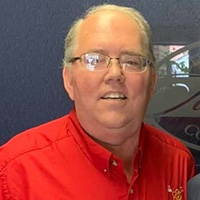
Mark Grobner
Science in Our Community, Faculty Director
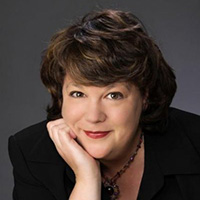
Julie Fox
Office of Service Learning, Director
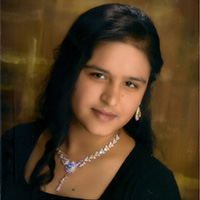
Sunpreet Kaur
Science in Our Community Lead & Civic Engagement Community Liaision
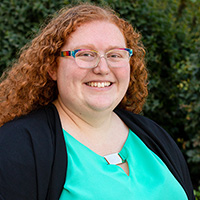
Breanna McIntyre
Administrative Analyst
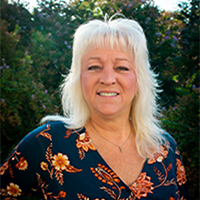
Melanie Myers
Adminstrative Support Assistant
Next Steps:
In 2023-2024, the Science in Our Community program will continue to offer programs such as Junior Scientist, Science Saturday, Science Day, and more. The program will continue to focus more on grants to support the program to continue providing the students and community with these opportunities.
The program will take the feedback from Science Day 2023 to make changes to Science Day.
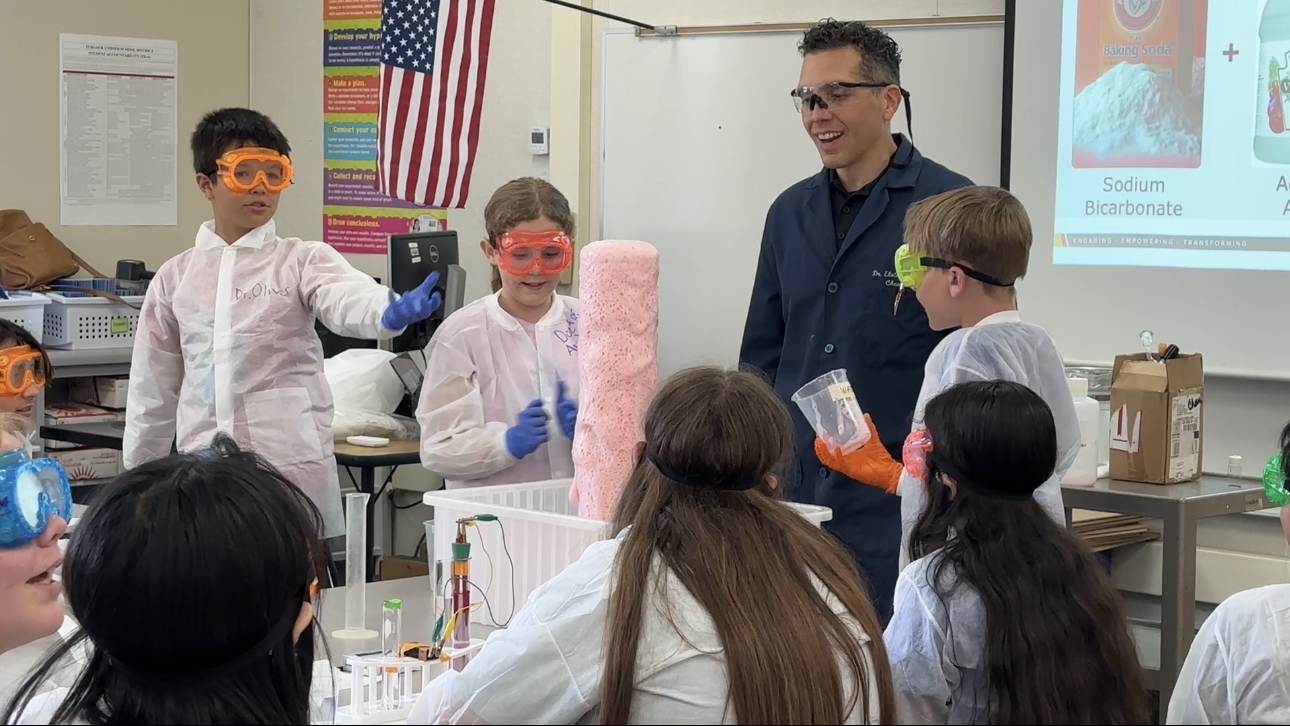
Junior Scientist & Science Saturday
The program will take feedback from Junior Scientist school sites and make changes, if necessary. Science Saturdays will continue to be offered in person.
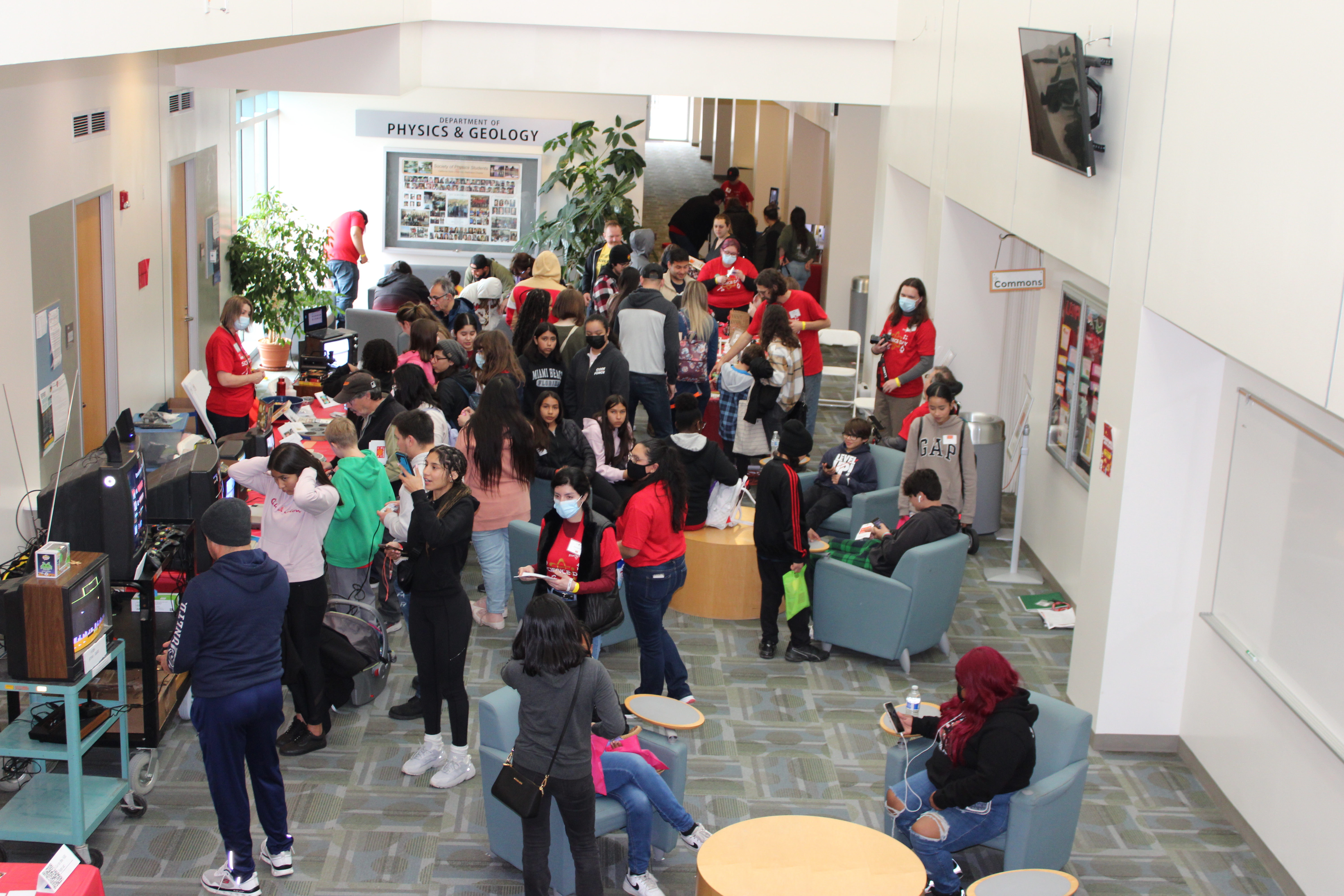
Science Day
Take the feedback received for Science Day and make modifications to the event to make it more.
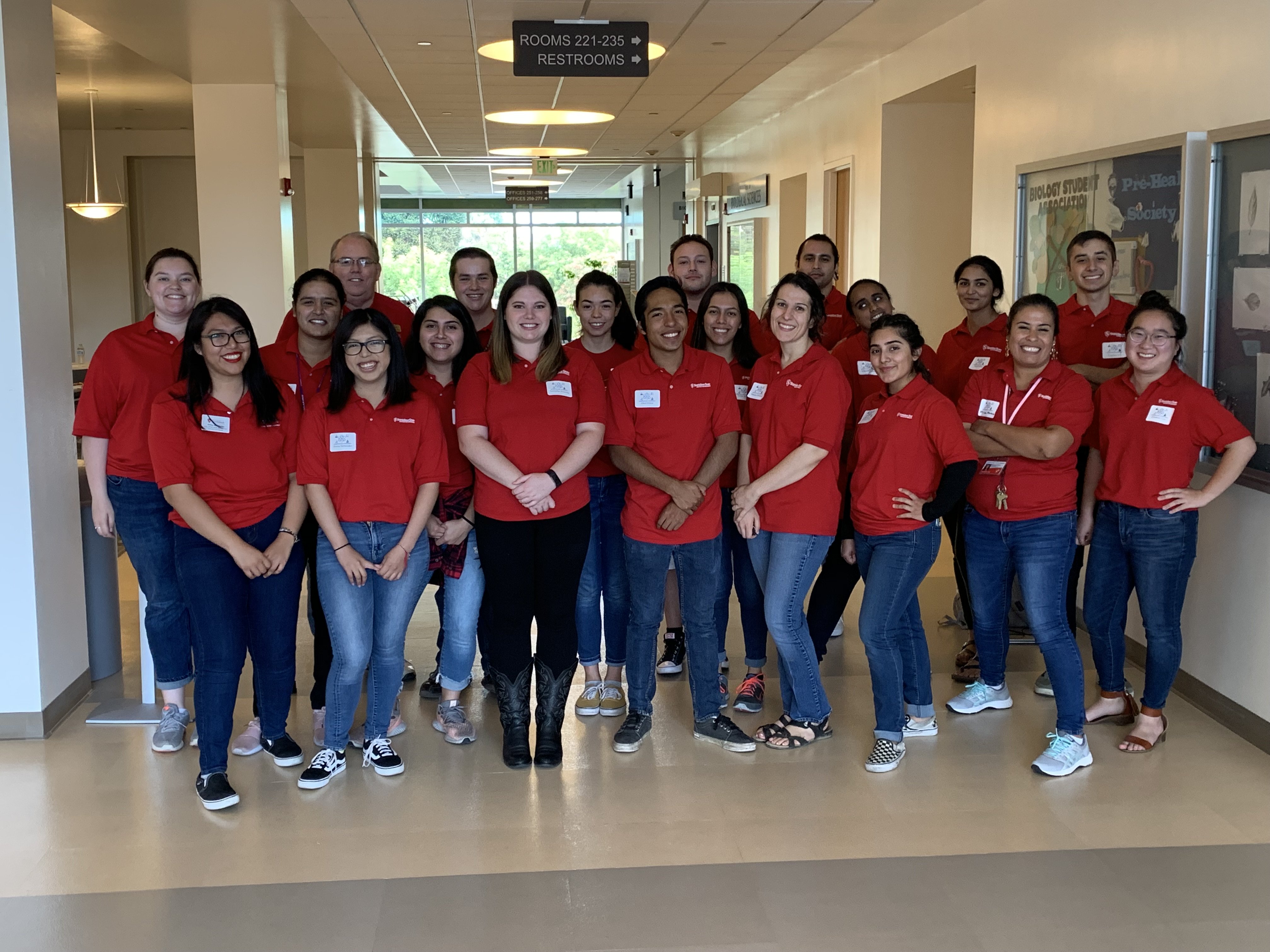
Grants
The team will continue to work on finding and applying for grants that align with Science in Our Community program.
Acknowledgements
Listed below are names of those who supported the Science in Our Community throughout this past year in making these events possible:
- Science in Our Community Steering Committee Members:
- Dr. Elvin Aleman
- Dr. Andrew Gardner
- Ms. Shannon Hernandez
- Dr. Brian Jue
- Dr. Dae Hee Kim
- Dr. Wendy Matthew
- Dr. Brian Morsony
- Mr. Alfredo Vargas
- Teacher Recruitment and Retention Program
- Dr. Mark Grobner
- Dr. Oddmund Myhre
- Student Volunteers:
- Spoogmai Ahmad
- Margaret Creighton
- Mahnoor Raza
- STEM Ambassadors and Stan State Student Volunteers
- Stan State Science Faculty Volunteers
- Other Stan State Staff members
- Stan State Student STEM Clubs
Updated: March 20, 2026