Mission Statement
The Stan State Science in Our Community Outreach Program is dedicated to science education and public engagement. This program, supported by volunteer efforts of Stan State students, faculty and staff, provides STEM activities to educationally and economically disadvantaged students is the campus's service area.
Vision Statements
The Science in Our Community STEM Outreach Program seeks to:
-
encourage the community to visit the local campus;
-
encourage students to be engaged in the STEM subjects (Science, Technology, Engineering, and Mathematics);
-
encourage local students to attend Stan State, consider a STEM major, especially those populations underrepresented in the STEM Community (i.e. Hispanics and women);
-
allow Stan State students to teach the community about science and its importance in society today;
-
promote Science as lifelong learning for all citizens.
Programs
The STEM Ambassador program is a substantial volunteer program for undergraduate students in STEM and non-STEM disciplines. This program provides Stan State students the opportunity to develop leadership and teamwork skills and the ability to share their knowledge of Science gained in the classrooms with a K-12 audience. Internships are also available if students desire to earn credit for their participation. In addition, STEM Ambassadors lead classroom activities for the Junior Scientist and Solar Suitcase Program and take the lead in preparing and conducting Science Saturday and Science Day activities.
In person: The open-house environment will feature activities from 10 a.m. to 2 p.m. in the Naraghi Hall of Science, the Science 1 Building, the greenhouse, and the sustainable garden. There will also be tours of the Trans-California Pathway, an outdoor arboretum featuring plant communities native to a transect of California from the Central Valley to the High Sierra. With more than 40 activities available, students and their families will receive a “Passport to Science” booklet to track their activities throughout the day.
Virtual: The event is week-long in which PreK-12 classrooms can join to participate in 30 to 60 minutes STEM activities. Some activities are in demonstration format, where the students learn the topic and see an experiment performed by the activity leader. Another format includes learning concepts and then applying those concepts in a hands-on activity that the students can follow along with the presenter as Science in Our Community provides the material in advance. The faculty, staff, and STEM Ambassadors are the ones who led these activities.
STEM Ambassadors and other student volunteers take two or more STEM interactive activities to the school site. They work with the K-12 students and the community members on these activities while answering their questions about the Science concepts.
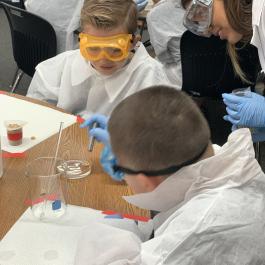
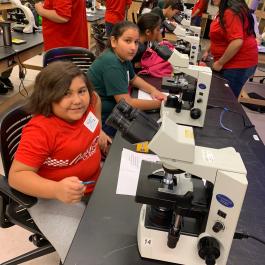
In person: The Junior Scientist program provides 4th-grade students with STEM curriculum enrichment for the local schools from the Turlock Unified School district. Students accompanied by teachers and parents visit Stanislaus State to participate in three-hour-long science lessons free of cost. These science activities reinforce the in-class curriculum and provide a hands-on approach to localized issues and problems. The program aligns with the Next Generation Science Standards (NGSS). This past year, students from Cunningham Elementary, Wakefield Elementary, and Osborn Elementary schools came to the Stan State campus for Saturday activities of STEM enrichment.
Virtual: The program works virtually with Cunningham Elementary, Wakefield Elementary, and Osborn Elementary. In which STEM Ambassador takes the lead on one-hour science lessons free of cost. We also provide the schools with material allowing students hands-on experience. While doing this, we continue to align the in-class curriculum.
In person: The Science Saturday involves three hours of exploring one science discipline with two to three activities focused on that discipline. The faculty, staff, and STEM Ambassadors lead these activities.
Virtual: It involves one to three hours of exploring one science Disciple virtually through zoom. This activity also allows participants to follow the activities along with the presenters.
In person: Undertaken in partnership with the We Share Solar program. The Solar Suitcase program helps middle school students develop their solar systems and enhances the learning of green energy sources. Then deployed, the student-built systems to areas lacking electrical utilities, generally schools and refugee camps. Also, middle school students learn the global aspect of energy access and the social issues accompanying this subject. A group of student volunteers leads this activity by going onto the school site to work with the students on this project. We have previously worked with Dutcher Middle School and Turlock Junior High School.
Virtual: Solar Suitcase programs continue with the partnership of the We Share Solar program. In the virtual format, one STEM Ambassador takes the lead in doing multiple sessions with the middle school students. These lessons go from concept to building the Solar Suitcase and their Solar Suitcase system. Science in Our Community provides the school with materials for each session, so the students can follow along and do hands-on activities. We worked with Dutcher Middle School for our first virtual Solar Suitcase in the past year.
In Person: Lesson Planning Workshops are three-hour-long workshops that focus on STEM education. The workshop gives Stan State students interested in pursuing a career in teaching science subjects the opportunity to familiarize themselves with current state teaching standards and how to engage K-12 students effectively and efficiently at different grade levels. In addition, participating students receive helpful tools such as lesson planning templates and how to navigate the NCSS (Next Generation Science Standards) website, which they can optimize when working with students in the classroom.
Virtual: Lesson Planning workshop continues to focus on STEM education and provides tools such as templates and navigation tools for Next Generation Science Standards. In this format, the workshops are an hour long, where the presenter connects with the participants through Zoom.
Volunteers Data
Due to the ongoing pandemic, starting the academic year of 2020-2021, all the Science in Our Community activities were presented in the virtual manner, such as zoom, the science in our community webpage, and our SIOC youtube channel. this ensured that we were following the guidelines of center of disease control and prevention (CDC) and ensure safety of the students, faculty, staff volunteers, and the community members.
Thus, the science in our community program has been conducted in a virtual manner for the past two years.
Number of Volunteers
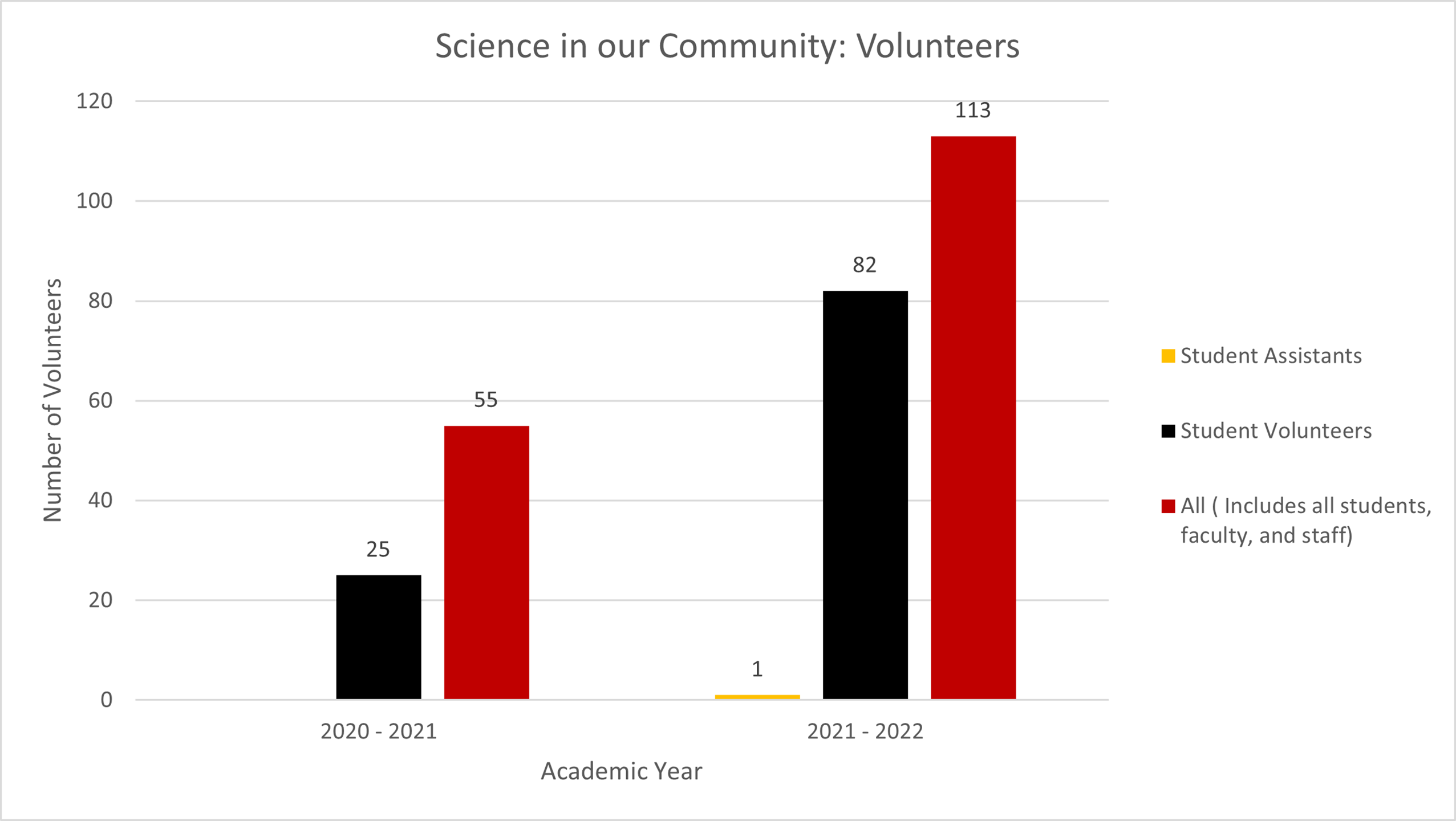
In 2020–2021, there were 25 student volunteers and 55 total volunteers. In 2021–2022, there was 1 student assistant, 82 student volunteers, and 113 total volunteers.
Form Academic Year 2020-2021 to 2021-2022, Science in Our Community had an increase of more than 105% Stan State student volunteers and 30 College of Science’s professors and staff members.
Volunteer Hours
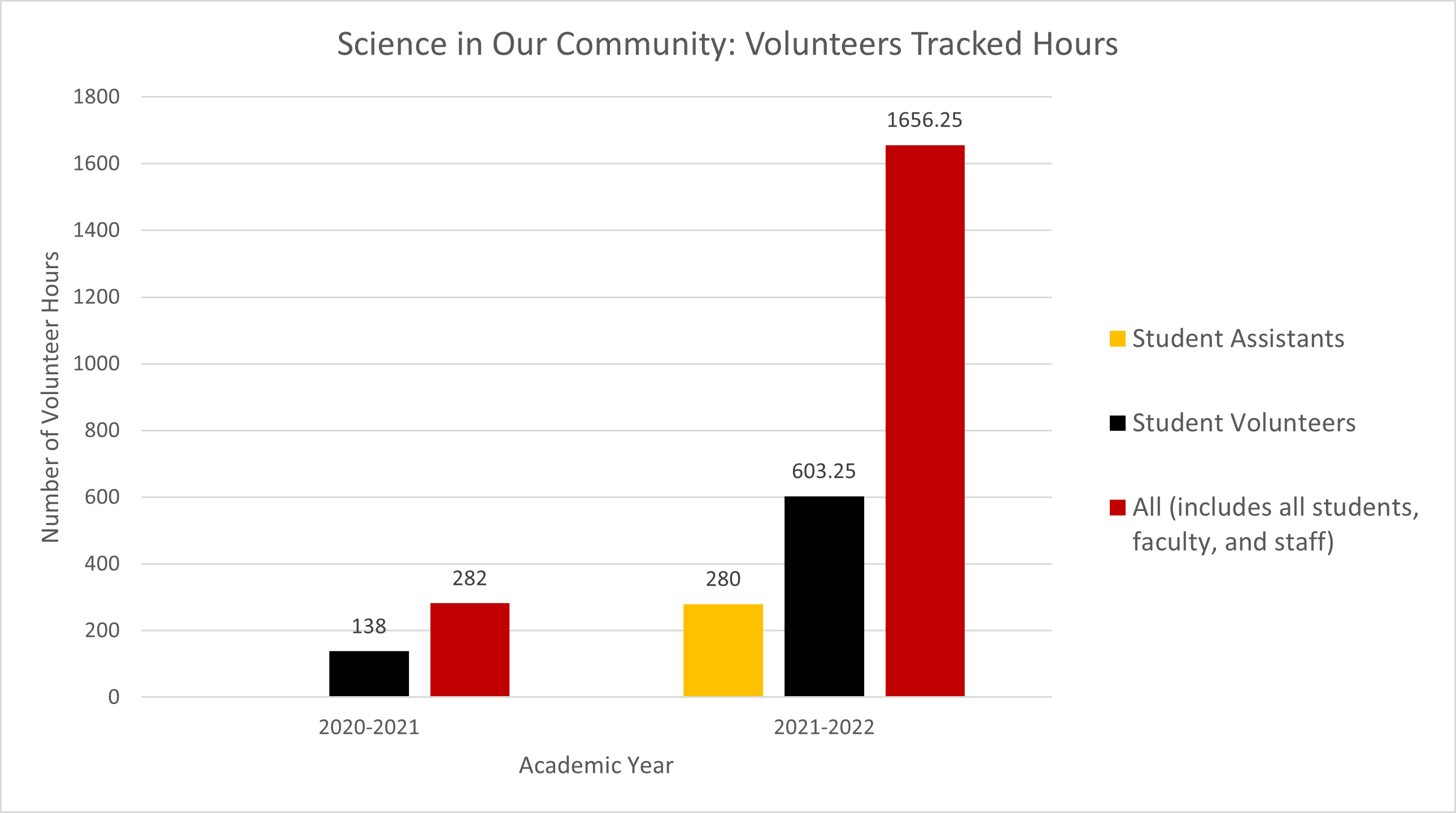
In 2020–2021, there were 138 student volunteer hours and 282 total volunteer hours. In 2021–2022, there were 280 student assistant hours, 603.25 student volunteer hours, and 1,656.25 total volunteer hours.
All of the volunteers contributed more than 1,656 hours of volunteer time, an increase of over 487% from previous year. These volunteers contributed about $58,897 worth of volunteer time**.
Number and hours of Participants Engaged in STEM Education
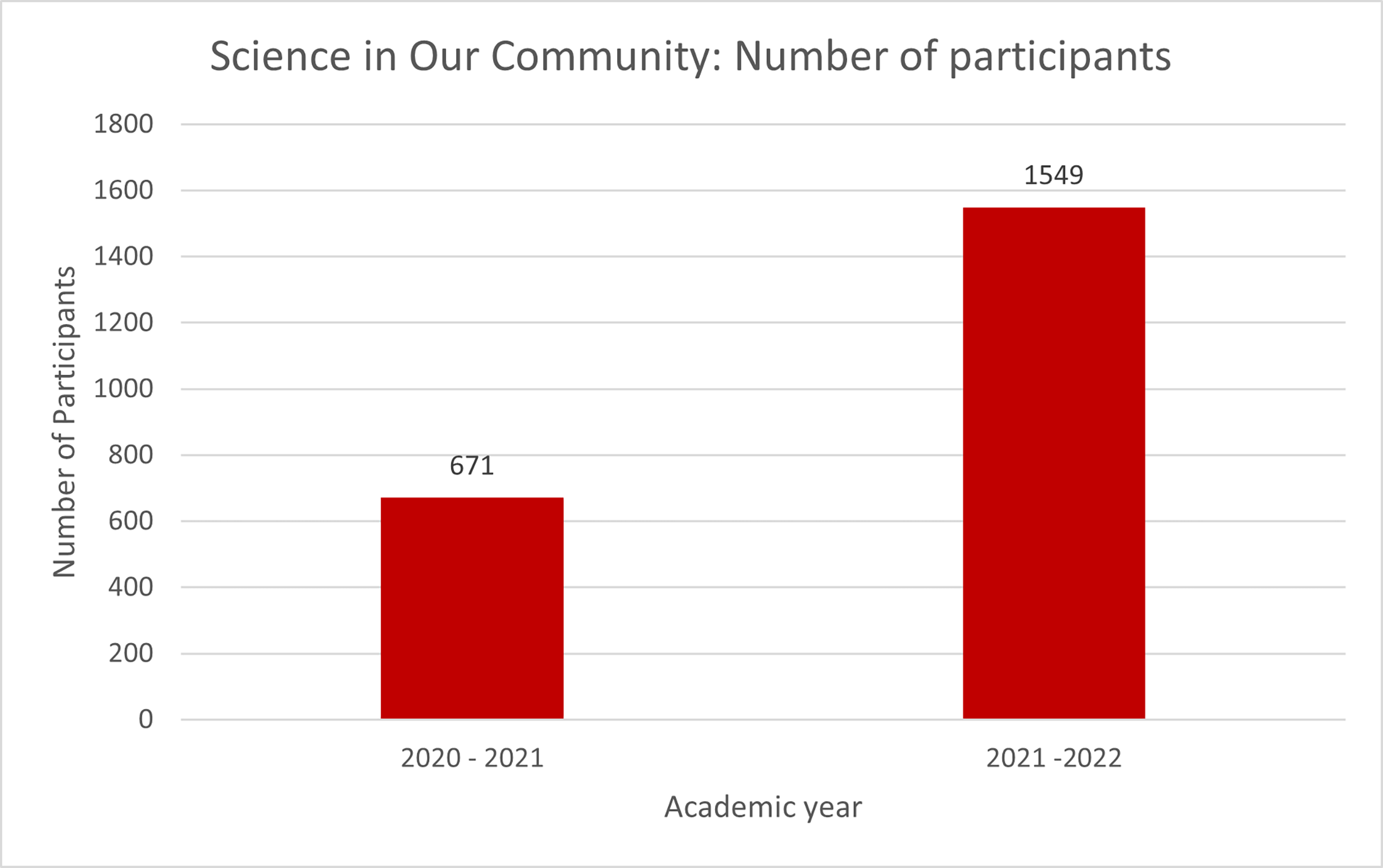
Number of Participants
In 2020–2021, there were 671 participants. In 2021–2022, there were 1,549 participants.
Science in Our Community served more than 1,549 participants in our community, which is an increase of more than 130% from the previous year. The number of participants Represent more than 2% of **Population in Turlock in 2022.
**Turlock, California Population 2022 (Demographics, Maps, Graphs) (worldpopulationreview.com)
Participants Hours
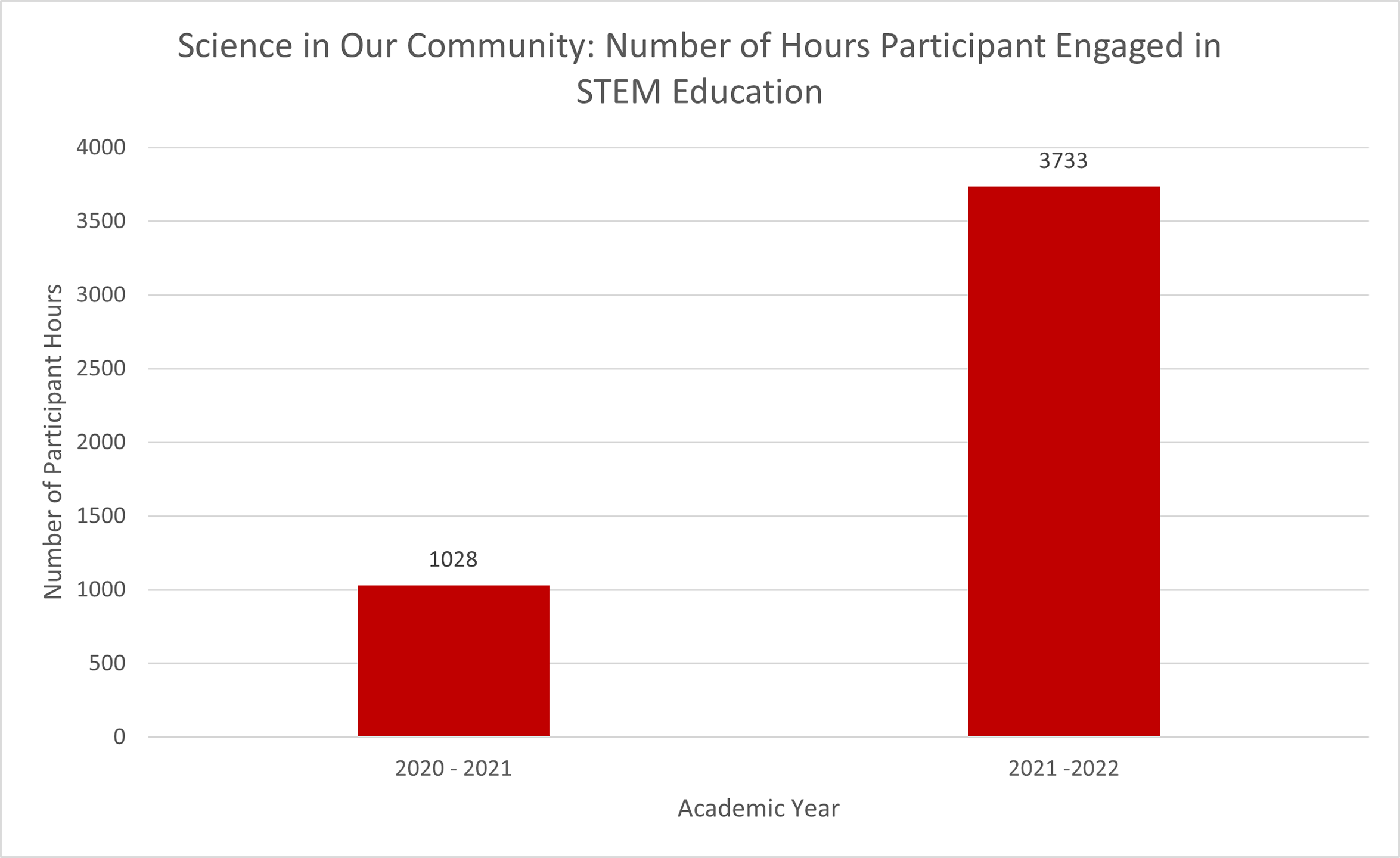
In 2020–2021, participants engaged in 1,028 hours of STEM education. In 2021–2022, participants engaged in 3,733 hours of STEM education.
The participants received more than 3,733 hours of free hands-on STEM instruction. This is an increase of more than 263% hours of free hands-on STEM instruction.
K-12 Schools
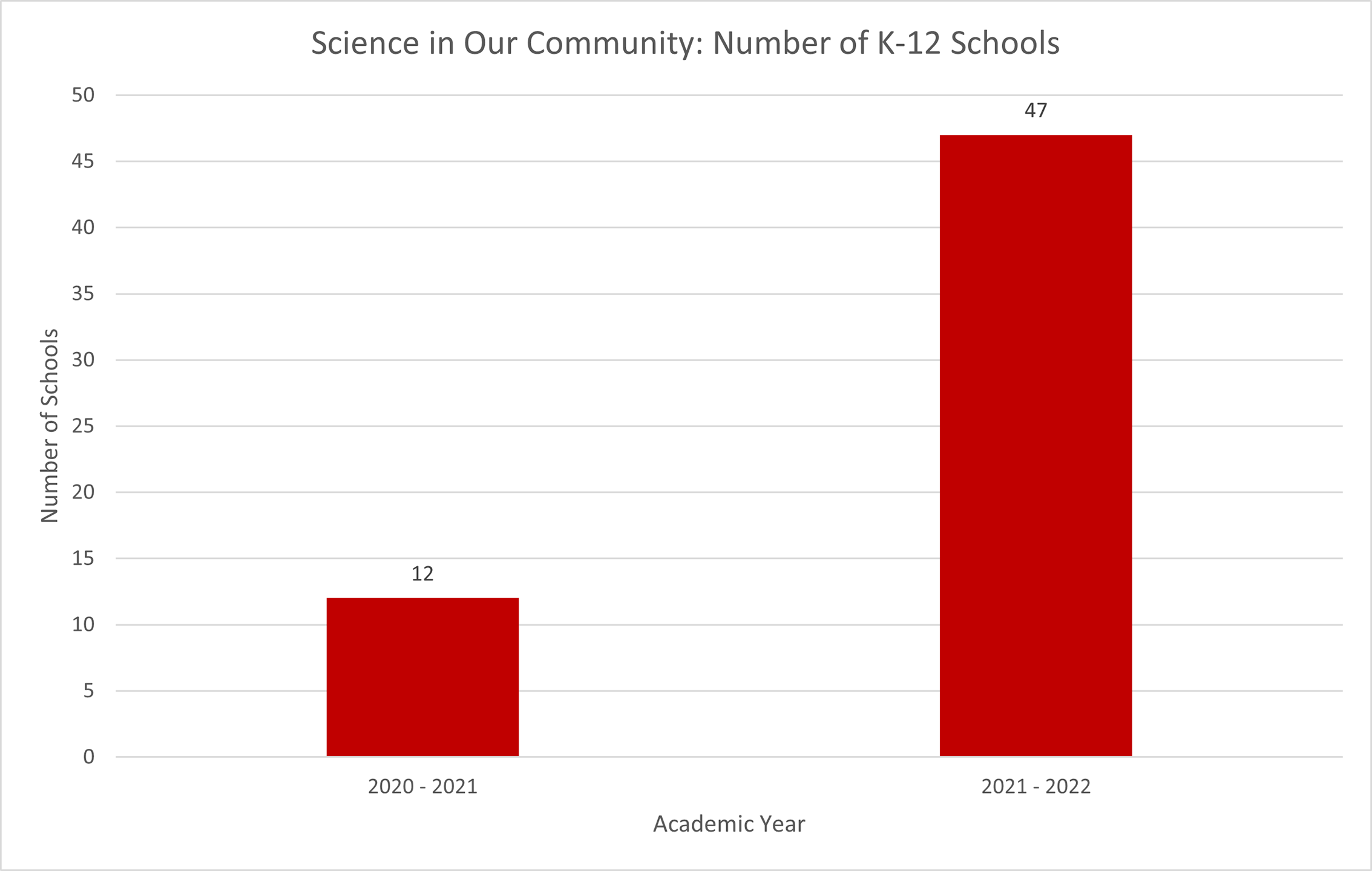
In 2020–2021, 12 K–12 schools participated. In 2021–2022, 47 K–12 schools participated.
The program served over 47 schools in our region.
Activities and Institutions
- MAKE A MARKER MAN FLOAT
- MOLECULESAND HOW THEY WORK: POLARITY AND DIFFERENT TYPES OF BONDING
- FAST OR SLOW...CHEMISTRY MAKES IT GO!
- ASTRONOMY NIGHT: MOON, VENUS, JUPITER, AND SATURN
- BUILD A WIND POWERED CAR
- HOW TO MAKE ROCK CANDY
- BUILDING PROTEINS
- EXPLORING BIOLOGY
- ASTRONOMY NIGHT: MOON AND ORION NEBULA
- FUN WITH SCIENCE NIGHT!: OZOBOTS
- FUN WITH SCIENCE NIGHT!: COLORING PAGES
- SOLAR SUITCASE: GLOBAL ENERGY/ACCESS
- SOLAR SUITCASE: SOLAR 101
- SOLAR SUITCASE: BASIC ELECTRICITY FOR SOLAR
- SOLAR SUITCASE: SYSTEM WIRING
- SOLAR SUITCASE: SYSTEM ASSEMBLY
- SOLAR SUITCASE: DESGIN YOUR OWN SOLAR SYSTEM
- SCIENCE DAY: BUG TO DYE FOR!
- SCIENCE DAY: CELEBRATE EARTH MONTH
- SCIENCE DAY: CHEMISTRY GOES POP!
- SCIENCE DAY: HEALTHY LIFESTYLE
- SCIENCE DAY: INTRODUCTION TO ARTIFICAL INTELLIGENCE (A.I.)
- SCIENCE DAY: NURSING SIMULATION LAB
- SCIENCE DAY: PAPER TOWER
- SCIENCE DAY: PRESSING PLANT SPECIMENS
- SCIENCE DAY: SOLAR OBSERVATION
- SCIENCE DAY: VOLCANO MAKING-CHEMICAL REACTIONS
- SCIENCE DAY: EFFICIENT VISULAIZATION OF BIG DATA ANALYSIS USING SHINY APPLICATION
- SCIENCE DAY: ARTIFICIAL INTELLIGENCE ROBOT PROGRAMMING WITH COZMO
- SCIENCE DAY: HOW DRONES FLY
- SCIENCE DAY: SENSORS AND DRONES
- SCIENCE DAY: INTRODUCTION TO VIRTUAL REALITY
- SCIENCE DAY: ORAL HEALTH AND HYGIENE
- SCIENCE DAY: CHARACTER STRENGTHS AND AFFIRMATIONS
- SCIENCE DAY: PAPER BRIDGE CONSTRUCTION
- SCIENCE DAY: MASTERMIND
- SCIENCE DAY: SOUND WAVES AND MUSIC
- SCIENCE DAY: KRYPTO! (CARD GAME)
- SCIENCE DAY: 4 WAY COUNTDOWN-JR. VERSION
- SCIENCE DAY: 4 WAY COUNTDOWN
- SCIENCE DAY: HANG 10
- SCIENCE DAY: MATCHSTICKS PUZZLES
- SCIENCE DAY: PTC: TASTE TEST
- HOW TO MAKE WATER WALK?
- PROJECT 13: CELL-BAGGY LAB
- PROJECT 13: ANIMAL LAB
- PROJECT 13: SUSTAINABLE GARDEN TOUR
36 activities of these 47 were recorded and are available on YouTube and the Science in Our Community Page
- Aspire Arts and Science Academy
- Bret Harte Elementary School Modesto
- Carroll Fowler Elementary School
- Chrysler Elementary School
- Connecting Waters Charter School Central Valley
- Creekside Middle School
- Crowell Elementary School
- Cunningham Elementary School
- Dan Savage Middle School
- Dennis Earl Elementary School
- Dutcher Middle School
- Empire Oaks Elementary School
- Evelyn Hanshaw Middle School
- Fred C Beyer High School
- George McParland School
- Grattan Elementary School
- Hanshaw Middle School
- Hickman Charter School
- Hickman Elementary School
- James C Enoch's High School
- Johansen High School
- John Muir Elementary School
- Julien Elementary School
- Keyes to Learning Charter School
- Kolbe Academy and Trinity Prep
- Las Palmas Elementary School
- Lucas Elementary Dual Language Academy
- Mae Hensley Junior High School
- Medeiros Elementary School
- Osborn Elementary School
- Patricia Kay Beaver Elementary school
- Pitman High School
- Prescott Junior High School
- Riverbank Language Academy
- Sinai Academy Yeshivah High School
- Sonoma Elementary School
- St. Stanislaus Catholic school
- Turlock Junior High School
- Virginia Parks Elementary School
- W Verne McKinney Elementary School
- Wakefield Elementary School
- Walnut Elementary Education Center
- Walnut Grove Elementary School
- Walter M Brown Elementary School
- Whitmore Charter High School
- Wilson Elementary School
- Yolo Middle School
- University of California, Merced
- San Jose State University
- San Jose City College
- California State University, Stanislaus
- California State University, Stanislaus-Child Development Center
Staff & Team Members
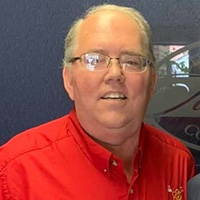
Mark Grobner
Science in Our Community, Faculty Director
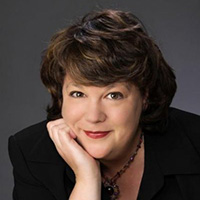
Julie Fox
Office of Service Learning, Director
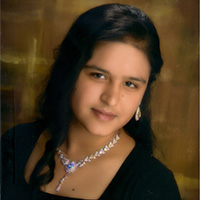
Sunpreet Kaur
Stem and Internship Outreach Coordinator
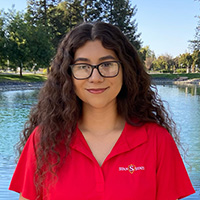
Chelsea Flores
AmeriCorps CSU STEM VISTA
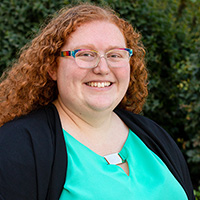
Breanna McIntyre
Administrative Analyst
Next Steps
In 2022-2023, the Science in Our Community program will continue to offer programs such as Junior Scientist, Science Saturday, Science Day, and more. The program will also work with the Safety & Risk management office to bring some events back in person while also continuing in a virtual capacity. Lastly, the program will focus more on grants to support the program to continue providing the students and community with these opportunities.
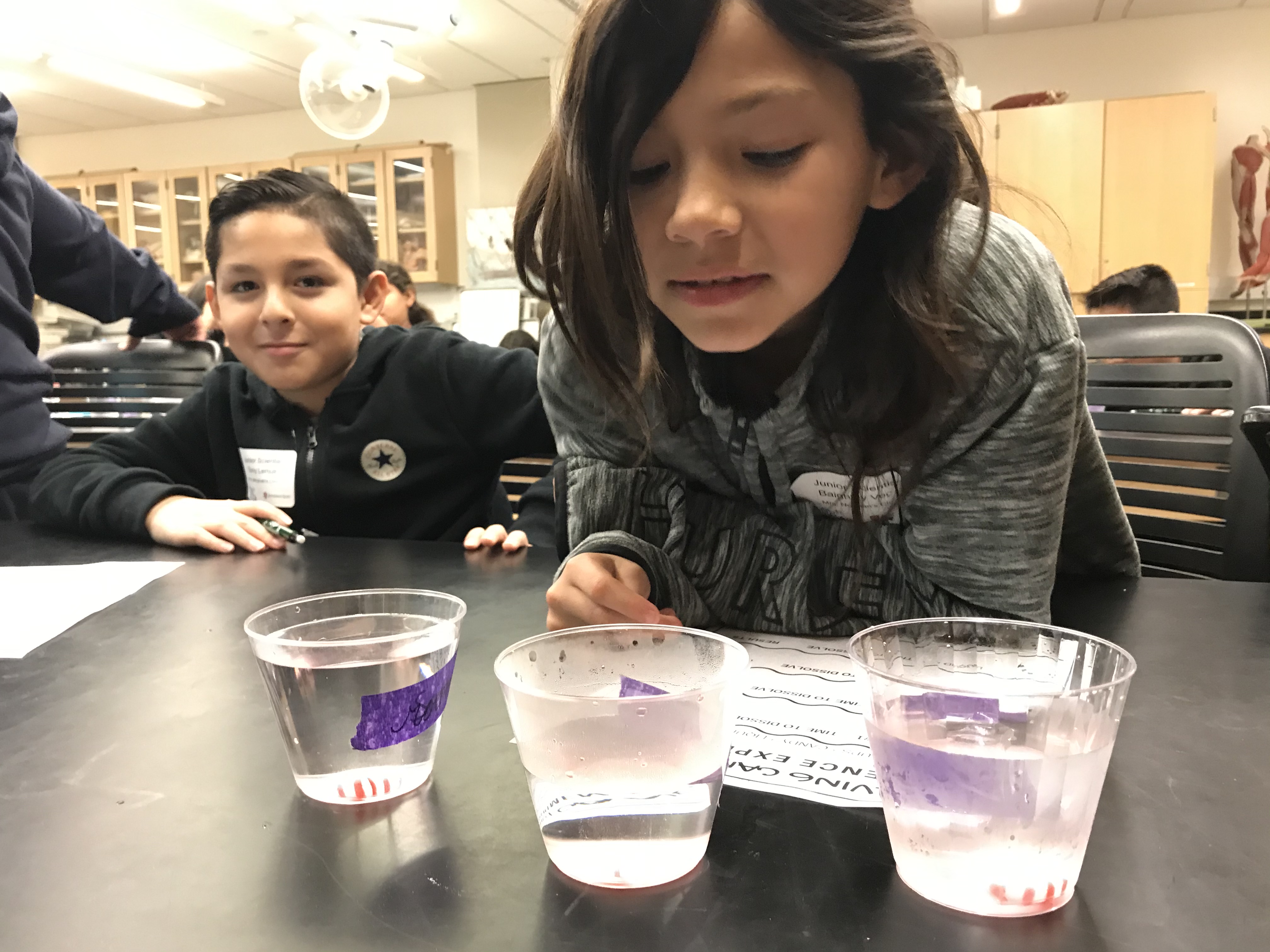
Junior Scientist & Science Saturday
The Junior Scientist program we will continue to offer in a virtual format for the fall semester. At the same time, we will work towards bringing Science Saturdays in person.
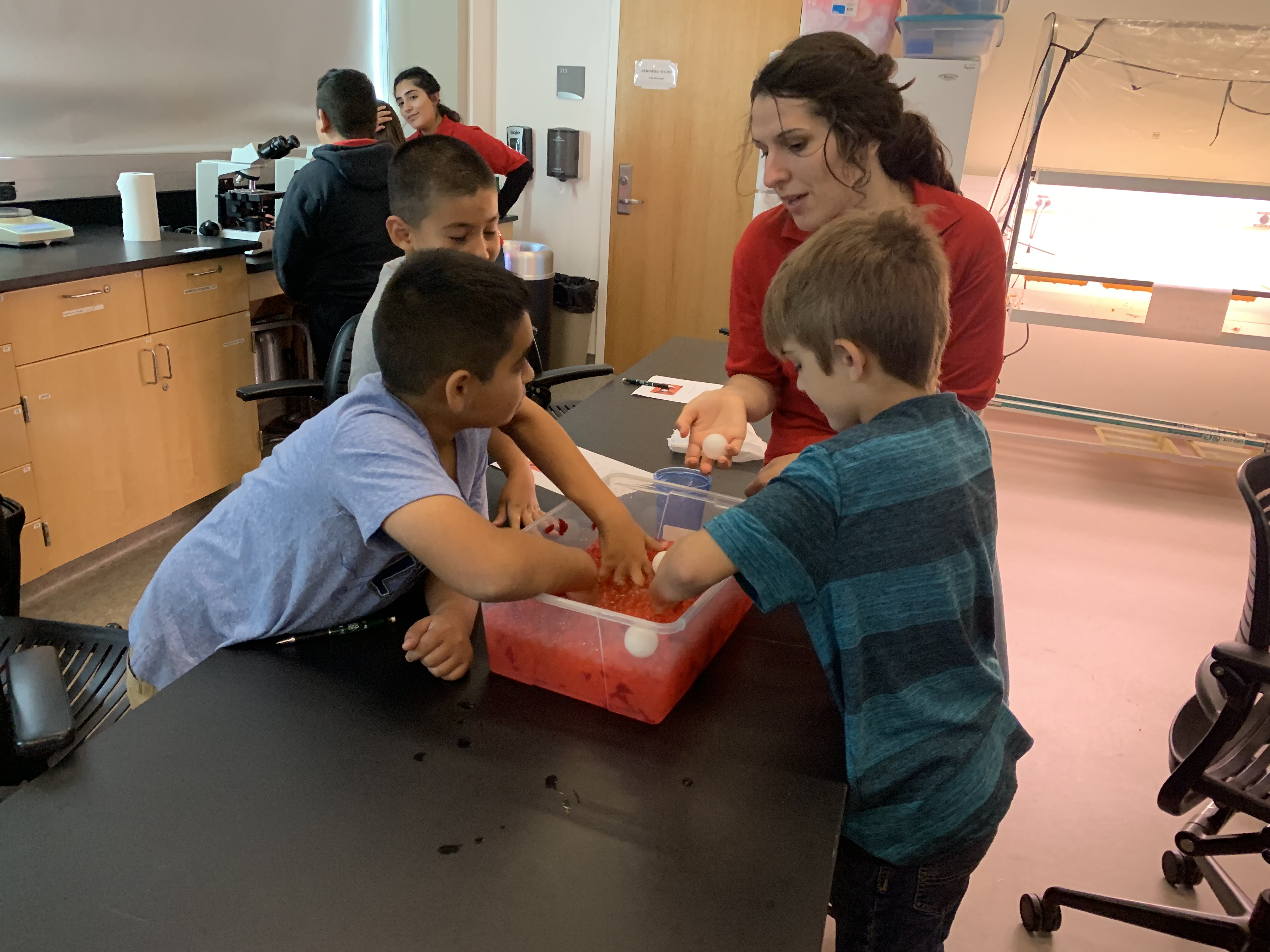
Science Day
Work with Safety & Risk, Events, Facilities, and other offices to determine how to bring Science Day back in person.
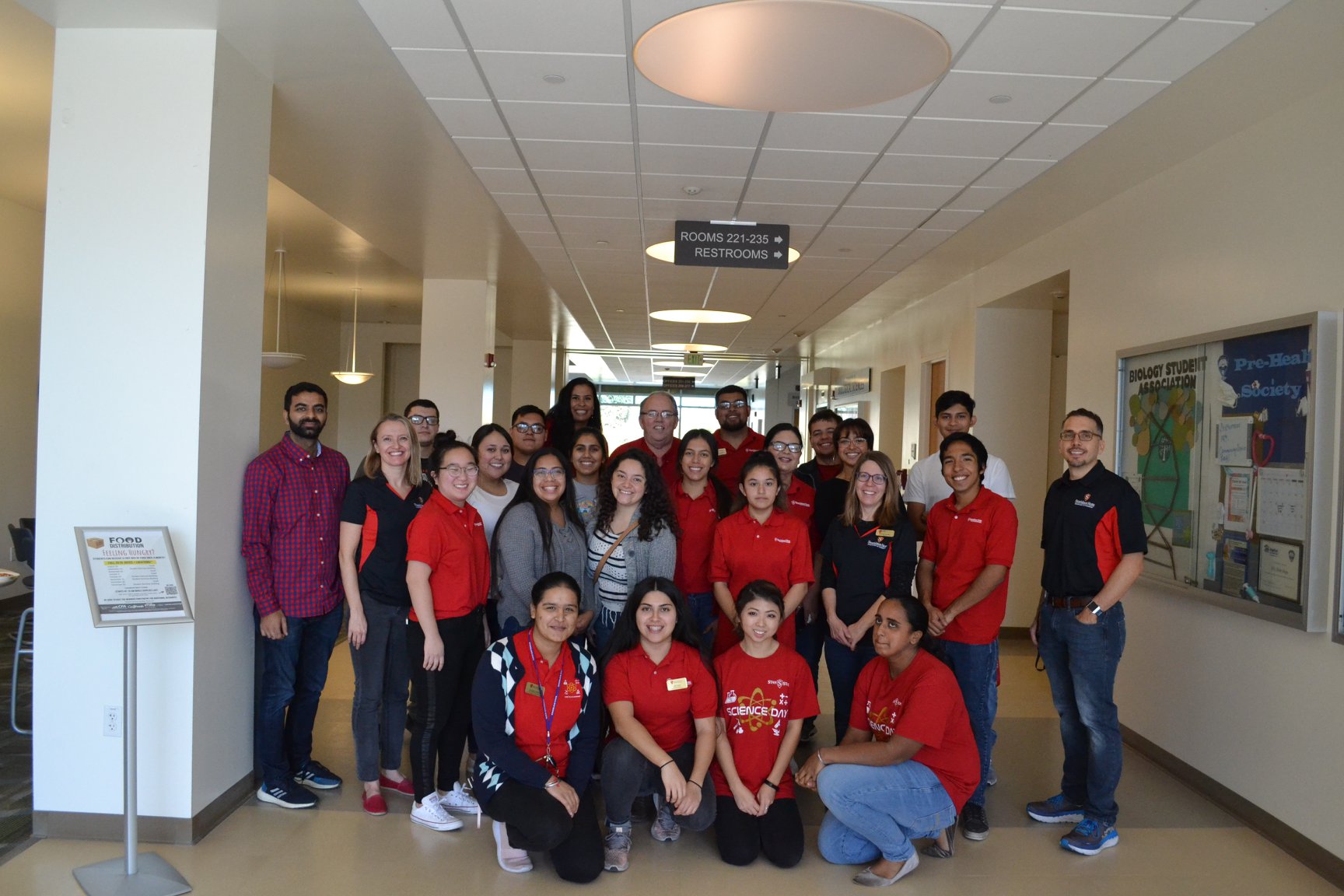
Grants
We will work with the Steering Committee Members and other faculty members to find grants that align with the Science in Our Community program.
Acknowledgements
Listed below are names of those who supported the Science in Our Community throughout this past year in making these events possible:
- Science in Our Community Steering Committee Members
- Teacher Recruitment and Retention Program
- Dr. Mark Grobner
- Dr. Oddmund Myhre
- Alfredo Vargas
- Student Volunteer- Mahnoor Raza
- STEM Ambassadors and Stan State Student Volunteers
- Stan State Science Faculty Volunteers
- Other Stan State Staff members
- Stan State Student STEM Clubs
We thank everyone for their continued support to the Science in Our Community Program.
Updated: March 20, 2026