How Campus Experience Became Career Preparation
Carrera had an interest in creating digital content long before she considered turning it into a business.
At Stan State, that interest became practical experience.
As a student employee in the Office of Strategic Communications and Marketing, Carrera created content featuring students, faculty and University leadership. The work required more than knowing how to film or edit. She had to approach people, make them comfortable on camera, stay organized and collaborate with a team.
At the time, she did not realize how directly those skills would carry into her career.
“Getting the job at Stan State, getting to create content with students, faculty, the president was definitely a big opportunity that I didn’t even realize at the moment,” she said.
Carrera also credits the experience with strengthening her communication skills.
“I am really shy,” she said. “Having them as a support system to get me these new connections” helped her become more comfortable approaching and working with people.
The organizational habits she developed have remained just as valuable. Carrera said clients now compliment the structure of her business, something she connects directly to what she learned while working on campus.
For students, her experience shows that a campus job can become more than employment. It can provide a place to practice professional skills before graduation and discover which parts of the work they may want to pursue further.
How Can Students Start Building a Portfolio?
Carrera’s advice for students interested in content creation is straightforward: start before you feel completely ready.
She encourages students to identify businesses, organizations or projects they already care about and look for opportunities to create.
“If you see a local business that you love or you go drink coffee there, go talk to them and ask, ‘Can I create content for you?’” she said.
The first project does not necessarily have to become a paid client relationship. Early work can help students build something equally important: evidence of what they can do.
“Record everything you possibly can and edit and start building up that portfolio,” Carrera said.
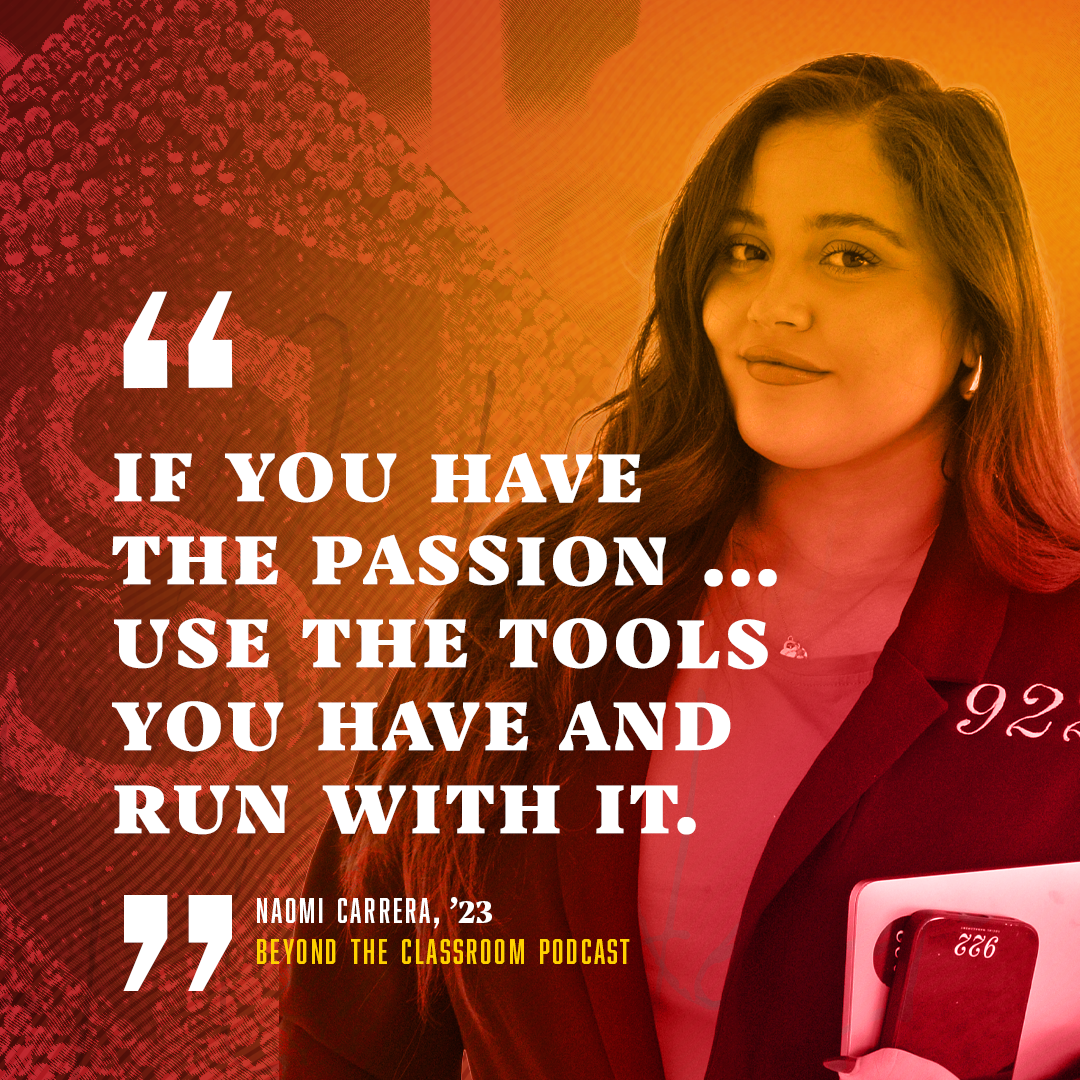
She also cautions students against believing they need expensive equipment before they begin.
Carrera points to smartphones as one of the primary tools used in her own content-production workflow and recommends accessible platforms such as Canva for experimenting with design and social content.
For students interested in marketing, social media or creative work, the lesson is practical: create something, evaluate it, improve it and keep building.
Why Networking Matters Even If You Are Shy
Carrera describes herself as naturally shy, which makes her career growth particularly relevant for students who may find traditional networking uncomfortable.
Her approach is less about formal introductions and more about participation.
She attends events, creates content and starts conversations with people already working in spaces that interest her.
“You never know who you’re going to meet at any time, any place, anywhere,” she said.
That mindset also connects to what she learned as a student employee.
Creating content required her to approach faculty members, students and others who might not feel comfortable on camera. Having a conversation first helped both Carrera and the person she was filming relax.
Over time, those interactions strengthened her ability to build professional relationships.
Her advice to students is not to wait until they need a job to begin meeting people.
Attend events. Join organizations. Talk with faculty, staff, alumni and local professionals. Ask questions. Participate in projects.
Networking can begin simply by showing up and being genuinely interested in the work happening around you.
How Does Marketing Become Relationship Building?
Carrera’s work is not only about producing social media posts.
She spends time understanding each client’s goals, audience and vision before deciding what content to create.
“I love connecting with my clients because the more I get to know about them, the more I get to know how they want to run their business,” she said.
That relationship-based approach helps her create content designed around the needs of a specific organization rather than relying on the same ideas for every client.
It also reflects a broader marketing lesson for students.
Good marketing begins with understanding the audience, the organization and the problem that needs to be solved. The creative execution comes afterward.
Carrera’s experience shows how communication, listening and relationship building can be as important as technical content-production skills.
What Should Students Know About Entrepreneurship?
Carrera’s move into entrepreneurship grew from a combination of experience, relationships and recognizing that there was demand for a type of work she enjoyed.
She encourages students to pay attention when they see an emerging need or opportunity, but she also cautions against romanticizing business ownership.
Entrepreneurship can involve long hours, uncertainty and periods when progress feels uneven.
“If you’re going to start a business, you really gotta love what you do,” Carrera said.
Her advice is to focus not only on the idea of owning a business but also on whether you enjoy the work required to build and sustain it.
“Really, really love the process because it is a journey of ups and downs,” she said.
Carrera also emphasizes the importance of having collaborators and people who can offer support when one person encounters a creative or professional challenge.
Students interested in entrepreneurship do not need to have every part of a future company planned while still in college. They can begin by building skills, experimenting, making connections and paying attention to problems they might be able to solve.
Naomi’s Advice for Students
Carrera’s path from marketing student to entrepreneur was shaped by doing the work before she knew exactly where it would lead.
Her advice includes:
- Start creating before graduation.
- Build a portfolio that shows what you can do.
- Use the tools already available to you.
- Attend campus and community events.
- Talk with people working in fields that interest you.
- Treat relationships as part of the work, not just a way to find clients.
- Look for opportunities to practice in real-world settings.
- Be willing to step outside your comfort zone.
Her strongest message is also one of the simplest:
“Put yourself out there, go to events, talk to people.”
A Career Built by Creating and Connecting
Carrera’s story demonstrates how classroom learning, campus employment and community relationships can begin connecting before graduation.
Her business administration degree gave her a foundation in marketing. Her campus employment gave her space to practice content creation, communication and organization. Professional and community relationships helped her see where those skills could create new opportunities.
Today, she applies those experiences as a business owner working with organizations throughout the Central Valley.
For students still wondering where their own experience might lead, Carrera’s path offers a useful starting point: begin building before the final destination is clear.
Frequently Asked Questions
Naomi’s experience answers practical questions for students interested in marketing, content creation and entrepreneurship. Here are a few takeaways from her conversation on Beyond the Classroom.
How can students start a career in social media or content creation?
Students can begin by creating work for campus organizations, personal projects or local businesses and collecting their strongest examples into a portfolio. Carrera recommends starting with the tools already available rather than waiting for professional equipment.
Does campus employment count as career experience?
Yes. Campus employment can help students develop professional skills, build relationships and gain examples of work they can discuss with employers or clients. Carrera credits her Stan State communications experience with helping prepare her for the work she does today.
How can marketing students build professional connections?
Students can attend events, join organizations, talk with faculty and alumni and participate in projects related to their interests. Carrera recommends approaching networking as relationship building rather than waiting until a job search begins.