- Thursdays
- 3:30 - 4:30 p.m. & by appointment
- Bizzini Hall, B123
College
Department
Phone
Location
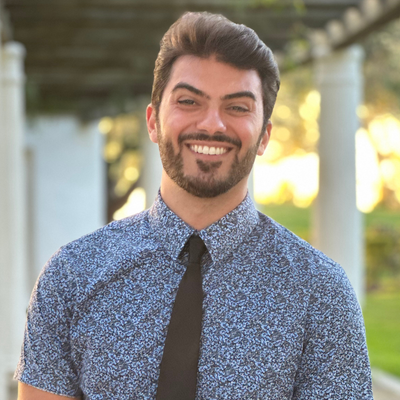
My passion for history, logic, and storytelling have always intersected in my academic pursuits. In my youth I was exposed to Western philosophy and the complex literatures of Aldous Huxley, Herman Hesse, Fyodor Dostoevsky, Nicanor Parra, Gabriel García Marquez, and Julio Cortázar, among others, and these became foundational to building a critical eye with which to appreciate the beauty and spoils of the world around me. From a young age I chose to major in philosophy and did precisely that and chose to study at Stanislaus State for its robust philosophy and modern languages department. During my undergraduate career I studied abroad in Santiago, Chile to learn more about political corruption and popular reactions to it. I received my master's degree from San Diego State University exploring the application of Martin Heidegger's notion of "authenticity" to Walter D. Mignolo's "idea of Latin America" where I explain the existential thought of Heidegger's "Dasein" as Being's relation to the self and the self to what surrounds it in the Latin American context while also renouncing the language of "authenticity". Following my master's degree, I returned to Stanislaus to conclude a postbaccalaureate degree in Spanish.
My background in teaching extends from university peer tutoring, to teaching ESL both in Santiago, Chile and in San Diego, teaching Spanish language/history courses throughout the Central Valley and San Diego area in K12 classrooms.
My current pursuits in academia concern transgressional literature (Georges Bataille, Marquis de Sade, José Donoso), the political power of language systems, and resistance to grand narratives. I am very much drawn to literature and the language that clothes it, while philosophy is a great tool to unpack immediate experience. It is languages that lend their own flavor to the thoughts born in the minds of speakers. Language is in great part the avenue by which we come to know our identity and build the world to our understanding, so my aim is to observe and study the different languages at our disposal for making sense of existence in each of our particular registers. This may lead to questioning what most have taken as calcified and granted, but it could be that those ossified remains are precisely what need the most investigation or restructuring as the world we find ourselves in continues to unfold.
Stay interested and stay curious! There is yet a lot of the world to dialogue with.