When Sebastian Lara found himself in the rugged Australian outback helping prepare a 110-million-year-old ichthyosaur fossil, he was doing more than participating in a remarkable scientific project — he was continuing a journey that began in California’s Central Valley.
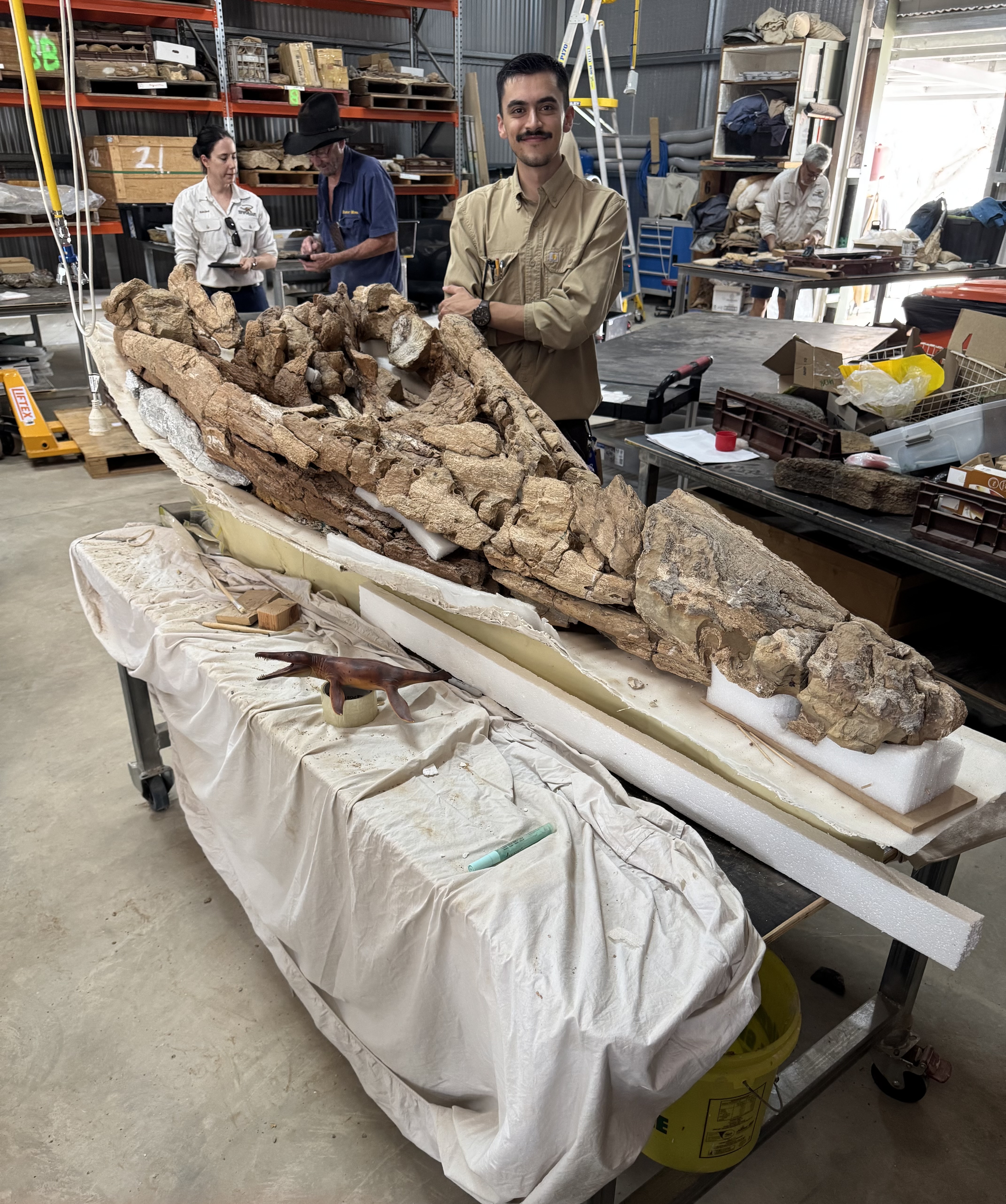
Lara recently worked with researchers at the Australian Age of Dinosaurs Museum in Winton, Queensland, contributing to the preparation of “Cassandra,” a roughly 7.1-meter-long ichthyosaur discovered in rock dating to 110 million years ago, during the Cretaceous Period.
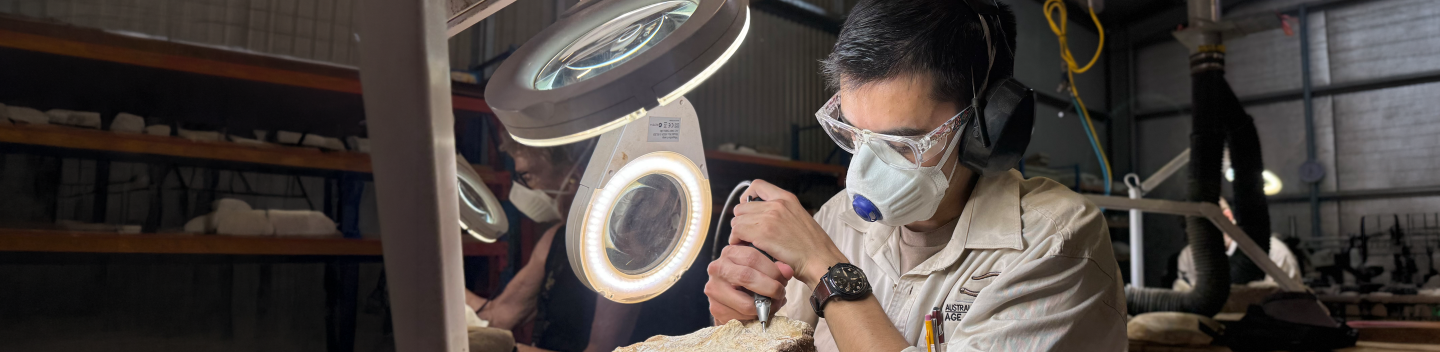
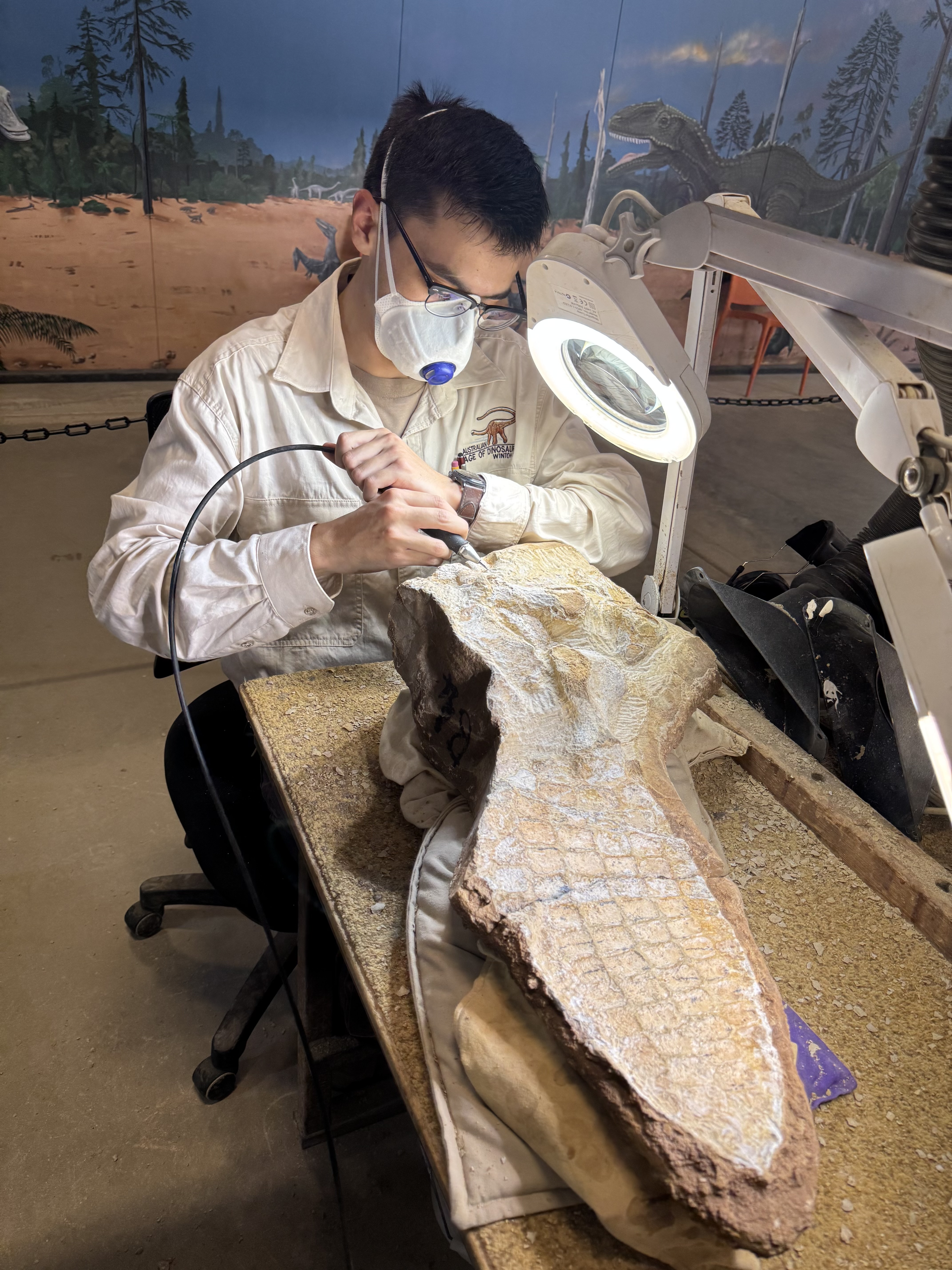
During the project, Lara worked five days a week in the museum’s laboratory, helping remove hardened rock surrounding the fossil using specialized tools and preservation techniques and assisting researchers in preparing the specimen for study and eventual display.
“I was personally responsible for preparing sections of the vertebrae, paddles (flippers) and the ribs,” Lara said. “The work required patience, steady hands and sustained concentration for many hours at a time.”
The excavation drew national attention in Australia and was featured by the Australian Broadcasting Corporation.
For Lara, the opportunity reflects how learning at Stanislaus State prepared him for global field experiences.
“The Anthropology program at Stanislaus State was incredibly important in building a strong foundation of skills and knowledge that prepared me to participate in these archaeological and paleontological field programs,” Lara said.
He said coursework in archaeology and field methods gave him practical preparation, while anthropology more broadly shaped his approach to unfamiliar environments and cultures.
“The principles and discipline I learned through Anthropology at Stanislaus State helped prepare me to approach these new environments with awareness, adaptability, respect and appreciation for the diversity of humanity,” Lara said.
That preparation, he said, made him more confident as he entered professional fieldwork.
“All in all, it made me more confident in my skill set and knowledge before I participated in real fieldwork at these sites and projects,” he said.
Richard Wallace, professor and director of anthropology, said Lara’s accomplishments reflect the power of experiential learning and the opportunities students can pursue through the program.
“We’re very proud of Sebastian and all of our grads,” Wallace said. “He has really worked hard to create these experiences.”
Lara’s work in Australia is already leading to another international opportunity. According to Wallace, Lara has been accepted to another excavation project in Egypt, continuing a growing body of field experience spanning continents.
For Lara, those experiences reinforce a lesson that extends beyond the classroom.
“Your education doesn’t end when you receive a degree,” he said. “Life is a never-ending journey of learning.”