Archaeological research led by faculty from Stanislaus State, including Stan State Assistant Professor of Anthropology Kyra Pazan, is reshaping how scientists understand early human survival — and highlighting how undergraduate students can play a meaningful role in that discovery.
The research team identified one of the earliest sustained human occupations in Highland Southern Africa at a rock shelter in Lesotho. The site, known as Likonong, shows evidence of human activity dating back 242,000 years — more than tripling the age of similar sites in the region.
“Likonong is one of the only sites we know of from this time period, and it’s really interesting that we’re seeing success in this environment at the same time that we ourselves are becoming human,” Pazan said who is also a U-M alumna.
The findings, published in “Archaeological and Anthropological Sciences,” suggest that early humans were able to survive harsh, high-altitude environments not just through physical adaptation, but through strong social cooperation.
The excavation was supported by multiple funding sources, including a Stan State Research, Scholarship and Creative Activity (RSCA) grant from the College of the Arts, Humanities and Social Sciences (CAHSS) and a Dean’s RSCA grant, underscoring the University’s commitment to advancing faculty research and student engagement.
A Site That Challenges Assumptions
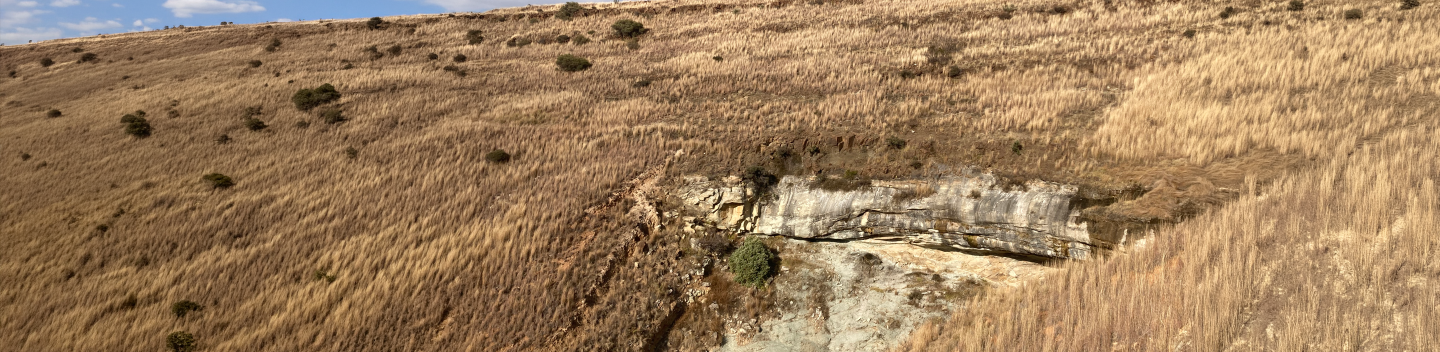
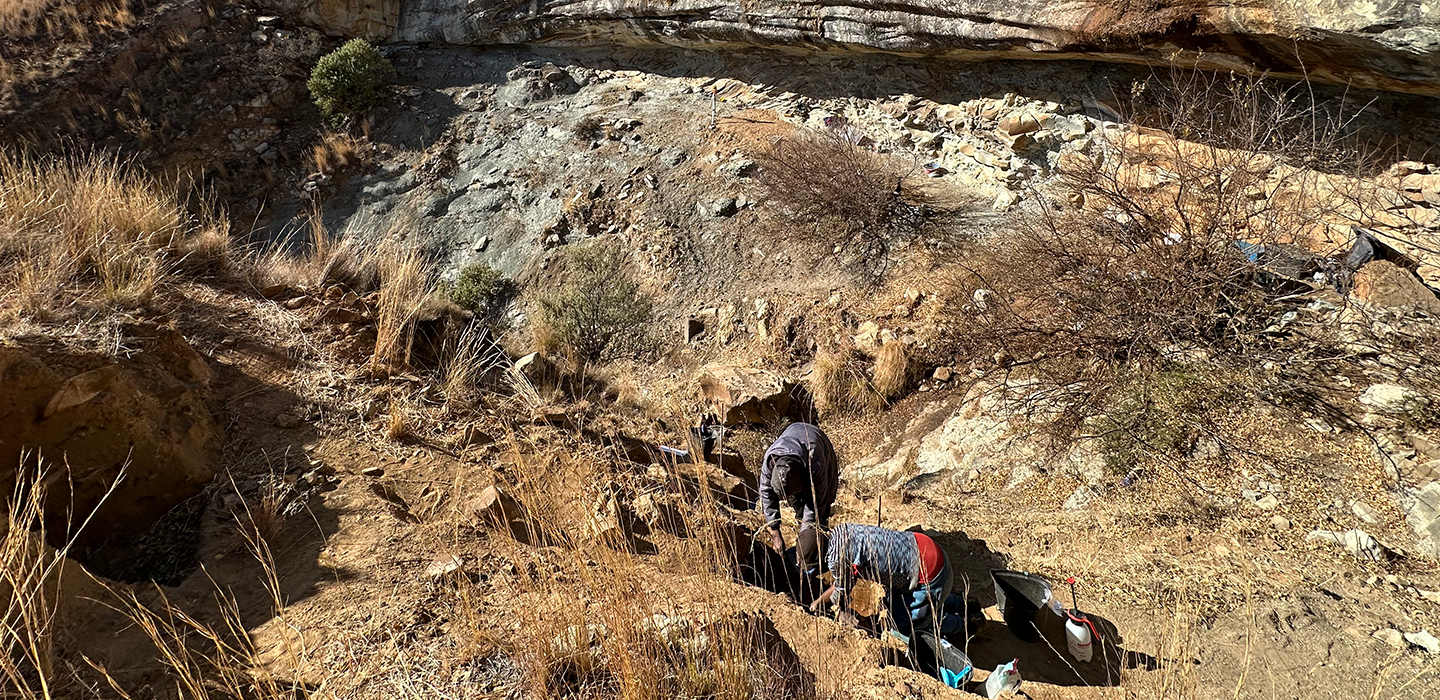
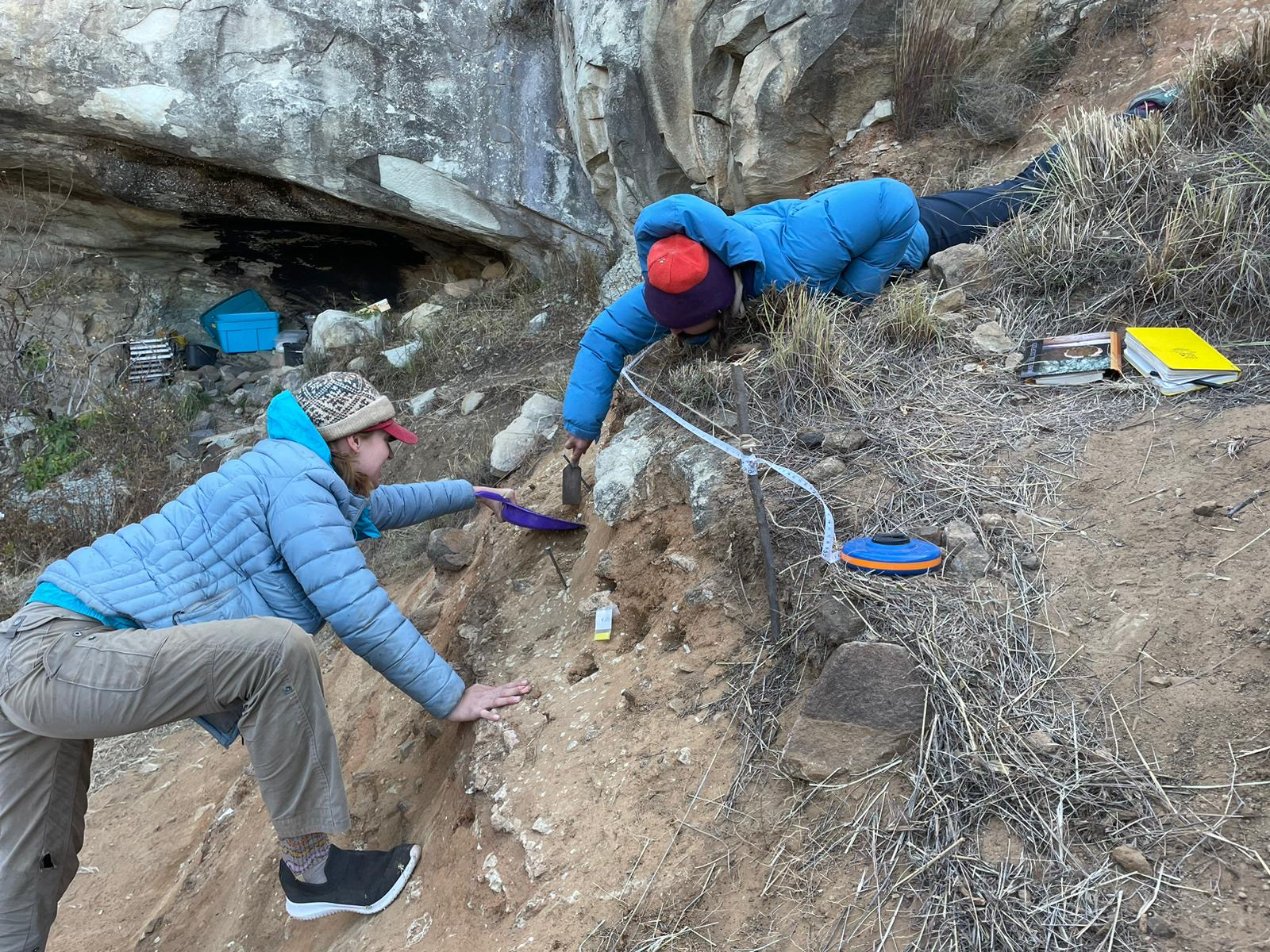
Likonong, pronounced “Dikonong,” was discovered in 1995, but Pazan delved more deeply into the site in 2023. Initially a cave-like space, its roof collapsed at some point after occupation, preserving human activity within the shelter. The shelter itself is about 52 meters end to end; with its roof collapsed, the sandstone cliff that composed its back wall is now visible.
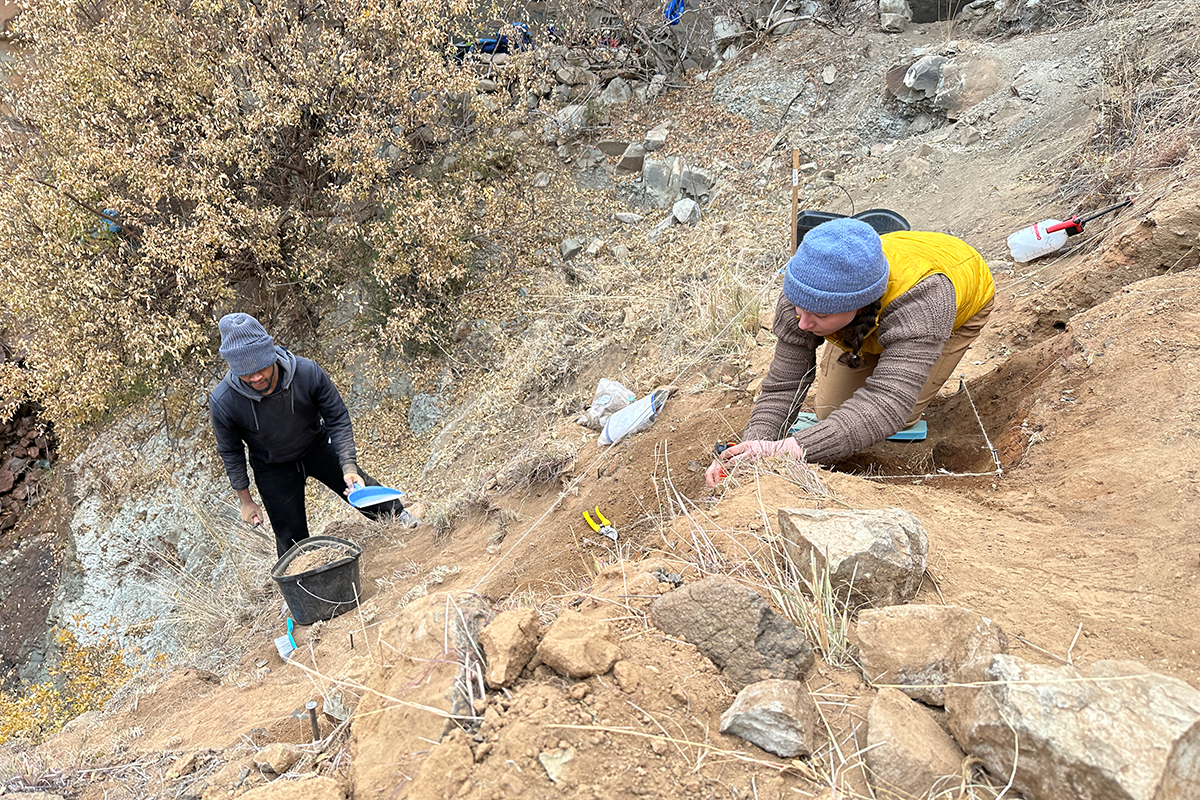
South Africa, and Kyra Pazan of Stanislaus State, excavate
Likonong Rock Shelter in the mountains of Lesotho.
Located about 6,000 feet above sea level, the Likonong rock shelter offers new insight into why early humans were slow to settle mountainous regions. While scientists have often pointed to low oxygen levels — or hypoxia — as a limiting factor, Pazan’s work suggests temperature and seasonal resource availability may have been more significant barriers.
“The fact that Likonong and Lesotho in general didn’t see any sustained occupation until Homo sapiens came around is significant because it suggests that maybe hypoxia was not the issue. Maybe it was temperature and knowing what's available at specific times of the year,” Pazan said. “I think Ethiopia shows that we can be at high altitudes if it's warm enough and if resources are predictable. But it takes a little extra adaptive ability to live in a place that gets so cold and has these really dramatic swings in resource availability, even if there’s plenty of oxygen there.”
Over time, the site shows increasing human activity, with more consistent occupation beginning around 144,000 years ago and continuing through an ice age roughly 90,000 years ago.
Collaboration as a Survival Strategy
The findings reinforce a broader theory about human evolution: that cooperation — not just innovation — was critical to survival.
“There is an evolutionary story here, and that is that Homo sapiens were very, very good at settling new habitats. The question is: When and in which selective contexts in Africa did these things begin?” said Brian Stewart, associate professor of anthropology at the University of Michigan and coauthor of the study. “It’s pretty suggestive of some major changes happening, if not cognitive then in how societies were organized and networked, and also perhaps in how such changes affected technologies: innovation in terms of cold weather clothing or those types of things. Time will tell, but there seems to be a change in sequence at Likonong.”
“We came to be a successful species by creating long-lasting, very deep friendships that spread over land,” Stewart said. “You need to have clothing, ready access and instant ability to make fire, and you probably need cooking techniques that soak every last fat out of the kind of food you’re getting. But these things are not the be-all, end-all. Social cooperativeness, having fallbacks, and having a risk distribution across the landscape if things go wrong are just as critical.”
Learning Through Discovery
Beyond its scientific contributions, the project is also creating meaningful opportunities for Stanislaus State students to participate in hands-on research.
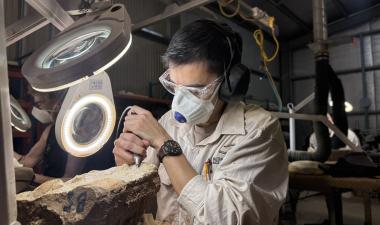
Undergraduate students have been directly involved in both fieldwork and laboratory analysis, gaining experience that connects classroom learning with real-world discovery. Sarah Theofanopoulos (’24), now pursuing a master’s degree at Sacramento State and working as a professional archaeologist with the Calaveras County Resource Conservation District, assisted with excavations in 2024. Current student Natalie Lopez-Cuevas is building on that work through an honors thesis focused on the stone tools recovered at the site.
Their involvement reflects a broader commitment at Stanislaus State to integrating undergraduate students into faculty-led research programs — demonstrating how students can contribute to globally significant scholarship while developing skills that prepare them for advanced study and careers.
Lessons for Today
For Pazan, the implications of the research extend far beyond archaeology.
“From the very beginning, we were only able to solve these environments by working together as a group and collaborating toward better solutions,” Pazan said. “If that’s how we began as a species, then perhaps that is key toward our survival here on Earth today. If we forget that, we’re forgetting a little bit about what it is to be human in the first place.”
The project deepens understanding of human history, and at the same time reflects the University’s role in advancing research that connects global discovery with student success and community impact.
Study: Evolving entanglements with highland southern Africa: Site formation, initial chronology, and occupational pulsing during the Middle Pleistocene at Likonong Shelter, Lesotho (DOI: )
This article was published in collaboration with Morgan Sherburne, University of Michigan