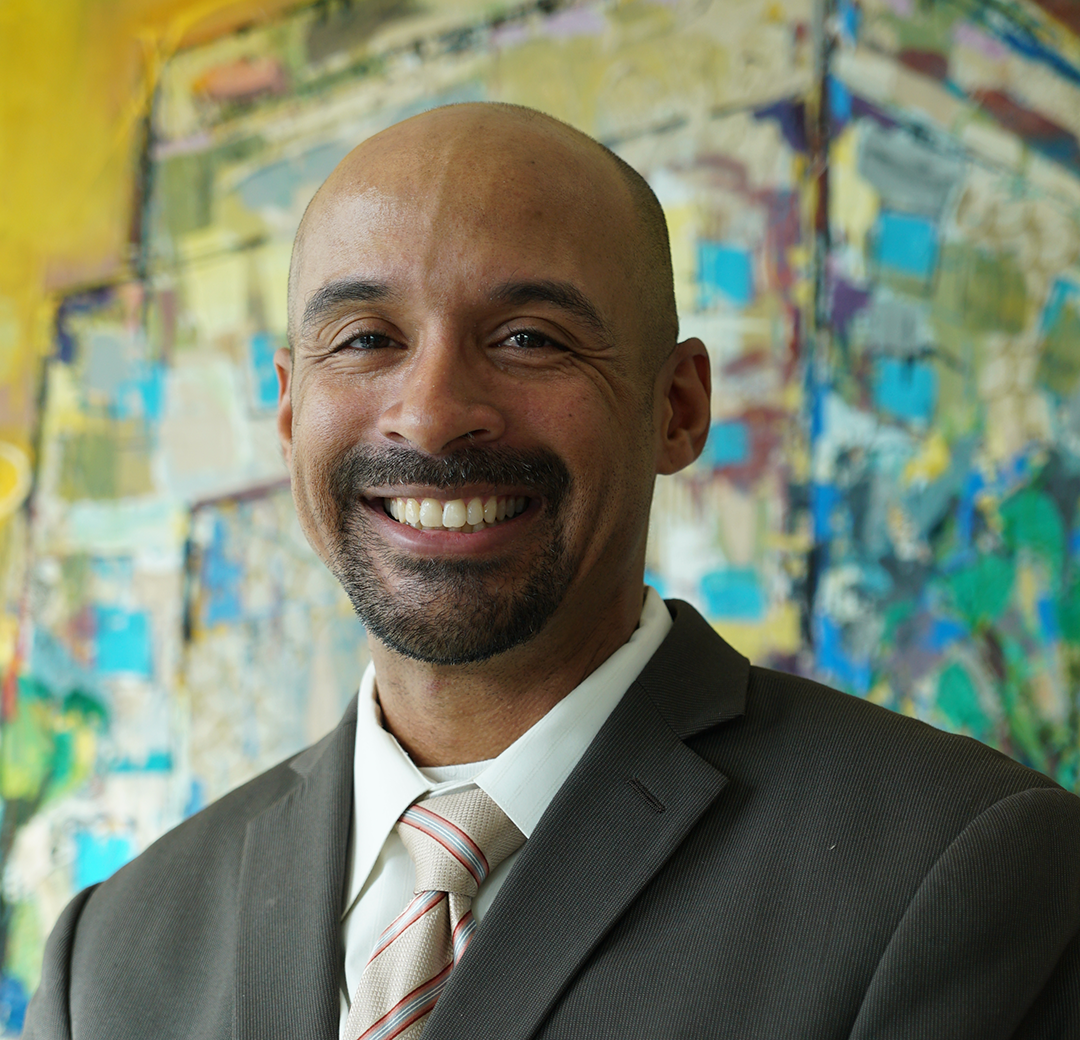
For Stanislaus State alumnus Jacque Wilson, his work as a public defender is rooted in justice, advocacy and community. It’s a path he’s been on since his childhood in Modesto.
Long before he stood in courtrooms advocating for clients or helped advance criminal justice reform efforts in California, Wilson learned what it meant to stand up for others.
“Growing up on the west side of Modesto shaped how I see justice,” Wilson said. “I saw hardworking families doing everything right and still struggling, and I saw how easily voices can go unheard.”
The experiences that shaped Wilson’s understanding of justice would later guide a career dedicated to advocacy, public service and systemic reform.
Now, the California State University Board of Trustees and Stanislaus State will honor Wilson with an honorary Doctor of Humane Letters during the University’s 66th Commencement ceremonies. Wilson will be recognized during the College of the Arts, Humanities and Social Sciences ceremony on Tuesday, May 26.
Wilson, who earned a bachelor’s degree in criminal justice from Stan State in 1997, is a senior attorney with the San Francisco Public Defender’s Office and has dedicated his career to public defense, legal reform and mentoring future advocates.
His work has included efforts to reform California’s felony murder rule and reduce unjust incarceration while helping shape the next generation of public service leaders through education and mentorship.
From Personal Experience to Public Advocacy
Wilson credits his father, community advocate Mack Wilson, with modeling what it meant to fight for others, even when the odds seemed impossible.
“I watched him take on challenges where the odds were against our community and fight anyway — and win,” Wilson said. “That example stayed with me and is what led me to become a public defender.”
After attending Modesto High School and Modesto Junior College, Wilson enrolled at Stanislaus State, where he found mentors who challenged him to think bigger about his future and his potential.
He recalled one in particular: criminal justice professor Cecil Rhodes, who helped transform the way he saw himself.
“He saw potential in me and pushed me to see it too — to believe that I could exceed my own expectations and approach my work with a standard of excellence,” Wilson said. “That stayed with me.”
Wilson said his education helped him better understand the systems he witnessed growing up and how those systems affect people’s lives.
“For me, being a public defender wasn’t just a career choice — it was a responsibility to stand next to people when they need it most and make sure their voice is heard,” Wilson said.
Wilson’s path was not without hardship. During his time at Stan State, his mother died, forcing him to step away from school before he eventually returned to complete his degree. He describes receiving an honorary doctorate from his alma mater as a “full circle” moment.
“This recognition means everything to me, not just personally, but for where I come from,” Wilson said. “I’m grateful for the people who helped me along the way well before I ever stepped into a courtroom. This honor belongs to them as much as it does to me. It’s something I know my mother and community would be proud of.”
For nearly a decade, Wilson fought to defend his younger brother, who faced the death penalty under California’s felony murder rule after prosecutors alleged he helped plan a robbery that ended in two deaths.
During that time, Wilson worked with advocates and lawmakers supporting efforts to reform California’s felony murder rule through Senate Bill 1437, legislation that narrowed the circumstances under which accomplices could be charged with murder.
“Seeing someone you love face the death penalty for a crime they did not commit changes you,” Wilson said. “Fighting that case and later being part of the effort to reform that law showed me what is possible when people refuse to give up.”
After the law took effect in 2019, Wilson’s brother became the first person released under the revised felony murder law — a moment Wilson said represented far more than one individual case. Reporting has shown that the changes to the law have reduced sentences for hundreds of people, removing more than 11,000 years from prison sentences and saving taxpayers hundreds of millions — and potentially over a billion — dollars.
“It represented second chances, accountability and the belief that the system can change,” he said. “Beyond the numbers, the real impact is measured in lives restored, families reunited and people being given a chance to move forward.”
He and his twin brother, attorney Jacq Wilson, later co-founded Advocates for Justice, focusing on education and school discipline issues in the Central Valley. Wilson said the work reflected his belief in helping young people before they ever enter the justice system.
Today, Wilson manages the misdemeanor unit at the San Francisco Public Defender’s Office and works with more than 200 interns each year. He also continues mentoring students and returns to Stan State to encourage young people to pursue meaningful work grounded in service and advocacy.
“When I was a student, my dreams were simple,” Wilson said. “I wanted to do something meaningful. I wanted to help people.
“It’s not just about individual cases,” he said. “It’s about systems. It’s about making sure the next person doesn’t have to go through the same thing. I still see myself as someone who stands next to people when they need it most,” Wilson said. “The responsibility is bigger now, but so is the opportunity to make a difference — not just in individual cases, but in the systems that shape them.”
As he prepares to address graduates from the Class of 2026, Wilson said he hopes students recognize the responsibility and opportunity that come with education.
“Your education is more than a degree. It’s a responsibility,” Wilson said. “And when your name is called, and your story is told, it won’t be about titles or accomplishments. It will be about the lives you touched.”