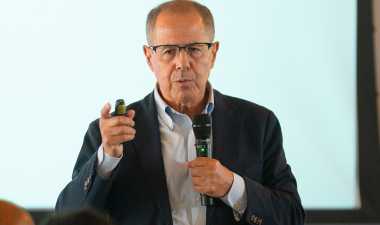
David Good Connects Indigenous Knowledge and Scientific Discovery at Stan State
Presidential Celebration Series Distinguished Speaker Encourages Students to Bring Identity, Ethics and Curiosity into Research
November 16, 2026
Image
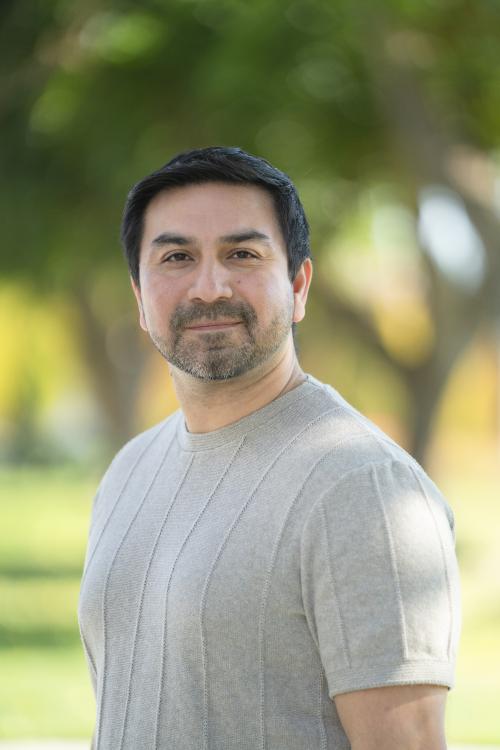
A journey to reconnect with his mother and Indigenous roots led David Ãyõpëwë Good to discover deep-rooted connections between identity, culture and science. Drawing on his experiences navigating Indigenous and Western worlds, as well as the complexities of family and belonging, Good brings a deeply personal perspective to his work as a scientist, author, filmmaker and public speaker, exploring the intersections of cultural preservation, environmental sustainability and scientific discovery — as well as family relationships.
A member of the Yanomami people of the Amazon rainforest, Good brought those perspectives to Stanislaus State as a Presidential Celebration Series Distinguished Speaker, sharing his work and personal journey with students, faculty and staff through a series of campus events that explored family, belonging, resilience and the relationship between Indigenous knowledge and Western science.
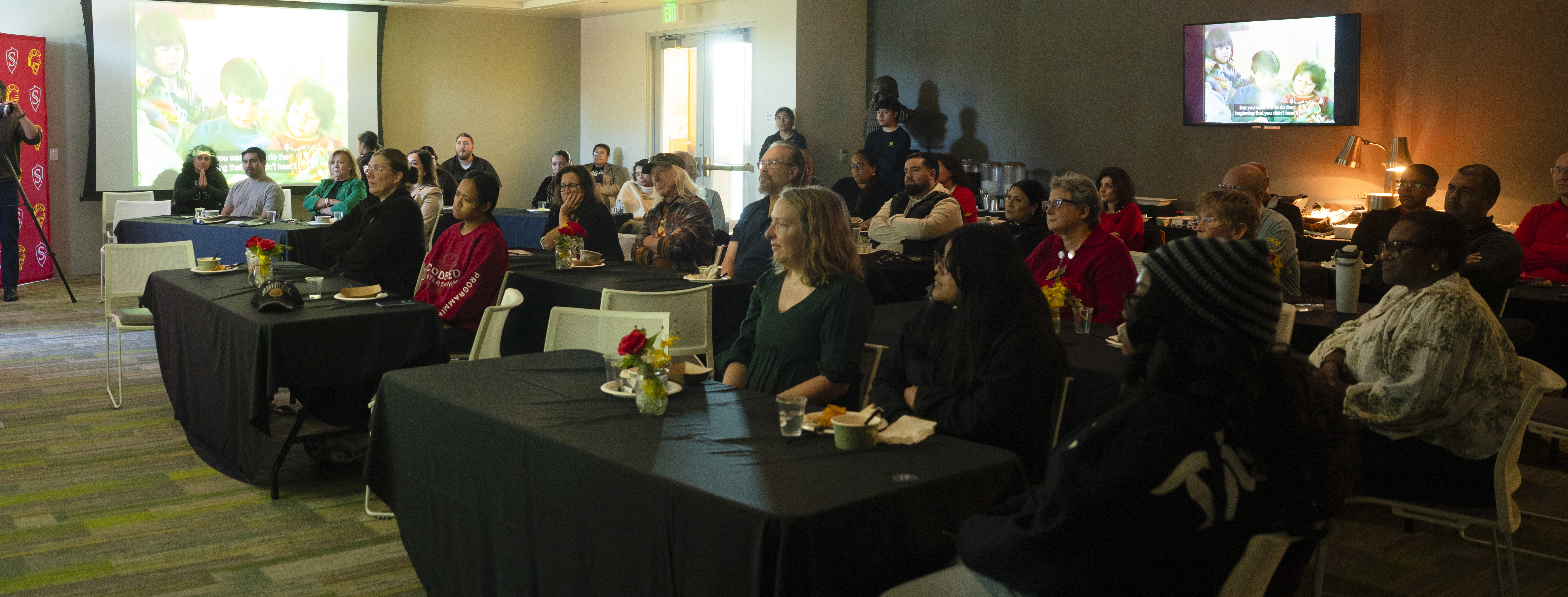
For students, the visit provided opportunities to engage directly with a researcher whose work challenges conventional approaches to scientific discovery. Across numerous conversations — including a screening of his documentary Wayumi, panel discussions and classroom dialogues — Good encouraged students to consider collaboration across cultures and whose knowledge informs scientific research.
“We’re trying to change that where we’re not doing research on Indigenous people, but with Indigenous people,” Good said during the 10th Annual Indigenous Peoples Day Panel Discussion, “Remember Who We Are, Together,” on Thursday, Nov. 5. “Integrating their knowledge and treating them not as subjects of research, but as partners and academics. They are scientists, and their knowledge is just as critically important as the Western knowledge that we generate through our science.”
Where Identity and Scientific Inquiry Meet
Good’s experiences across Indigenous and Western cultures inform both his scientific research and his approach to storytelling.
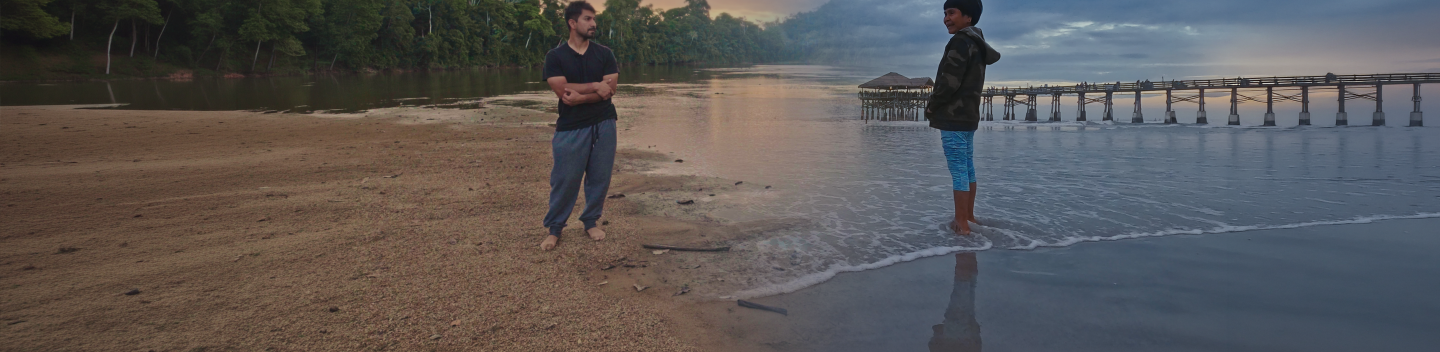
Born to a Yanomami mother and an American anthropologist father, Good spent his early childhood moving between the Amazon rainforest and the United States. When he was 5, his mother, Yarima, returned to her community in a remote area near the border between Venezuela and Brazil, while Good remained in the United States.
As an adult, Good traveled into the Amazon to reunite with his mother and reconnect with his family and heritage. Their story is explored in Wayumi, a documentary about family and life across cultures.
Good completed his doctoral research at the University of Guelph in Canada, studying the gut microbiome of Yanomami communities. The gut microbiome consists of microorganisms that help digest food and interact with the immune system. His research examines how diet, lifestyle and environmental conditions shape the gut microbiome, including differences among Yanomami communities experiencing varying levels of exposure to urbanization and between Yanomami and industrialized populations.
“The microbiome is a deep reflection of your relationships with your surrounding ecosystem”, Good said. “When I’m extracting microbial DNA from the gut microbiome samples provided by Yanomami participants, I’m understanding what it means to be a Yanomami person from a molecular and cellular lens.”
For Good, the responsibility of research extends beyond collecting samples or publishing findings. He said researchers must consider how their questions and interpretations respect Indigenous knowledge and how the resulting discoveries can benefit the communities involved.
Bringing Research to Life for Stan State Students
Image
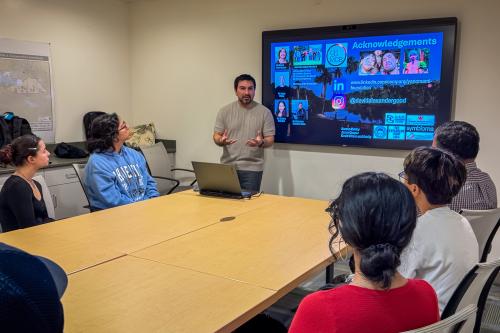
In a conversation with biological sciences students, Good discussed DNA sequencing, bioinformatics and laboratory experiments investigating how changes in diet affect gut bacteria. He also addressed the need for trust, ongoing consent and reciprocity in research involving Indigenous communities.
“My biggest takeaway from David’s visit was the realization that you can tie your culture and roots into science while not being exploitative,” said Alexis Avila, a biology major.
Avila said Good’s visit encouraged her to think beyond familiar research boundaries and remember that an idea can be worth pursuing even when others do not immediately see its potential.
For Arielle Names, a student pursuing a postbaccalaureate biotechnology certificate, the presentation demonstrated what thoughtful graduate research can look like.
“For someone pursuing graduate-level research opportunities, Dr. Good’s lecture exemplified what well-balanced and thoughtful study can look like,” Names said. She also cited bioinformatics as an important transferable skill and said the visit expanded her view of research opportunities in academia.
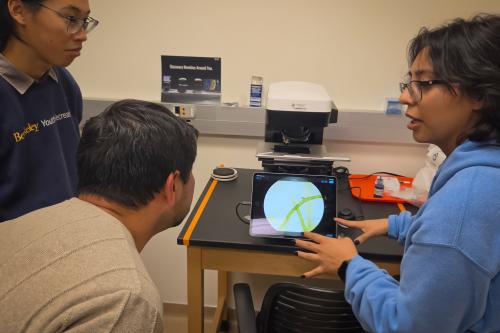
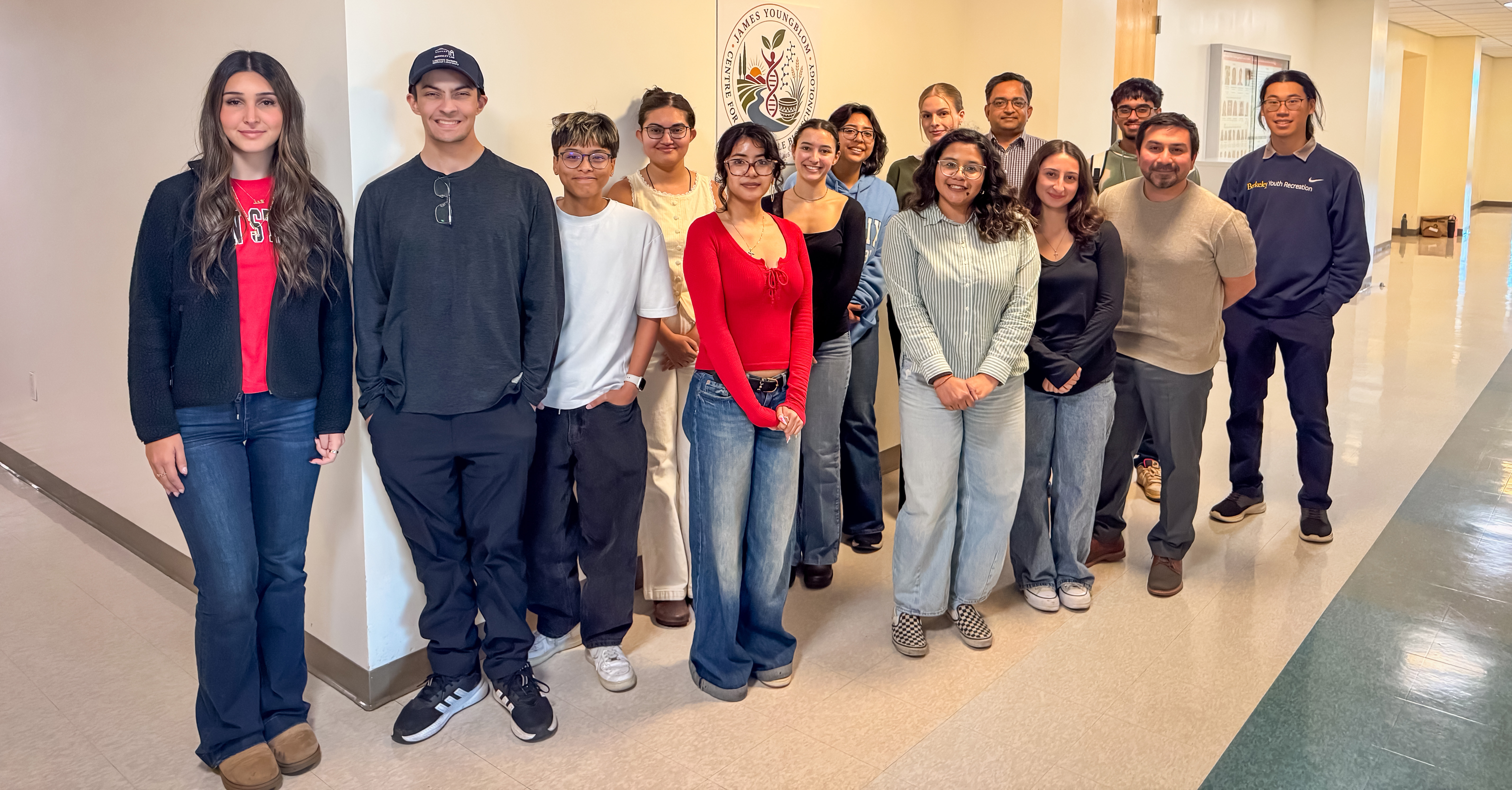
Good also toured the recently dedicated Dr. James Youngblom Center for Sustainable Biotechnology, where students presented projects involving microalgae under simulated microgravity and experiments exploring how light conditions affect compounds produced by algae. The visit provided students with a chance to discuss their work with a scientist experienced in both laboratory and field research.
A Campus Conversation About Identity and Belonging
Beyond the biology classroom, the Wayumiscreening prompted reflections on family, cultural identity and belonging.
“I just want to be able to show to the world that even though our situation is unique, there are so many universal elements that can resonate with families all across the world — love, family reunion and heartbreak,” Good said.
Creative media major Yolanda Noriega said the film challenged expectations that reconnecting with one’s identity necessarily brings a simple happy ending.
“Watching the documentary made me think about how it's very emotional to go through remembering who we are,” she said. “You think it’s maybe a happy ending, you found yourself, and now everything’s great. This is more the reality of it — seeing how painful change and discovering can be. It’s emotional.”
Yazmin Colin, an administrative support coordinator for Community Engagement and Belonging, was especially inspired by the journey both mother and son made to reconnect with one another and their family.
“It was amazing to see how she literally changed her life from the way she had lived and everything she had known,” Colin said. “It really touched my heart, and it was so eye-opening. I’m just filled with gratitude because I’m able to have these experiences, this is something that will really stay with me.”
Anthropology Professor Rich Wallace said Good’s experience of reconnecting with his cultural roots could resonate with students and faculty navigating questions about identity.
“When sharing his story about reconnecting, about his cultural roots, he spoke about how that’s become a big part of his life,” Wallace said. “Earlier in the film, he talked about how he was struggling with that. I think that’s something a lot of people struggle with, so hearing his story is great for our students and faculty, too. And having a visitor like him on campus is just awesome.”
Ana York, a Stan State alumna and assistant professor, emphasized appreciation for how “your culture and background and how that really helps you to navigate your present.”
Creating Opportunities for Discovery
President Britt Rios-Ellis, who has known Good for more than a decade and serves on the Board of Directors for the Yanomami Foundation founded by Good, emphasized the importance of giving Stan State students access to distinguished scholars and perspectives that bridge different ways of knowing.
Image
“One of my priorities is ensuring that our Stan State students have access to the same extraordinary opportunities they might find at an elite or private university. By welcoming renowned scholars like Dr. David Good to our campus, we are bringing the very best to our students and our community,” Rios-Ellis said.
“For me, it’s also about the powerful energy that comes when we gather to learn and reflect together — when we open our minds, hearts and souls to new perspectives that deepen our compassion, strengthen our understanding and inspire us to be compassionate and caring stewards of our planet. This is especially important as we honor Indigenous communities, their knowledge and their ability to thrive. Scholars like David are generating meaningful research that goes beyond scientific discovery. It embraces the full spectrum of our humanity and our collective responsibility to one another and the world we share.”
As Good concluded his visit to the Youngblom Center, he reminded students a reminder that scientific discovery rarely follows a straight path.
“Research and science are marathons,” he said. “I had so many experiments that failed, but it’s still data, and you can still learn from it.”
For students pursuing their own research at Stan State, the message was a reminder that scientific discovery and personal growth are connected endeavors. Both are shaped by curiosity, determination and the journey of understanding identity and your place in the world.
David Good with Stan State students at the Youngblom Center for Sustainable Biotechnology.