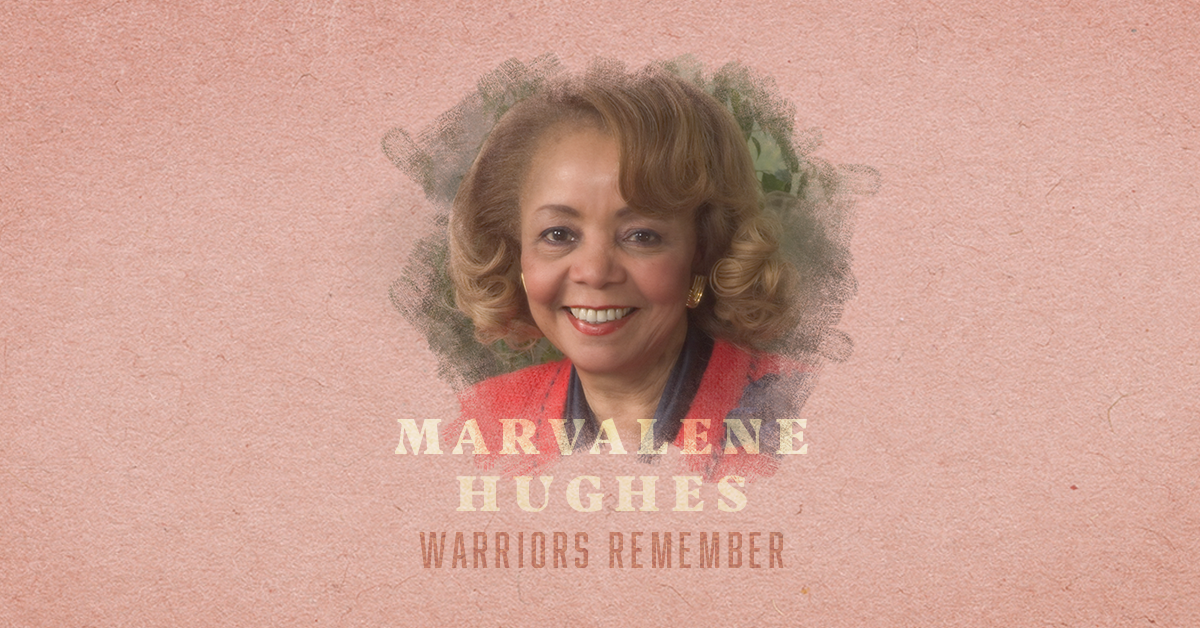
President Emerita Marvalene Hughes shaped California State University, Stanislaus in ways that continue to echo across campus and beyond — in the buildings and beauty of our physical campus, in the culture of care and engagement that define our community and in the University’s enduring sense of purpose.
As the eighth and longest-serving president, Hughes led Stanislaus State from 1994 to 2005, becoming its first woman and first African American leader. She passed away Jan. 3, 2026, at the age of 88. Her presidency marked a pivotal chapter in the institution’s history, one defined by growth, expanded access across the Central Valley and a vision and leadership style rooted in engagement, dignity and shared purpose.
Hughes’ presidency represented a time of transformation for Stanislaus State. As the University stepped more fully into its role as a regional institution, she led it into a new era of confidence, visibility and connection to place. Many of the physical features and community partnerships that define Stanislaus State today emerged during her tenure.
Taken together, the changes that unfolded during Hughes’ presidency established the foundation of the modern Stanislaus State. From its expanded geographic reach to the beauty and intention of its campus environment, growing community presence and leadership culture, the University that exists today bears the handprint of her vision — one shaped by grace, courage and a deep belief in what public higher education could and should be.
Under Hughes’ leadership, Stanislaus State emerged as more than a place of instruction. It became a regional anchor institution — one that understood its responsibility not only to educate, but also to welcome, connect and uplift the communities it serves. She envisioned a University that belonged to its students and its region alike, a place where dignity, opportunity and belonging were not ideals, but daily practice.
Honoring the Legacy of Dr. Marvalene Hughes
The campus and community will gather on Wednesday, March 25, to honor the life, leadership and lasting impact of Dr. Marvalene Hughes.
The program will feature reflections from alumni, staff and community members, along with a musical tribute from current students. The evening will conclude with the lighting of lanterns at the Dr. Marvalene Hughes Reflecting Pond — a symbolic tribute to the light she shared and the lives she touched.
Wednesday, March 25
University Quad, Flagpole Area
Turlock, CA
6-7:30 p.m.
Read Warrior Reflections on President Emerita Hughes
A Transformational Presidency
During her 11-year tenure, Hughes guided the University through a period of significant institutional growth and maturation. Enrollment expanded, the Stockton Campus moved to its permanent home at University Park and the Turlock campus added $135 million in new facilities, including the four scenic lakes that form a 12-million-gallon landscape water management system and remain among the University’s most recognizable features today.
Those visible changes reflected more than growth in scale. They marked the moment Stanislaus State fully stepped into its role as a comprehensive, regionally anchored University with an intentional sense of identity and purpose.
The humanity of Hughes’ leadership style was evident even in her earliest days on campus. Professor of Marketing Al Petrosky recalled arriving late to a new faculty orientation during Hughes’ first week as president and striking up a conversation with a woman walking in the same direction. When he asked what she taught, she smiled and replied, “Oh, I’m not teaching anymore. I’m going to be president.” Seeing his startled reaction, Hughes laughed — a moment Petrosky has said set the tone for a presidency defined by warmth, accessibility and ease with others.
That kind of openness became a hallmark of Hughes’ presidency — a quality campus leaders say is still remembered and felt today.
“Throughout my time as president, I have heard repeated praise for President Emerita Hughes’ accessibility and her deep commitment to students,” said Stan State President Britt Rios-Ellis. “That legacy continues to shape how we serve our campus community today.”
Through expanded partnerships with community colleges, schools and regional leaders, Hughes broadened access to higher education across the Central Valley, guided by a deeply held belief that opportunity should not be limited by one’s geography, background or circumstance. She understood Stanislaus State’s responsibility to serve students whose lives, families and communities would be shaped by that opportunity. Her commitment and leadership helped shape the University’s modern identity — one grounded in access, excellence and clear public purpose.
Leadership Grounded in Connection
Hughes often embodied and taught leadership not as authority, but as an act of connection.
“Leadership isn’t about dictating direction,” Hughes said during a 2021 interview. “It’s about engaging people, listening to them and understanding how to bring out what they have to offer.”
She believed that style mattered as much as substance — that leaders needed to read the room, listen closely and remain responsive to the people they served. Power, in her view, was most effective when it was shared rather than imposed.
Long before Hughes entered higher education, her leadership philosophy took shape on her family’s farm in Greene County, Alabama. Born to Judge Hughes Sr. and Alverta Hall Hughes as one of nine children, she learned early the importance of responsibility, perseverance and listening, values that would later define her career and how others experienced her leadership.
“Dr. Hughes believed leadership was an act of engagement, not authority,” said David Dauwalder, retired provost and vice president for academic affairs. “She taught by example, opening her home to student leaders and modeling inclusive, values-driven leadership in practice.”
A Campus Designed to Welcome
The physical transformation of the campus under Hughes’ leadership mirrored her belief that universities should be places of belonging — not only for students, but for the broader community.
“During the years I taught at Stanislaus State, the campus grounds went through a sweeping transformation,” said Mimi Bradley, alumna and retired faculty member. “Suddenly, there were places to sit outdoors, gather together and enjoy what became a showplace campus. It served as a social center that welcomed community, University and town alike.”
That same spirit guided Hughes’ work with alumni, donors and partners.
“There was something special in the air when you met Dr. Hughes,” said Norm Porges, former president of the Stanislaus State Foundation Board. “She exuded intelligence, kindness and strength — but above all, grace. Just look around campus and you’ll see her spirit in brick, mortar and beautiful water features.”
That spirit was formally recognized in 2017, when the University dedicated and renamed the Dr. Marvalene Hughes University Reflecting Pond in her honor during a campus ceremony. The dedication acknowledged Hughes’ enduring influence on the physical and cultural landscape of Stanislaus State and her belief in reflection, place and community.
“She often reminded us that leadership is never achieved alone,” said President Emerita Ellen Junn, “yet it is impossible to stand on this campus today without recognizing how profoundly we stand upon her shoulders.”
Hughes also believed in cultivating a shared sense of identity, commissioning the University’s alma mater as part of her broader effort to strengthen campus culture and belonging.
Investing in People and Potential
Despite the scope of her responsibilities, Hughes remained deeply invested in the people around her — particularly students.
For many, that investment shaped not only their experience at Stanislaus State, but the paths they pursued long after graduation. Paul Gardley Jr., now an academic advisor and Stanislaus State alumnus, credits Hughes’ leadership, mentorship and encouragement as a defining influence during his undergraduate years.
“Dr. Hughes is a significant reason why I pursued my doctorate degree,” Gardley said.
Hughes’ accessibility was often cited as a defining feature of her presidency. Alumna Adrian Harrell recalled how intentionally Hughes made herself available to students, often meeting informally at Mom’s, now known as the Warrior Grill.
“She was always willing to meet with students like me, taking the time to listen, encourage and offer thoughtful guidance,” Harrell said. “In those moments, I felt seen, valued and empowered.”
Hughes also made a point of recognizing academic excellence and service, attending ceremonies, welcoming honor society inductees and celebrating achievements across campus.
“She had a regal way of affirming people,” said Janice Herring, lecturer and officer with The Honor Society of Phi Kappa Phi. “Those moments stayed with us.”
For staff members, Hughes’ daily presence left a lasting impression.
“She carried herself with professionalism and grace and treated everyone with respect,” said Bev Barney, retired staff member who worked in the Office of the President. “Every morning, she walked in with a smile and never hesitated to express appreciation.”
Outside the University, Hughes’ life was anchored by her marriage to David J. Brinks, with whom she shared a devoted partnership until his passing in 2014. A familiar and beloved presence on campus, Brinks often accompanied Hughes at University and community events; together, they traveled widely, reflecting a shared curiosity about people, culture and the world beyond campus.
A Legacy That Endures
Hughes also challenged the University to see itself differently.
“She believed we deserved national recognition,” said Linda Bunney-Sarhad, director of the Office of Global Affairs. “She pushed us beyond thinking of ourselves as the ‘best-kept secret’ and encouraged us to embrace a broader vision of who we could be.”
After leaving Stanislaus State, Hughes once again answered the call to lead, becoming president of Dillard University in New Orleans in July 2005. Just weeks into her tenure, Hurricane Katrina devastated the campus and the city. Hughes led Dillard through the most difficult period in its history, evacuating students and staff, securing temporary housing and instructional space, raising hundreds of millions of dollars and rebuilding a campus submerged under floodwaters. Her insistence that Dillard remain in New Orleans preserved the University’s mission and stands as an extraordinary example of crisis leadership in higher education.
Even after leaving office at Stanislaus State, Hughes remained deeply committed to cultivating leadership. She established the Dr. Marvalene Hughes Leadership Conference, taking place this year on March 28, to advance inclusive, values-driven leadership — reflecting her belief that leadership development was essential to the University’s future.
Throughout her career, Hughes was dedicated to preparing the next generation of leaders. As a founding member and chair of the Millennium Leadership Initiative, she mentored senior administrators aspiring to become college and university presidents, including four American Council on Education Fellows. She believed others should not have to navigate the paths she once traveled alone — a principle she embodied by investing her time and guidance in those who would follow.
“It is a profound honor to lead in her footsteps,” Rios-Ellis said. “Her legacy reminds us all that we are part of something greater than ourselves — and that we are here to carry the mission forward with the same courage, vision and corazón she embodied.
Quiet
By Nikki Giovanni
Quietly
you open a book
to let the sunshine in
Quiet
you hum a song
that you create
to let yourself relax
Quietly
you shed a tear
when you let a loved one
go to Heaven
Quiet
like bread rising
or your grandmother
sleeping
Quietly
when you sew
a quilt to keep warm
Quiet
as the salt melts
in the bathwater
Quietly
Quietly
Quietly
when you know
whatever else it is
you were loved

Written in honor of Marvalene Hughes on the occasion of the dedication of the Dr. Marvalene Hughes University Reflecting Pond