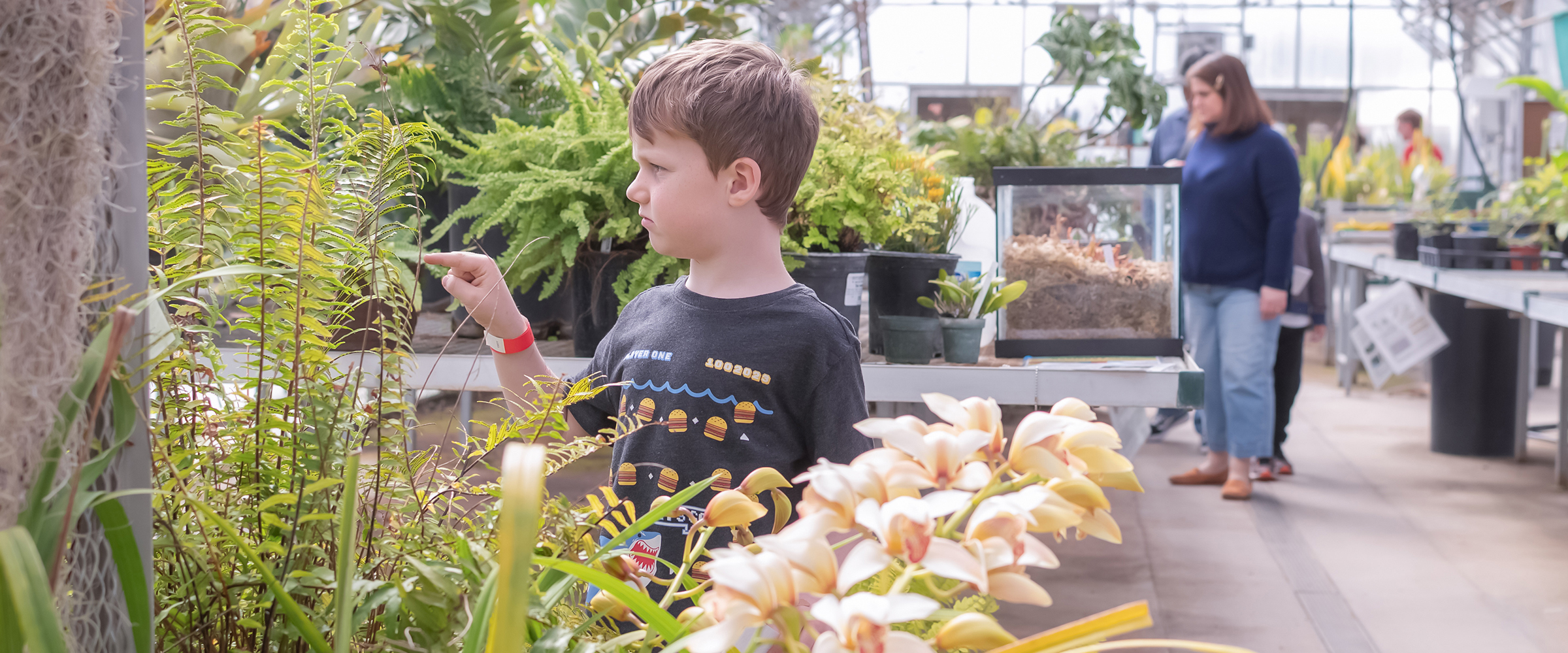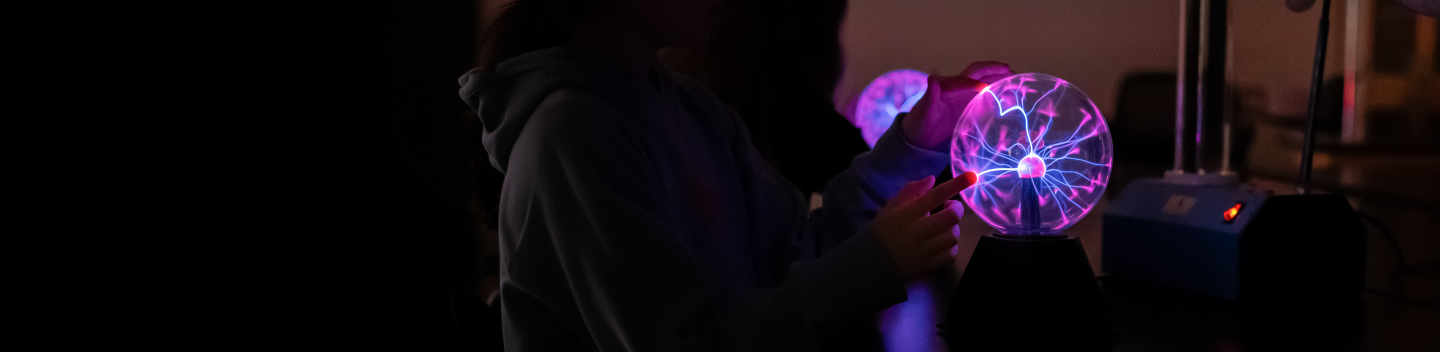
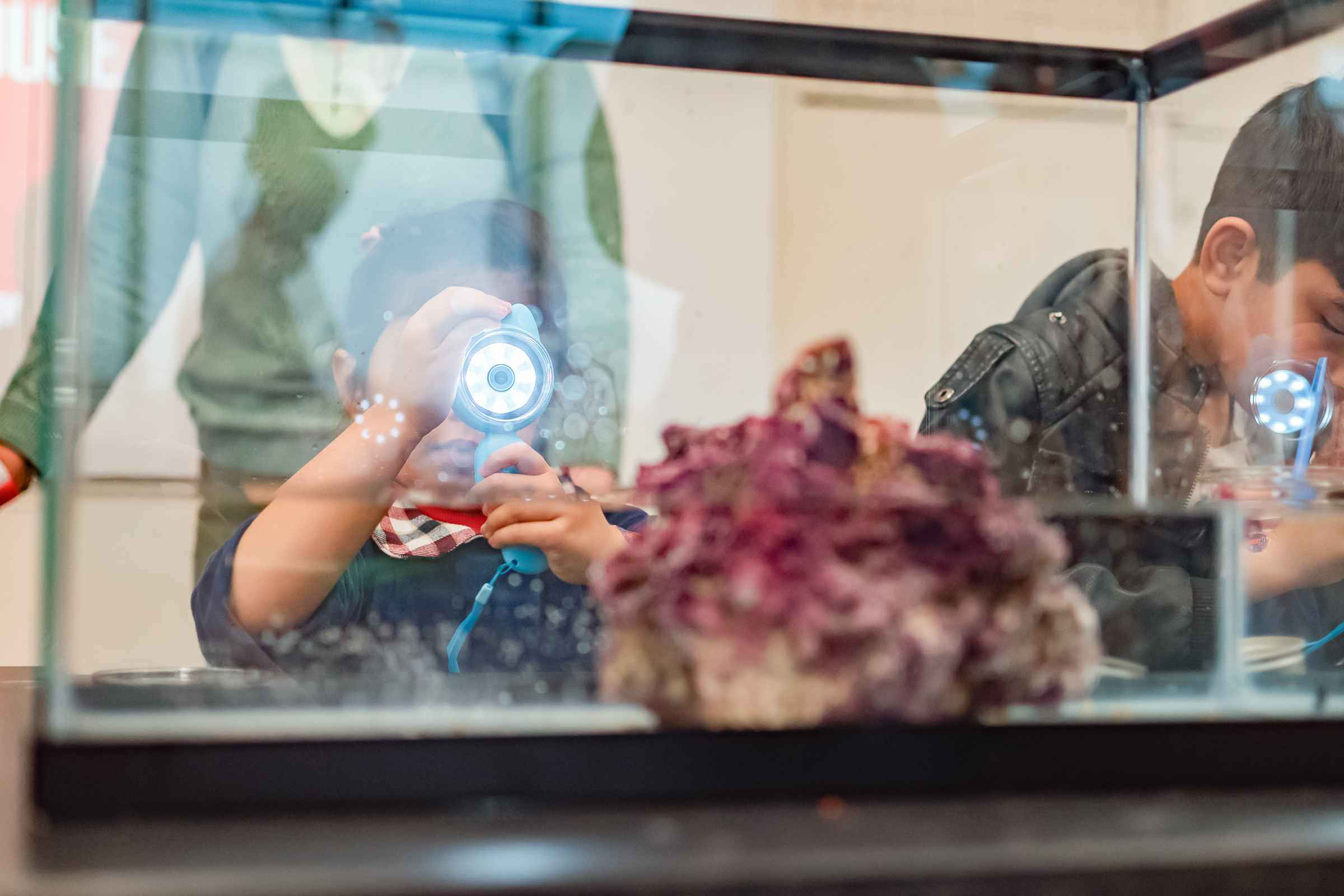
On Saturday, March 14, Stanislaus State will transform its Turlock campus into a hub of curiosity, creativity and hands-on discovery, welcoming families from across the region for Science Day 2026.
From 10 a.m. to 2 p.m., Naraghi Hall of Science, the Science 1 Building, the Event Center, the Greenhouse, the Child Development Center, BioAg and the Trans-California Pathway will come alive with interactive demonstrations and activities designed to spark wonder in learners of all ages. The event is free and open to the public, with minors accompanied by an adult.
Hosted by the Science in Our Community program under the leadership of Assistant Professor of Evolutionary Biology Jeanette Pirlo, Science Day goes beyond demonstrations and experiments. By connecting community members with student researchers, faculty mentors and industry-informed activities, the event turns curiosity into opportunity and shows how scientific learning can translate into meaningful careers in the region.
Science for Everyone
At Science Day, visitors can extract DNA from strawberries with BEAM Circular, observe the sun through a specialized solar telescope, create slime at the Child Development Center and explore eye-catching chemistry demonstrations. Students and faculty will guide guests through activities that blend play with real-world scientific principles.
The event will also feature NOYCE and CCMP Women in Math, highlighting inspiring women leaders in mathematics and offering insight into career pathways in the field. The California Academy of Sciences and the Raymond M. Alf Museum will join this year’s event, expanding the range of scientific exploration available to families.
For many children and teens, it may be their first time stepping into a university science building. For their parents, it is an opportunity to see higher education not as distant or intimidating, but as welcoming and within reach. And for adult learners — whether returning to school, considering a career change or simply seeking to get involved — Science Day offers a reminder that discovery does not have an age limit and that pathways into science and higher education remain open at every stage of life.
“Science Day is an important part of our commitment to an inclusive learning environment and community engagement,” Pirlo said. “Through the wide range of hands-on activities, we foster science literacy across Science, Technology, Engineering, Arts and Mathematics (STEAM), inviting members of the tri-county region to engage with science that connects to their everyday lives.”
Advancing Equity and Access in STEM
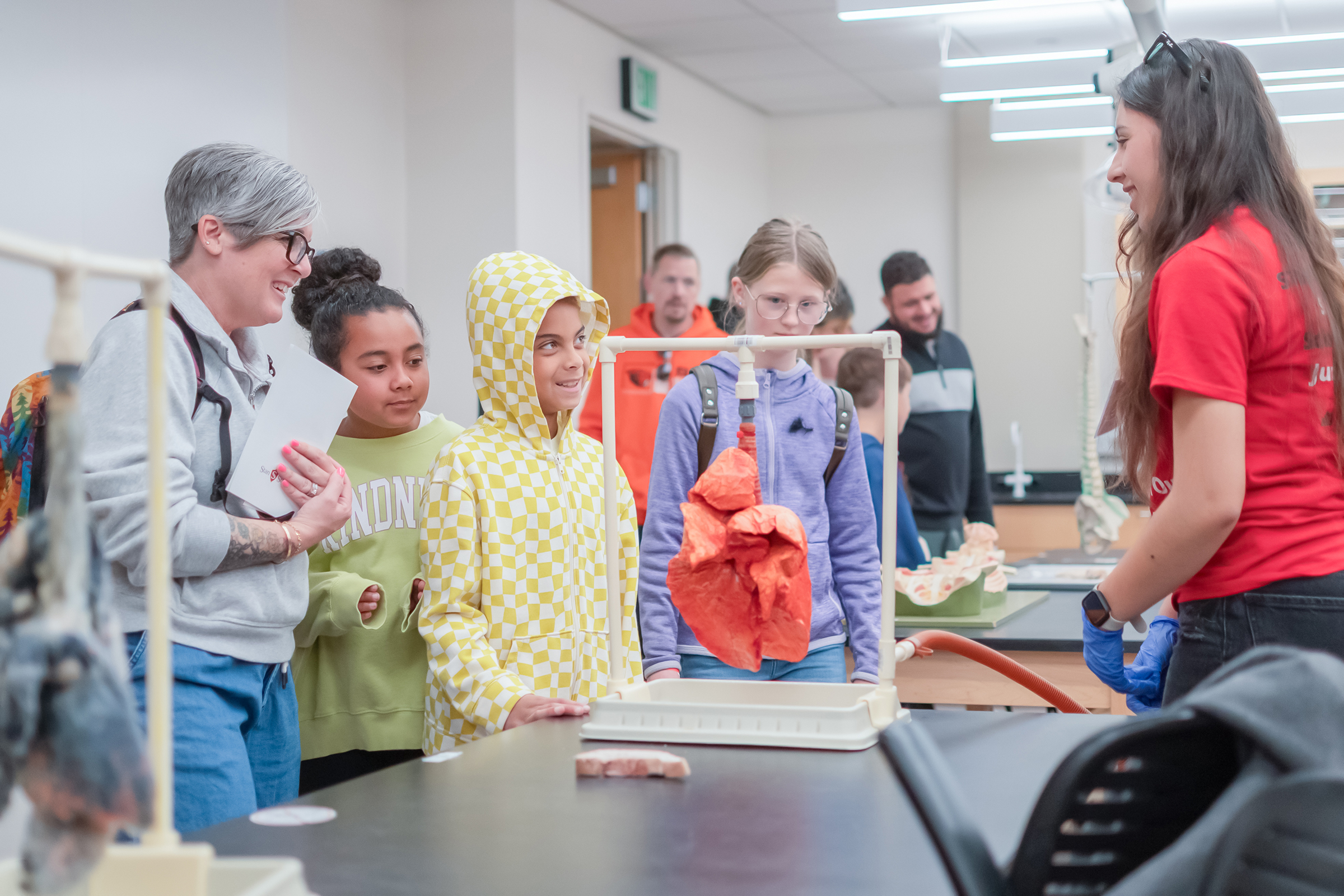
A defining goal of Science Day is to remove barriers to participation in STEM fields. Activities are intentionally designed to be accessible and engaging for participants of all ages, educational backgrounds and language abilities.
“Program leaders are encouraged to develop hands-on experiences that lower barriers to participation and foster meaningful learning for diverse audiences,” Pirlo said.
Science Day also amplifies the voices and visibility of scientists who have been historically excluded from STEM fields, including women and Latine scientists. By showcasing research and leadership from diverse faculty and students, the event allows attendees to see themselves reflected in scientific careers.
That representation matters.
“Being a role model in the community is something I take great pride in,” said Karisma Naidu, a biological sciences major STEM ambassador volunteering at the event. “I hope to inspire children—especially young girls—to see themselves in STEM and to continue building future generations of women in science who will lead and innovate.”
Allyson Medina, also a biological sciences major and STEM ambassador, said volunteering last year strengthened both her knowledge and her communication skills.
“The best way to learn something is by trying to explain it to someone else,” Medina said. “STEM careers can be intimidating, but when they’re introduced in a fun and approachable way, it may encourage others to pursue them.”
Preparing Students for Careers — and Community Leadership
While families explore hands-on activities, Stan State students gain something equally valuable: applied learning experience.
Organizing experiments, explaining complex ideas in accessible language and engaging visitors of different ages mirror the communication and problem-solving skills demanded in today’s workforce. Events like Science Day allow students to practice those skills in real time.
“This experience has positively shaped both my confidence and my career goals,” Naidu said. “I never expected to enjoy outreach as much as I do, but presenting to groups of all ages has strengthened my communication skills and shown me how important it is to make complex ideas understandable. While my career goals include research, being able to clearly explain a thesis or research proposal is essential. Working with younger audiences has been a great way to practice communicating scientific ideas in meaningful and engaging ways.”
Moments like these ripple outward. As Stan State students guide a child through a DNA extraction or answer a parent’s question about college majors, they are doing more than putting in volunteer hours — they are translating classroom knowledge into real-world impact. In helping the community see themselves in science, they begin to see themselves as professionals ready to lead in it.
A Lasting Regional Impact
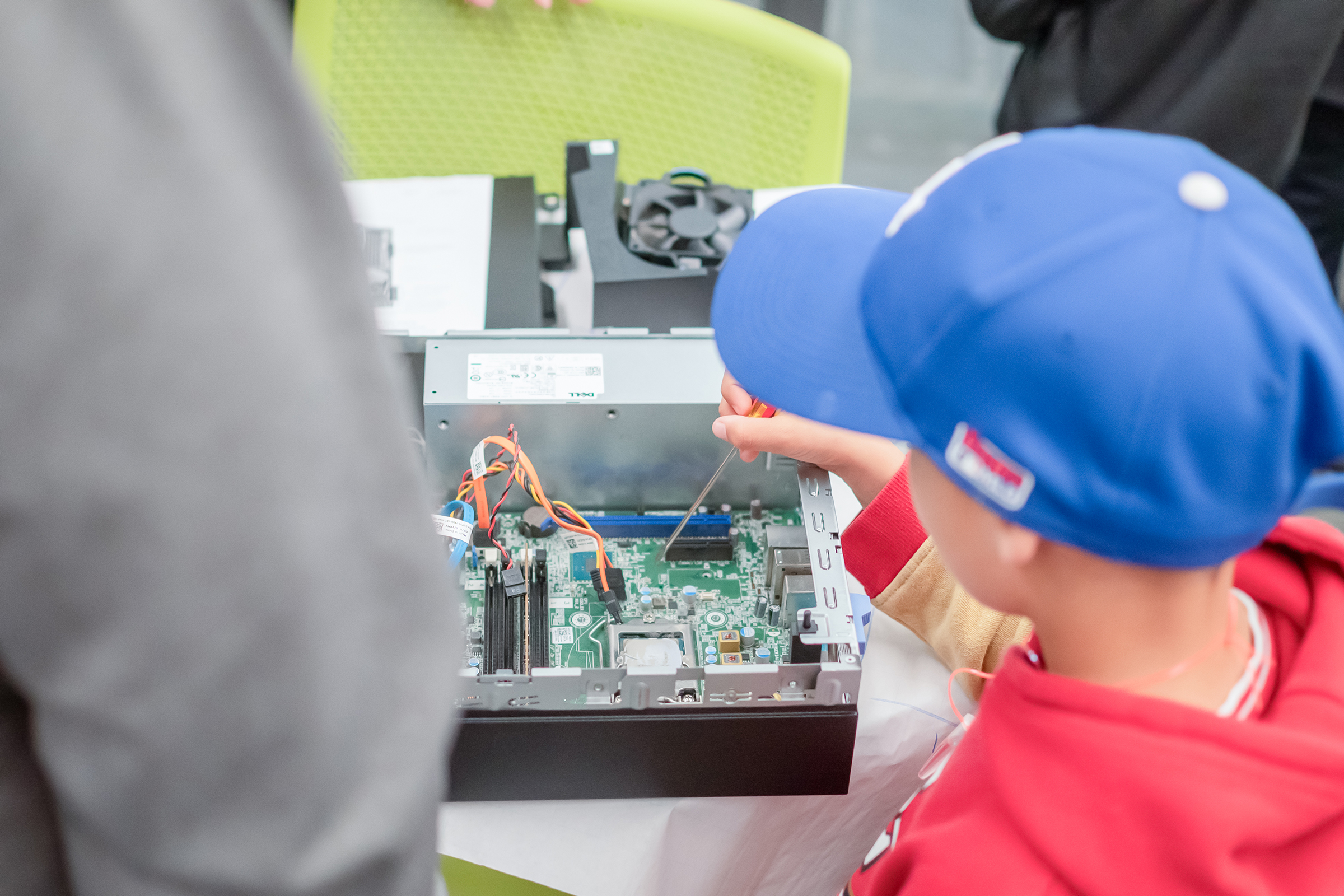
Since 2013, Science in Our Community has connected the University with thousands of residents across the region. Science Day builds on that sustained outreach by creating an annual gathering point where curiosity and community meet.
Delicia Garcia, who attended a previous Science Day with students ages 7, 13 and 17, described the impact.
“It helped us understand better about the ‘why’ and ‘how,’” Garcia said. “It gave us an opportunity to play and let loose while learning and exploring new activities and ideas.”
Her group was especially inspired by building marble tracks and interacting with a human anatomy exhibit — moments that transformed abstract concepts into tangible discovery.
Pirlo hopes those moments build into something larger.
“Stan State seeks to create lasting improvements in science literacy, community engagement and STEAM participation across the region,” she said. “Science Day contributes to this long-term impact by engaging thousands of community members annually and building enduring relationships and pathways into STEAM.”
Join the Exploration
Whether you are a parent hoping to spark a child’s interest, a high school student considering a STEM major or simply curious about how science shapes everyday life, Science Day offers a welcoming entry point.
On March 14, science will not be confined to textbooks or lecture halls. It will be in slime-streaked hands, in specialized telescopes pointed toward the sun and in the wide-eyed curiosity of future scientists taking their first steps onto a University campus.