A Passion for Science, A Commitment to Community

First-Generation Scholar and Stan State Professor Jeanette Pirlo Expands Access to STEM Through Mentorship, Research and Community Engagement

Share This:
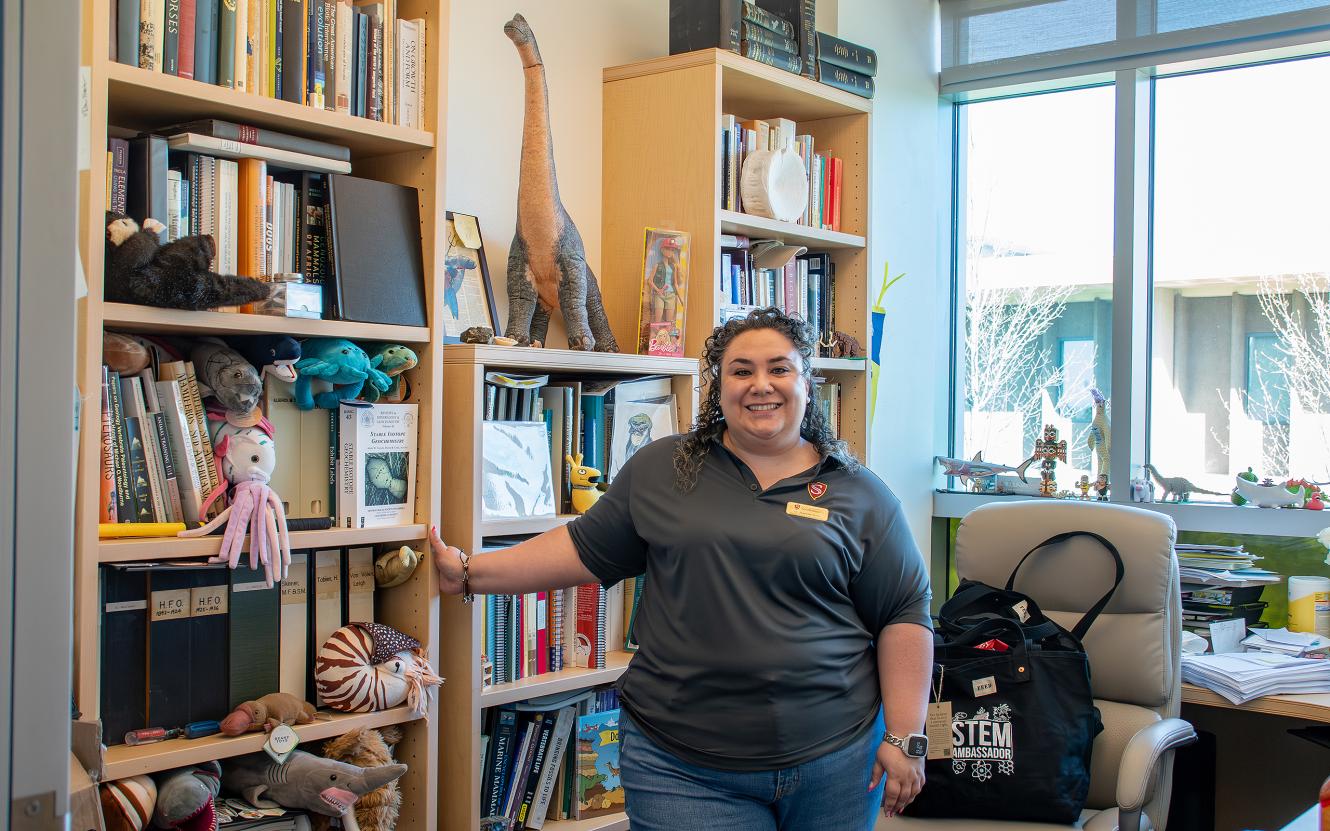
Stan State Professor Jeanette Pirlo

Jeanette Pirlo finds no greater joy than when she is sharing her love of science with others.

As an assistant professor of evolutionary biology at Stanislaus State since 2022, Pirlo has mentored over a dozen undergraduate and graduate students, secured more than $1 million in funding from national organizations, chaired committees, advised on-campus student organizations and has accompanied a number of students to destinations across the globe to conduct research and present at conferences.

The time at Stan State has been rewarding for someone who says she has been “obsessed” with science since elementary school. Pirlo’s most recent undertaking as director of Stan State’s Science in Our Community (SIOC) outreach program has kept her calendar full. And it’s her upbringing in the Central Valley and journey as an undergraduate that gives her a particular sense of pride.

Born in Tracy and growing up in Manteca as a daughter of immigrants — her mother was born and raised in Mexico and her father in Italy — Pirlo’s parents had less than an elementary-grade education level, and college was seldom discussed in the household. With little guidance navigating the world of higher education, it took 11 years for Pirlo to earn her undergraduate degree. Just before earning her Ph.D. in 2022, Pirlo was hired at Stan State and became the University’s first Latina faculty member of the Biology Department.

“There were a lot of things I didn’t know were possible growing up,” said Pirlo. “I had thought about attending college, but it was never something my parents truly thought I’d go forward with. When I finally made the decision to pursue higher education, I struggled because there weren’t many resources for first-generation students at the time. But I loved science so much, I just kept working at it. I eventually achieved my goals and ended up right back here in the Central Valley, and it couldn’t be working out better.”

After her decade-long, up-and-down journey as a student, Pirlo has made it a mission to create a better educational experience, and she’s not limiting the learning to college students.

“Many people don’t realize how science is quite literally all around us and plays a part in all aspects of our lives,” Pirlo said. “It’s fun to learn about, and I want every person to learn and experience just how amazing science can be, regardless of who you are, where you come from, your age, anything.”
The Right Place at the Right Time

Pirlo was introduced to science at a young age, intrigued by the Discovery Channel’s annual presentation of “Shark Week,” a week-long television programming block featuring shark-related documentaries.

“I was five or six years old,” Pirlo said. “I vividly remember telling my dad while watching Shark Week that I wanted to touch a shark, and that my future job would be working with sharks.”

Her mother recalls another story, when Pirlo was on a third-grade field trip to the Monterey Bay Aquarium and proclaimed that she was “going to move to Monterey and work with fish.”

“There was a time when I consumed anything and everything that had to do with oceans and marine science,” Pirlo said.

Upon graduating from Manteca’s Sierra High School in 2005, Pirlo enrolled and spent two years at Cal State Monterey Bay. Without guidance from family or peers, and a hesitation to reach out for assistance, Pirlo struggled. After two years, she decided to reset at Monterey Peninsula College. Following seven years there, Pirlo transferred to UC Santa Cruz in 2014 and graduated with her Bachelor of Science in Marine Biology and Biological Oceanography in 2016. Later that year, Pirlo landed at the University of Florida in Gainesville to pursue a Ph.D. in vertebrate paleontology with a focus on land mammals. In the Sunshine State, Pirlo and other graduate students were encouraged to be involved in community outreach and education.

“I was elated because as much as I love doing research, I like sharing science with people,” Pirlo said.

Prior to completing her doctorate in 2022, Pirlo began the search for a job. She was back in town for Thanksgiving when she saw an opening at Stan State.

“I couldn’t believe it,” Pirlo said. “For so long, I wanted to explore places outside of the Central Valley, and I wasn’t sure about returning. They were looking for someone who studies evolutionary biology, focusing on mammals and ancient fossils. It felt like it was literally written for me.”

Upon meeting with administration, faculty and staff, and learning about Science in Our Community, Pirlo “fell in love with the University.”

“They are the greatest people I’ve ever met,” she said. “We share the same vision and values for our students and are so committed to helping them learn and be successful in all fields of science. It just seemed like things were aligning with the right people at the right time.

“I always joke that it took me forever to finish school, but that’s just the time I needed to take considering my situation. Now, there are so many resources at different places for first-generation students, and my goal is to provide as many as I can to students here at Stan State who may be in the same shoes.”

I want to bring science to the people. When we say, ‘Science in Our Community,’ I really want it to mean exactly that.
— Professor Jeanette Pirlo

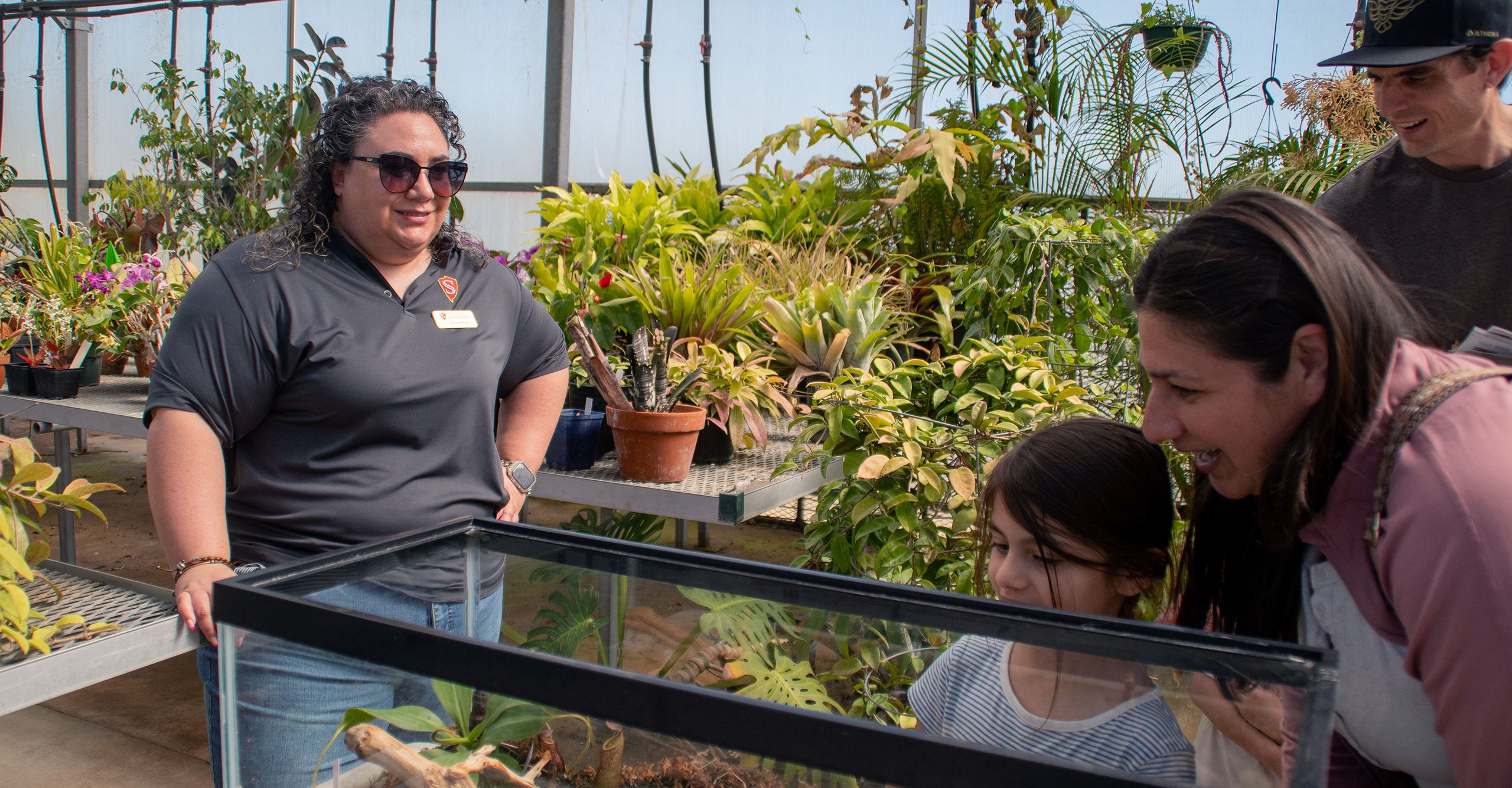
Stan State Professor Jeanette Pirlo at Science Day
Science is For Everybody

Science in Our Community is dedicated to science education and public engagement, providing STEM activities to educationally and economically disadvantaged K-12 students in the University's service area. It is supported by the volunteer efforts of Stan State students, faculty and staff.

The program was created in 2011 under the dedicated leadership of Professor Emeritus of Biological Sciences Mark Grobner. The first event put on by the program was Science Day, held annually at the Turlock campus for community members of all ages. Since its inception, SIOC engages annually with more than 50 faculty members, 30 staff members and more than 300 student volunteers to help spread the love of science.

Although Pirlo was involved in SIOC since her arrival at the Stan State campus, Science Day 2026 marked the first time she served as the event director, taking over for the retired Grobner. She was a natural fit to work alongside program coordinator Robert Bell in making the event a success.

In her first year spearheading Science Day, 4,254 community members descended on the Stan State campus to participate in 59 different activities. Pirlo and Bell received the support of 350 volunteers for what was the second-largest event SIOC has hosted since its founding.

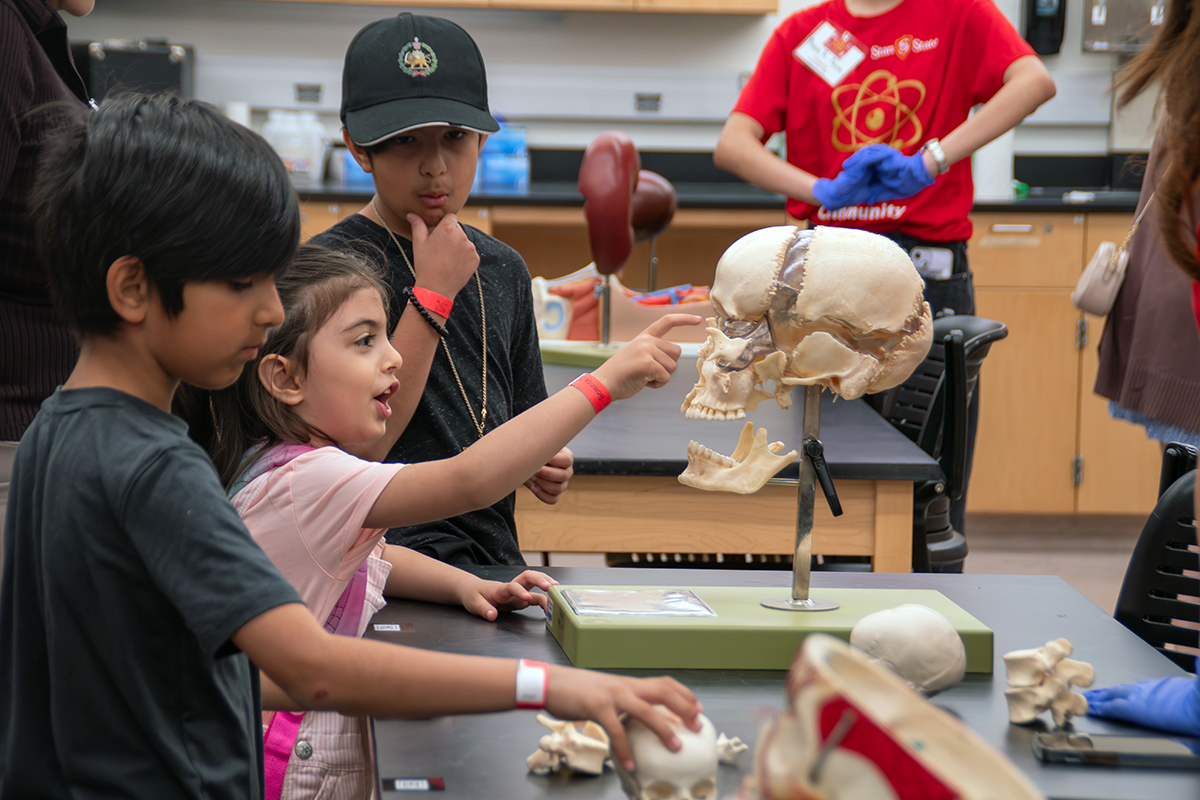
Activities this year included fossil screening, solar observations, robot programming, demonstrations on physics and chemistry, computer deconstructions, analyzing bird and plant specimens, slime making, practicing wound care on teddy bears with nursing students, engineering with blocks and pool noodles. Attendees explored the activities by walking through facilities and landmarks such as the Nora and Hashem Naraghi Hall of Science, the Science 1 Building, the Wayne & Donna Pierce Trans-California Pathway, the new Child Development Center and the University’s greenhouse.

“Not only do we want people participating in all these fun and unique activities, but we want them to explore our Stan State campus and learn about all of the cool things that our students, faculty and staff are doing on a daily basis,” Pirlo said. “I want to show people how science is all around us. There are some amazing things happening right in their backyards, and that they can be involved too.”

Bell has been involved in Science Day since 2023. As Pirlo jokingly puts it, his role as program coordinator includes “putting up with all my wild and crazy ideas and helping make them a reality.”

“Jeanette is really elevating the program, and working with her has been awesome,” Bell said. “She has so many unique and fresh ideas and is very innovative. She just really vibes with the students and knows how to keep them engaged. At the same time, she comes to me with fun ideas for events in the community to get older folks interested and engaged in science. She is incredibly creative.”

Since her arrival in 2022, Pirlo has helped secure more than $1 million in funding from the National Science Foundation and other organizations to support research and community engagement projects at Stan State.

With the financial backing, as well as support from her peers at Stan State, other activities put on by SIOC include the Junior Scientist program, which provides STEM curriculum to fourth grade students from Turlock Unified School District, monthly Science Saturdays that focus on different STEM disciplines, Computer Science Jr. Camps and the Solar Suitcase program, which helps middle school students enhance their understanding of green energy sources and develop their own solar-powered systems.

Pirlo has introduced new events tailored for adults, such as Sip N’ Science, where she hosts a series of STEM activities at Dust Bowl Brewery, and continues traditional programs like Campus Bird Walks and landscaping at the Trans-California Pathway.

“I want to bring science to the people,” Pirlo said. “When we say, ‘Science in Our Community,’ I really want it to mean exactly that.”

Bell noted that while many ideas have already taken shape, others are still being explored — pointing to the possibility of even more creative, community-focused offerings in the future.

“For the most part, we’ve done a good job just making things happen,” Bell said. “ And some ideas that we haven’t made possible yet are still in our minds. We want to make sure we’ve tried everything possible before passing on an idea. That’s a big part of what science is, right?”

young Warriors at Science Day
Advocating for Future Generations

For Pirlo, there is no better learning than experimental learning. Traveling to conduct research as a graduate student in Florida played a major role in her success, and it’s something she aims to provide for Stan State’s students.

“Traveling changed my perspective on everything,” she said. “You get a chance to explore the world around you, and there is nothing quite like being in the field conducting research.”

Pirlo has taken nine Stan State students thus far on research trips, including fossil collecting and other specimen research in Nebraska, as well as a deep-sea mapping cruise from Honolulu to British Columbia, Canada on the E/V Nautilus research vessel through the STEMSEAS program. Aside from field research, Pirlo has taken over a dozen students to speak and present research at conferences across the globe, such as the Society for the Preservation of Natural History Collections conference in Okinawa, Japan in 2024, and the Society for Advancement of Chicanos/Hispanics & Native Americans in Science conferences in 2024 and 2025.

During that same time in 2025, Pirlo also served as a California delegate for the 2025 Geosciences-Congressional Visit Days in Washington, D.C., meeting with a bipartisan group of Congress to successfully secure science research funding.

Amid all her global excursions, Pirlo still recognizes the importance of accessibility to the sciences for younger generations back home. It’s why she serves on the advisory committee for two new local museums, the World of Wonder in Lodi and the Irvingtonian Fossil Museum in Fremont. In July 2023, Pirlo wrote a letter to the Monterey Bay Aquarium requesting its free educational entrance program be extended for Saturdays so that Stan State students could save an annual $12,000 in ticket costs. The letter was so impactful that the aquarium changed its policy entirely, allowing for any educational program to visit for free on Saturdays, expanding marine science access for thousands of students.

“It takes me back to that time as a little girl becoming interested in science because of the things around me,” Pirlo said. “I was able to visit the aquarium in third grade, and my interest in science just grew from there. I think everybody should be able to fall in love with science.”