The Power of Partnership

Raised in Stockton, Kristen Spracher-Birtwhistle Connects Her Hometown to New Opportunities in Health, Education and Community Well-Being

Share This:
Kristen Birtwhistle

For Kristen Spracher-Birtwhistle, Stanislaus State’s Stockton Campus is more than a space. Her kinship with the campus is personal, a connection that began with her father, Dr. Joseph Spracher.

He worked at this very location when the site operated as Stockton State Hospital. Established in 1851, the facility was California’s first institution for patients with mental illness. He served as a psychiatric technician for several years.

“My birth certificate says, father’s occupation: psychiatric technician, Stockton State Hospital,” she said.

Today, when Spracher-Birtwhistle walks through the Acacia Court Building at the Stockton Campus — where her father once worked — she feels that connection deeply. Her knowledge about the facility’s history shapes how she understands the Stockton Campus’ evolution, from its complex origin to what it is today: a center for education, access and community impact. She points to the collective effort behind that work.

“We’ve built a school that stands for equity, racial justice and non-disparities in healthcare,” she said.

What once stood as a system that reflected a very different era of care is now a place focused on access, opportunity, community health and training — a transformation Spracher-Birtwhistle sees as significant for Stockton and the broader region.

Leading Through Partnership

As the CEO of the United Way of San Joaquin County and a member of Stanislaus State’s Foundation Board since 2025, Spracher-Birtwhistle is helping shape the partnerships driving that progress.

“It is history, but those early days of Stockton — the early days with my family’s engagement — are all really important to me,” she said.

Her work brings her into close collaboration with the Stockton Campus, where education, nonprofit services and community health intersect in ways that extend well beyond the University.

I think I’m more emboldened than ever before to support the good work of the Stockton Campus. What I’ve witnessed — the expansion, the partnerships — it goes beyond the campus.
— Kristen Spracher-Birtwhistle

“I think I’m more emboldened than ever before to support the good work of the Stockton Campus,” she said. “What I’ve witnessed — the expansion, the partnerships — it goes beyond the campus.”

One example of that work is her focus on strengthening partnerships that improve community health outcomes.

“I’ve long held the belief that healthcare is only as good as the system that it resides within,” Spracher-Birtwhistle said. “That’s why prevention, education and the work happening at Stanislaus State are so important.”

Her perspective is shaped by a career spanning both healthcare and community leadership. Before taking the helm at the United Way in 2019, she spent nearly three decades in executive leadership roles with Kaiser Permanente, helping lead large-scale healthcare operations and community-based initiatives across Northern California.

Her ties to healthcare and community service are rooted in her family. Her father eventually opened a private medical practice in Stockton, where he treated patients and served the community for more than 50 years.

I’ve long held the belief that healthcare is only as good as the system that it resides within. That’s why prevention, education and the work happening at Stanislaus State are so important.
— Kristen Spracher-Birtwhistle

Her mother’s influence was just as formative, shaping a lifelong commitment to community service.

“I think my leadership style — and even the field I chose to go into — was completely driven by my father, who was a family physician for 50 years,” she said. “And my love for community came from my mother, who believed very strongly in giving back.”

Raised in Stockton, Spracher-Birtwhistle said that commitment took shape early.

“We worked with children’s homes and homeless shelters from the time I was little through high school and college,” she said. “That was instilled in me growing up here in Stockton.”

Through her leadership at United Way, she continues to connect positive outcomes by bringing together education, service-learning and nonprofits to better serve communities.

“When we come together, we can ease burdens for families,” she said.

She sees Stan State as a critical part of that effort — a growing hub where workforce development and community health converge to drive long-term change.

From the addition of Willow Hall to the growth of health and human services-focused programs and partnerships, she sees a level of collaboration and momentum that extends far beyond the boundaries of the academic buildings.

Initiatives like the Community Health Worker (CHW) Training Program, the Volunteer Income Tax Assistance (VITA) program and other nonprofit capacity-building efforts based at the Stockton Campus are helping bring those collaborations to life — connecting students, community organizations and health and human services providers in ways that directly serve the region.

Through these partnerships, students gain hands-on experience while supporting local organizations, expanding access to services and strengthening the region’s community health infrastructure.

“It feels like a resurgence and a renaissance happening at the same time, and now the activation has happened,” she said. “There’s a lot of cross-collaboration I’ve not seen in the past, and I’m very excited.”

That momentum is already translating into broader impact — strengthening the region’s workforce, expanding access to care and creating new pathways for students across San Joaquin, Stanislaus and Merced counties.
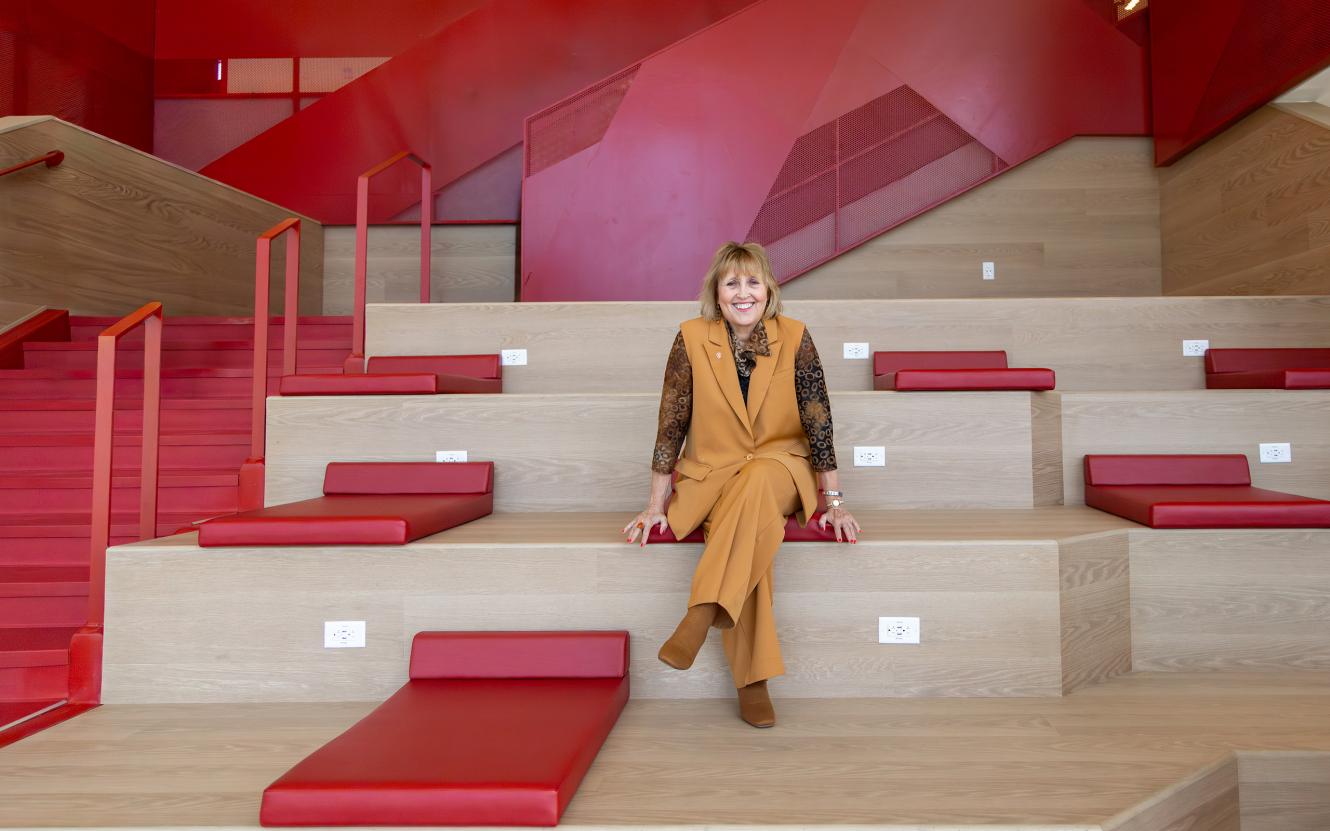
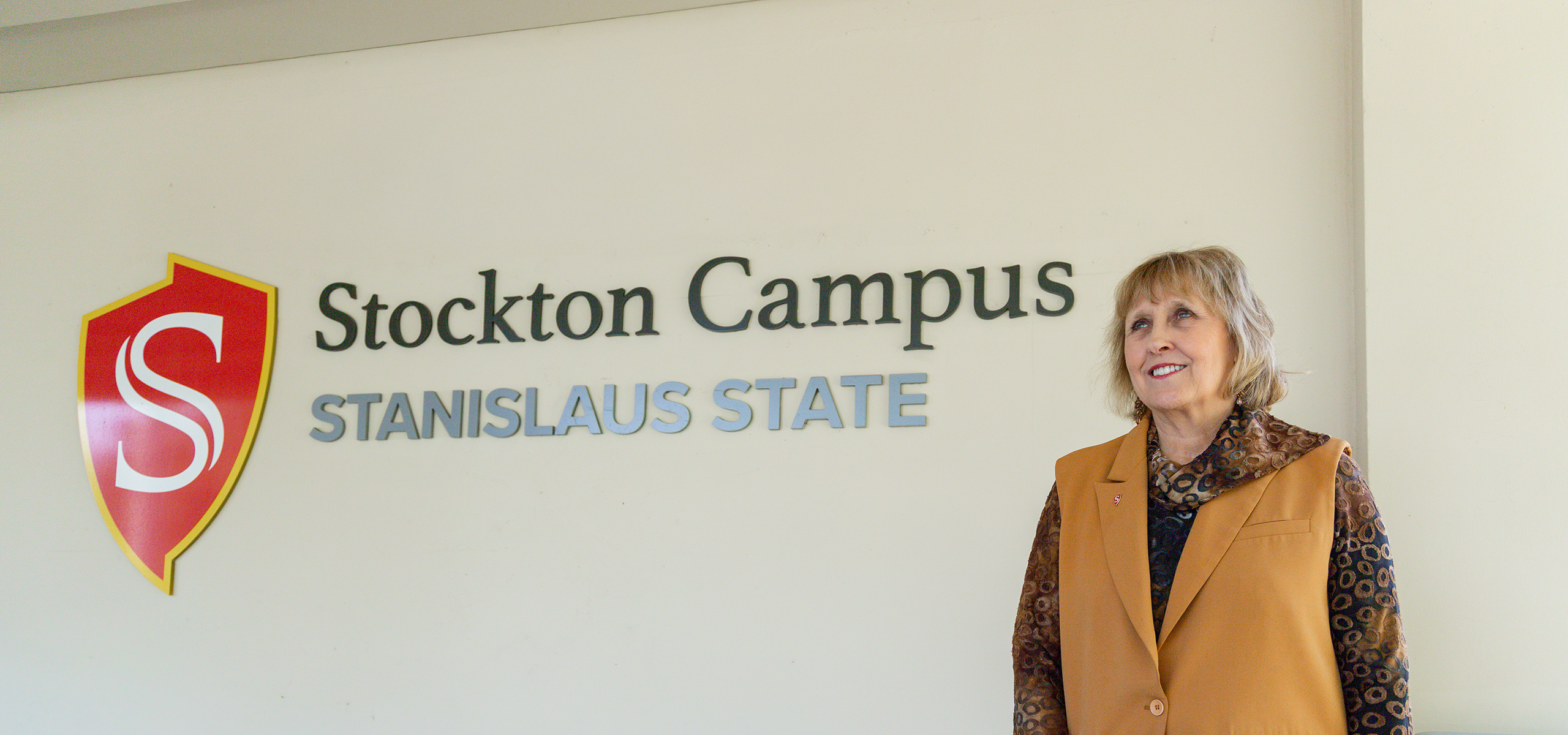
Kristen Birtwhistle at Stockton Campus
Impact in Action

The Volunteer Income Tax Assistance (VITA) initiative at the Stockton Campus offers a clear example of that impact in action, connecting students with real-world experience while delivering critical services to families.

An IRS-certified program that has operated for more than 50 years, VITA provides free tax preparation services for individuals and families earning $68,000 annually or less, as well as people with disabilities or those who speak limited English.

In 2024, student volunteers at the Stockton Campus completed 433 tax returns, securing $955,375 in total refunds and tax credits for local taxpayers — dollars that go directly back into the community.

“We couldn’t lift this up if not for those volunteer students,” Spracher-Birtwhistle said. “They know they are making a difference. That’s a few months’ rent — that’s food for a family.”

This year, the program has expanded significantly, growing from a small group of volunteers to nearly 120 in just a few years, reflecting increasing demand and deeper community engagement.

That work is also shaping the region’s future in more fundamental ways.

Many of the students coming through Stan State’s Stockton Campus are the first in their families to pursue higher education — preparing not only for careers in healthcare and human services, but for roles that directly impact their communities.

As they graduate and enter the workforce, they are helping address critical shortages across San Joaquin County and the broader Central Valley — and in doing so, creating new opportunities for their families to thrive.

Stan State is really becoming a hub of health excellence when it comes to the workforce. The boomerang effect from these buildings, from these students graduating out of these programs, is going to have decades-long effects on the health and wellness of our community.
— Kristen Spracher-Birtwhistle

These students are reshaping the region in meaningful ways: “They’re changing the workforce, and they’re changing the economic trajectory of their families.”

Even now, walking around the campus brings her back to where it all began.

“Walking down those halls, I feel my father.”

After everything she has seen take shape at the Stockton Campus, Spracher-Birtwhistle sees its impact extending far beyond the present moment.

“Stan State is really becoming a hub of health excellence when it comes to the workforce,” she said. “The boomerang effect from these buildings, from these students graduating out of these programs, is going to have decades-long effects on the health and wellness of our community. Period. End of story.”