At Stanislaus State’s Stockton Campus, Education Doesn’t Stay in the Classroom — It Moves Through Communities, Carried by the People it Prepares to Serve Them
Share This:
KS
By Kristina Stamper
9 minute read
Feature Story
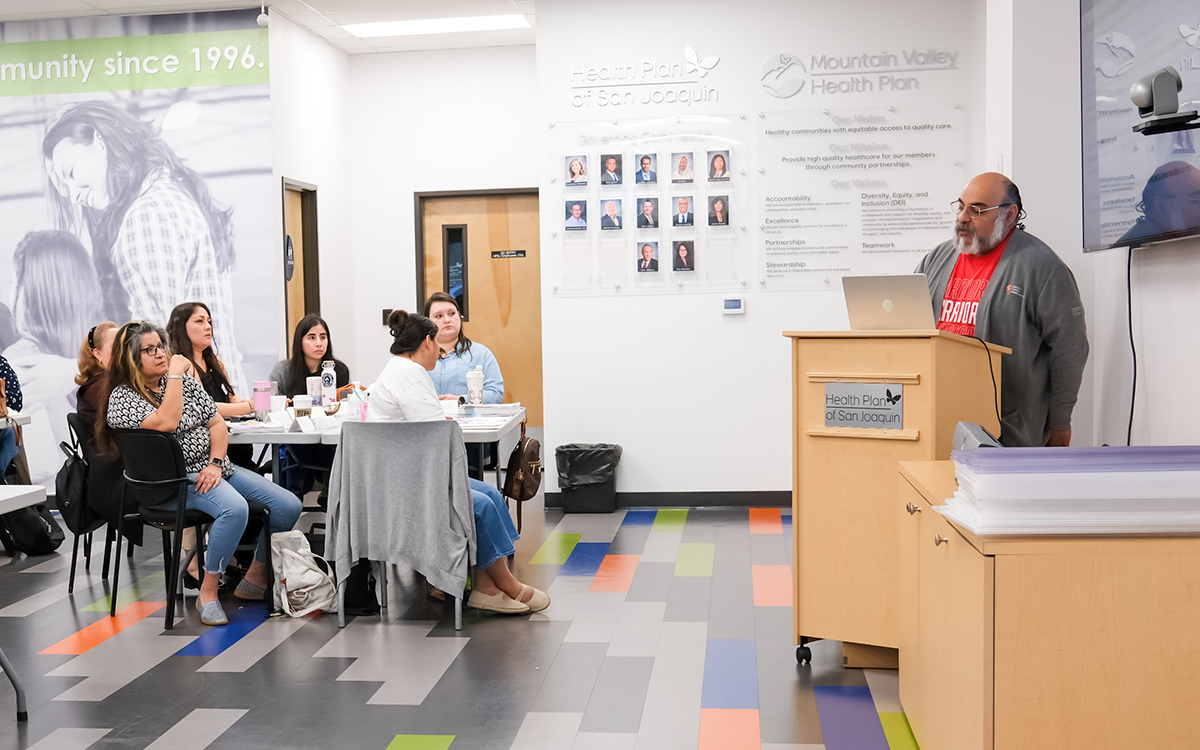
On a Saturday morning, at a Health Plan of San Joaquin community conference space, the room begins to fill.
One by one, people arrive — some with coffee, others with notebooks already flipping through their notes from the previous week. Instructors carry in tote boxes packed with materials. A number of students set snacks on a side table, always making sure there is enough for everyone to be nourished throughout the day. Conversations begin in Spanish, warm and familiar, as participants greet one another not as strangers, but as colleagues in shared work.
By the time class begins, about 30 students have gathered.
They are members of Stanislaus State’s Community Health Worker (CHW) Training Program, one of several initiatives helping prepare a new generation of professionals to serve communities throughout the Northern San Joaquin Valley. Some are already working in community organizations. Others are caregivers, advocates or volunteers seeking new skills and credentials. All have set aside a series of Saturdays to learn how to better support the people they care about.
For many of the participants, the training is also an affirmation that their lived experience, language and community knowledge are assets.
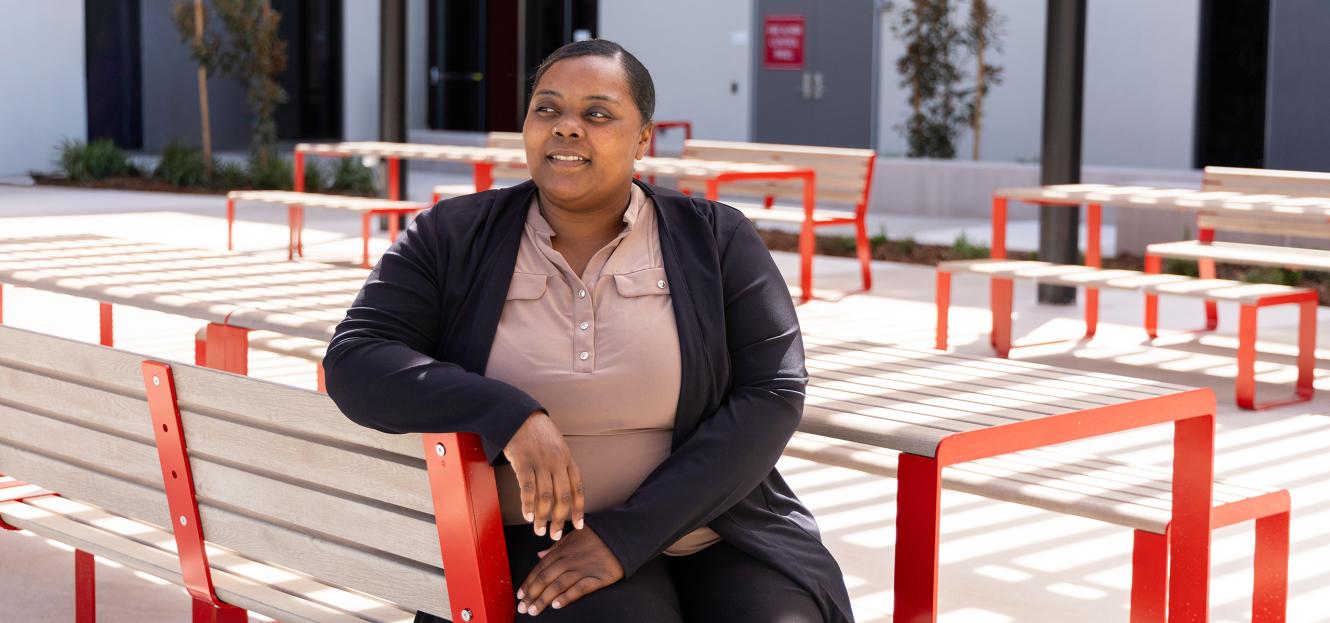
It’s a feeling shared by Sharee Wilburn Grimes, a native of south Stockton who went through the CHW training program and is now a CHW instructor.
“We all belong in these spaces because our lived experience becomes a tool of transformation when paired with the training and opportunity,” she said.
You belong here. This is your campus.
— Sarah Sweitzer, Stockton Campus Dean
While the classroom itself is not located on the Stockton Campus, it’s a clear example of the impact Stan State is having in the region. Its reach now extends far beyond a single location. Through partnerships, workforce programs and community engagement, the Stockton Campus has evolved into a regional hub connecting education with some of the Valley’s most pressing needs.
Rooted in Community
For decades, the Stockton Campus has provided access to higher education for students whose lives often look different from the traditional college experience. As the only public four-year university in San Joaquin County, it serves students whose talent and potential are deeply connected to the region. Many are the first in their families to attend college. They often balance jobs, caregiving responsibilities and family obligations while pursuing degrees and professional credentials.
Ana York, an assistant professor and Stan State alumna, said location matters for students who want to pursue a degree without leaving the region.
“It means accessibility,” York said. “Being able to have something in your home area — it means everything.”
For some, stepping onto a university campus can feel unfamiliar.
Sarah Sweitzer, dean of the Stockton Campus, remembers one of the first Community Health Worker cohorts meeting on campus.
“I had students from the community ask me, ‘Are you sure we’re allowed to be here? We’re not usually welcome in places like this,’” she recalled.
Her answer was swift and simple: “You belong here. This is your campus.”
We all belong in these spaces because our lived experience becomes a tool of transformation when paired with the training and opportunity.
— Sharee Wilburn Grimes, Community Health Worker Training Instructor
This is a fundamental belief extending throughout the programs offered by the Stockton Campus, both in and out of the classroom — that education begins with access and grows through a sense of belonging.
“The first important part of this training is that they take it back into their homes,” Sweitzer said. “They create change at home.”
Growing Local Talent
The Northern San Joaquin Valley faces challenges familiar to many communities across California.
Healthcare providers struggle to fill workforce gaps. Behavioral health services remain in high demand. Community organizations are stretched thin. Families often face barriers to accessing the resources they need, often experiencing long wait times to access healthcare or mental health services.
The Stockton Campus increasingly sees those challenges as opportunities to prepare local workforce talent for local impact.
President Britt Rios-Ellis often describes the University’s approach as one that is rooted in not just students’ academic ability, but also the cultural capital they bring to the table.
“At Stan State, we believe in a simple but transformative model: Grow local. Train local. Stay local,” she said. “The majority of our students come from the very counties experiencing these challenges. They are first-generation, bilingual, bicultural and deeply connected to their communities. And research tells us something powerful — when students train in the communities they call home, they are far more likely to remain and serve there.”
These students bring language, lived experience and community trust to the work, helping them connect with the families and neighbors they will serve.
For Sweitzer, those connections are critical to addressing health inequities throughout the region.
“We know that the best way to address health inequities is when the access point to our healthcare system is from the same community as the person who needs that access point,” she said. “I’s a trusted messenger. I’s having a similar lived experience and being able to truly connect at a human-to-human level.”
These are exactly the health and human services professionals the Stockton Campus is training.
They are reflected in nursing students preparing to enter healthcare systems facing workforce shortages; social work students committed to supporting local families; scholarships and internship programs for training behavioral health professionals designed to strengthen care across the region. And they are reflected in the community health workers learning how to guide neighbors through complex healthcare systems.
Increasingly, the Stockton Campus is becoming a place where education and workforce development converge.
Learning Through Service
One of the defining characteristics of the Stockton Campus is the way learning extends beyond the classroom and into the community.
Community Health Worker trainees design and carry out a culminating project — applying what they’ve learned about how to navigate healthcare systems, connect families to resources and advocate for community well-being. Nursing students regularly participate in community events such as Stockton Family Day in the Park, where they provide blood pressure screenings and health education to local residents.
Criminal justice and social sciences students engage in service-learning projects that challenge assumptions, deepen understanding and strengthen community connections, such as with St. Mary’s Dining Room and the Stockton Shelter for the Homeless. Others contribute to research and data collection efforts that help nonprofit organizations, like Friends Outside, better serve vulnerable populations and measure the impact of their work.
For Grimes, who is also a senior case manager with Friends Outside when she is not instructing in the CHW program on weekends, the connection between education and service is what makes the work so powerful.
“It’s not just what we know academically,” she said. “It’s who we know in our communities and how we use those connections to elevate our people.”
The Community Health Worker Training Program puts that philosophy in action by helping participants learn about health education, outreach, resource navigation and advocacy, often building on years of lived experience serving their communities. And the benefits are real.
“We know community health workers can help us to more efficiently use healthcare resources,” Sweitzer said. “One example is the United Way of San Joaquin’s Alliance for Wellness program, which is helping four local nonprofits build their capacity for billing with CHWs. They have provided services to more than 180 community members... that’s saving our local healthcare costs anywhere from half a million to $1 million — and those savings translate into lives saved. This is about saving lives in our community.”
The same commitment to strengthening community well-being can be seen through financial empowerment. Through the Volunteer Income Tax Assistance (VITA) program, student volunteers help local families access tax credits and refunds while gaining hands-on professional experience. In partnership with United Way of San Joaquin, the program has returned millions of dollars to San Joaquin County residents — putting resources directly back into local households and the local economy.
For accounting major Justinian Bacchi, the program provides an opportunity to connect coursework with real-world application.
“I’m applying a lot of what I learn in my accounting classes into VITA,” he said. “It gives me a taste of what I can see in the workforce. The more I help people, the more confident I am in myself.”
Whether in business, education, health or human services, the Stockton Campus knows that students learn best when they understand how their knowledge can serve others.
Willow Hall and a Promise
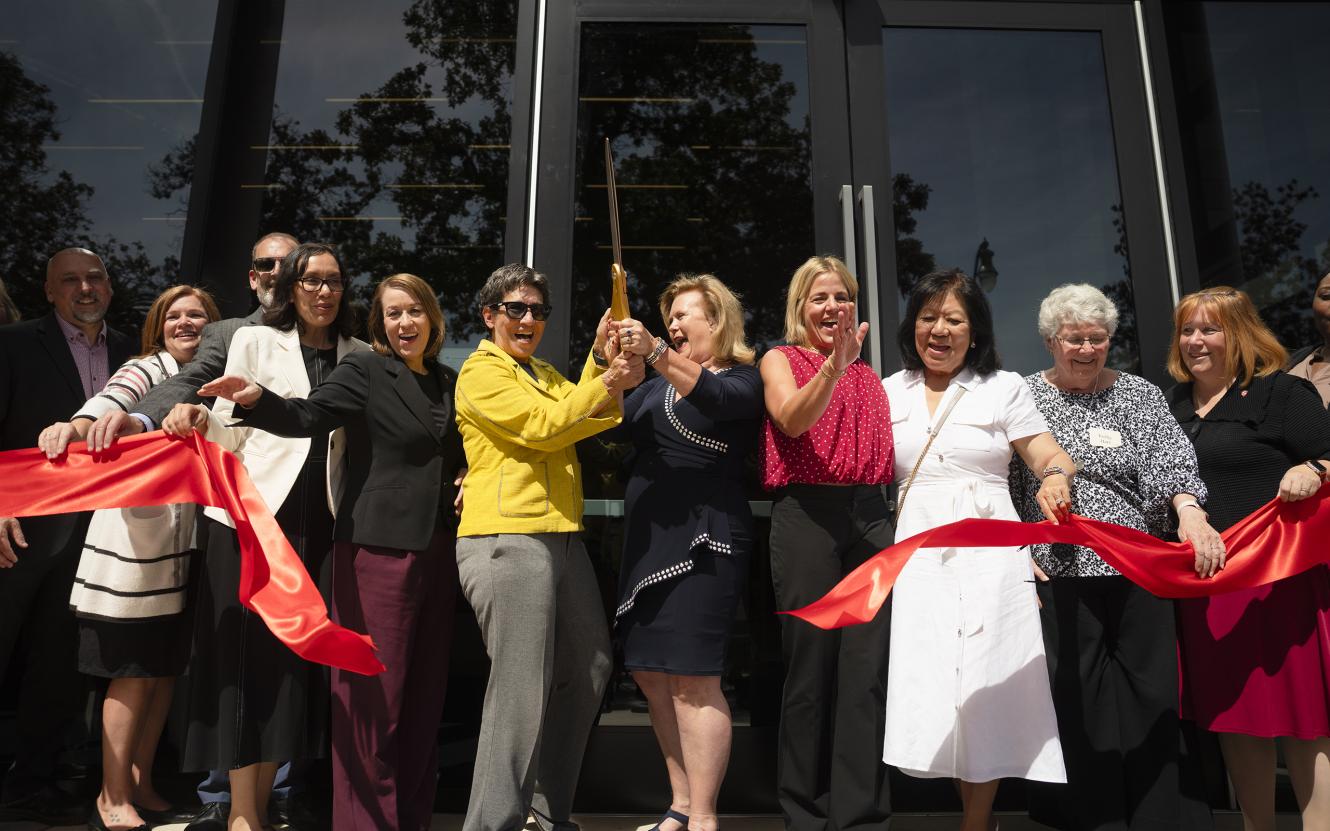
This spring, the opening of Willow Hall offered a visible reminder of how far the Stockton Campus has come — and where it is headed next.
The building expands capacity for health and human services education while creating new opportunities for collaboration among disciplines that increasingly work together in professional practice.
Nursing students, behavioral health professionals, social workers and future healthcare leaders will all benefit from spaces in the new building intentionally designed to support team building and the realities of modern care.
For President Rios-Ellis, the significance of the building extends beyond its physical presence.
“Willow Hall is more than steel and glass,” she said. “It’s more than classrooms and labs. It is a promise. A promise that access to high-quality public higher education begins right here in Stockton — and that when Stan State thrives, the Central Valley thrives.”
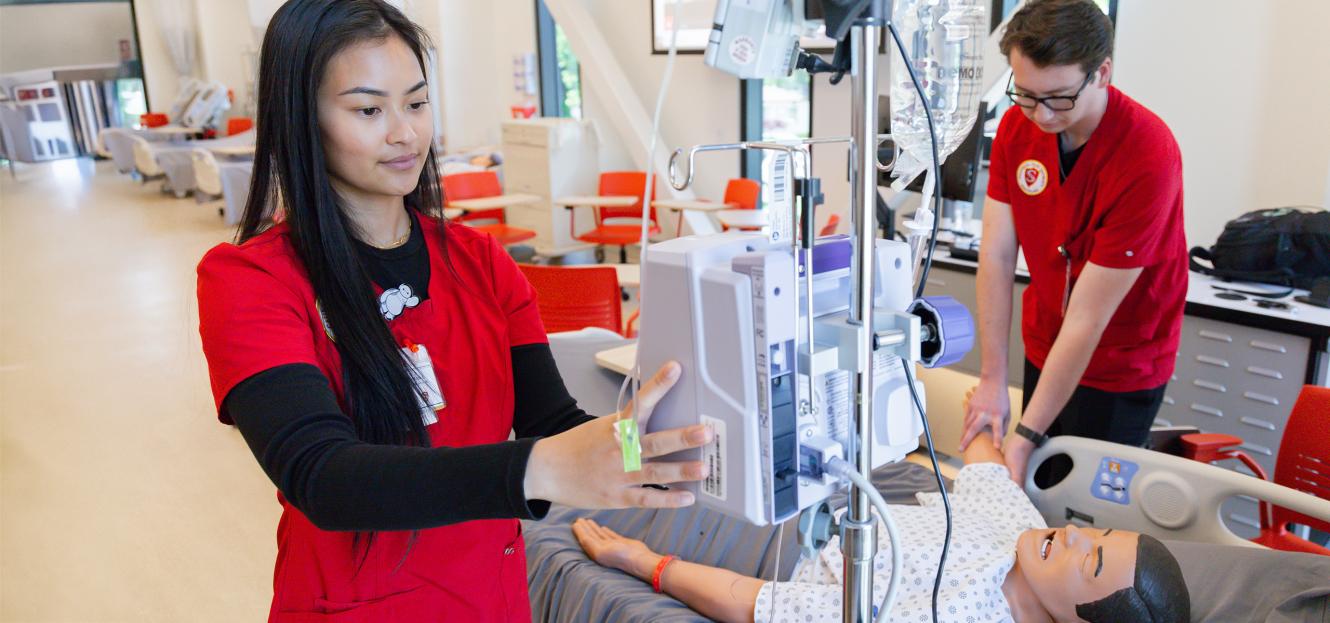
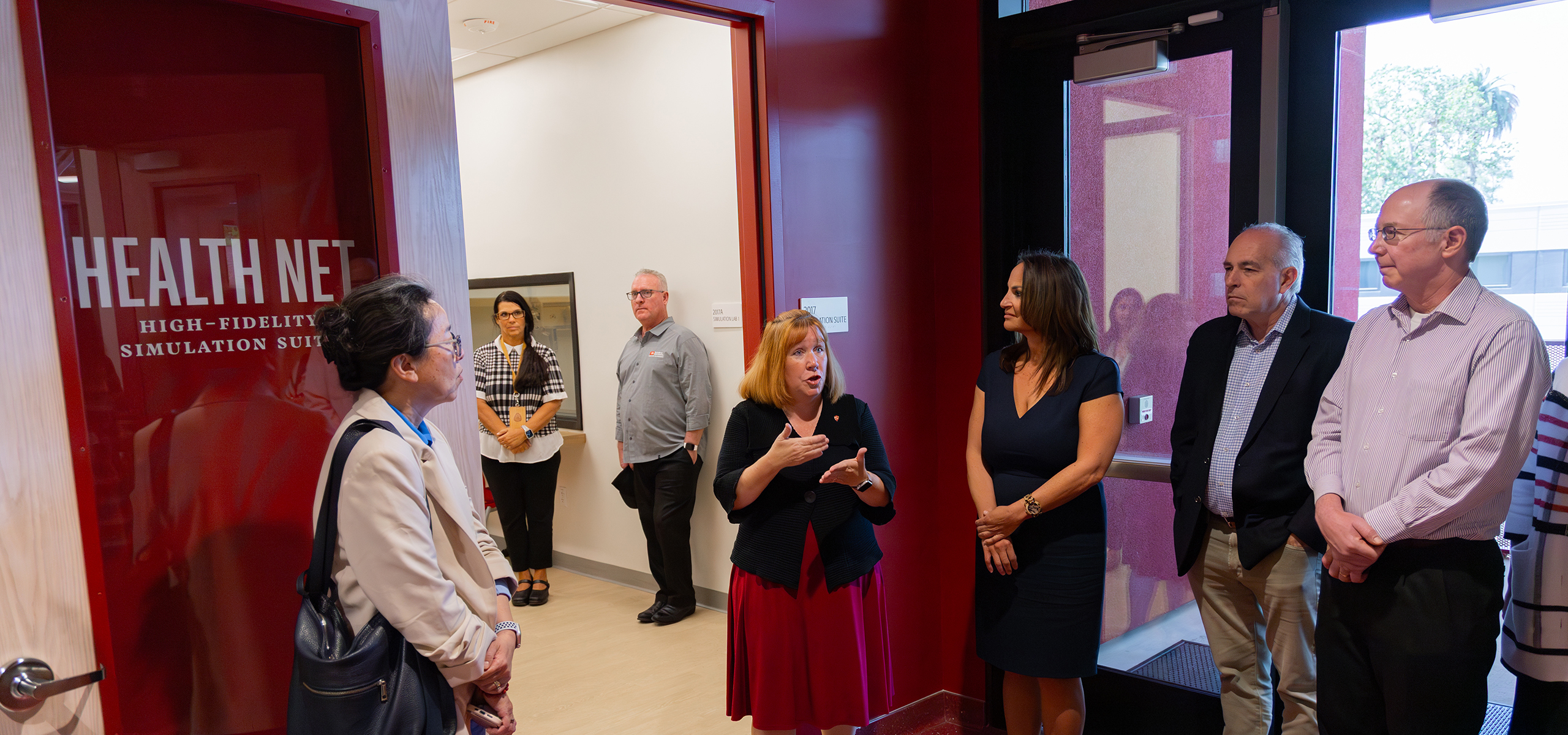
The building includes more than a dozen classrooms and specialized instructional spaces, including a team-based learning classroom that supports collaborative, real-world problem solving. At its core is the Health Plan of San Joaquin Health and Human Services (HHS) Training Center, supported by a $2.5 million investment that expands clinical training capacity for nursing and other health professions students across the region. The center features advanced simulation and clinical skills labs where students can practice complex patient-care scenarios before entering clinical placements.
A high-fidelity simulation lab, supported by an $817,000 grant from Health Net, allows students to train using advanced technology that replicates real patient responses, strengthening clinical judgment, teamwork and decision-making.
“Willow Hall is not only an academic building — it is a workforce engine,” Rios-Ellis said.
Moreover, it’s a physical expression of a strategy already taking shape across the Stockton Campus: investing in local talent, strengthening pathways into health and human services careers and expanding opportunity throughout the region.
A Place of Possibility
For graduate student Delilah Rice, the opening of Willow Hall was also a moment to think about the students who will follow.
“As we open the doors to Willow Hall, I think about the future students who will walk into this space,” Rice said. “They will walk in with dreams, with doubts, with questions — but also with hope. This building will become a place where they find their confidence, build connections and discover who they are and who they want to become.”
Having access to public education in Stockton means everything… higher education is not reserved for a few — it belongs to all of us.
— Delilah Rice, Master of Social Work Student and Stockton Native
Rice’s perspective of the Stockton Campus is centered by her experiences as a Stockton native and a student who learned the power of giving back. A transfer student from San Joaquin Delta College, Rice found opportunities at the Stockton Campus to volunteer with the VITA program and go on to graduate studies. Now, as a mental health specialist with San Joaquin County Behavioral Health Services, she sees firsthand how workforce development can strengthen entire communities. She reflected on what happens to students beyond their Stockton Campus experience.
“And just as importantly, I think about who they will be when they walk out of these doors,” she said. “They will leave not only with knowledge, but with purpose — ready to serve their families and uplift their communities. They will step forward as leaders, as changemakers and as proud representatives of Stockton — carrying with them the belief that their future is not limited by where they come from but strengthened by it.”
A Regional Ripple Effect
Just as Rice envisions, what begins at the Stockton Campus rarely stays there — the campus is building a reputation for being what Sweitzer calls “in community.”
Students and alumni carry new skills into workplaces, nonprofits and healthcare settings. Community partners gain access to research, volunteers and professionals rooted in community. Families benefit from services and resources that could otherwise be out of their reach. The impact of this network reaches thousands of community members each year.
For Kirsten Spracher-Birtwhistle, CEO of United Way of San Joaquin and a member of the Stanislaus State Foundation Board, it’s one of the most exciting developments she has witnessed in recent years.
“That seed was planted here at Stockton Campus, and I think that’s really important,” Spracher-Birtwhistle said. “The scalability of programs like VITA and the CHW Association, and now Willow Hall, will have a major ripple effect.”
She sees that momentum continuing to grow.
“I'm just on fire about it, and I think the potential of what that will bring to the Stockton community is going to be everlasting. I couldn't be happier. You’ve got faculty, and the team there is just unbelievable. It's the right place at the right time. There's so much hope for the future right now because of Stanislaus State.”