Rebuilding the Story

Students Gain Real-World Experience While Strengthening Local Journalism

Share This:
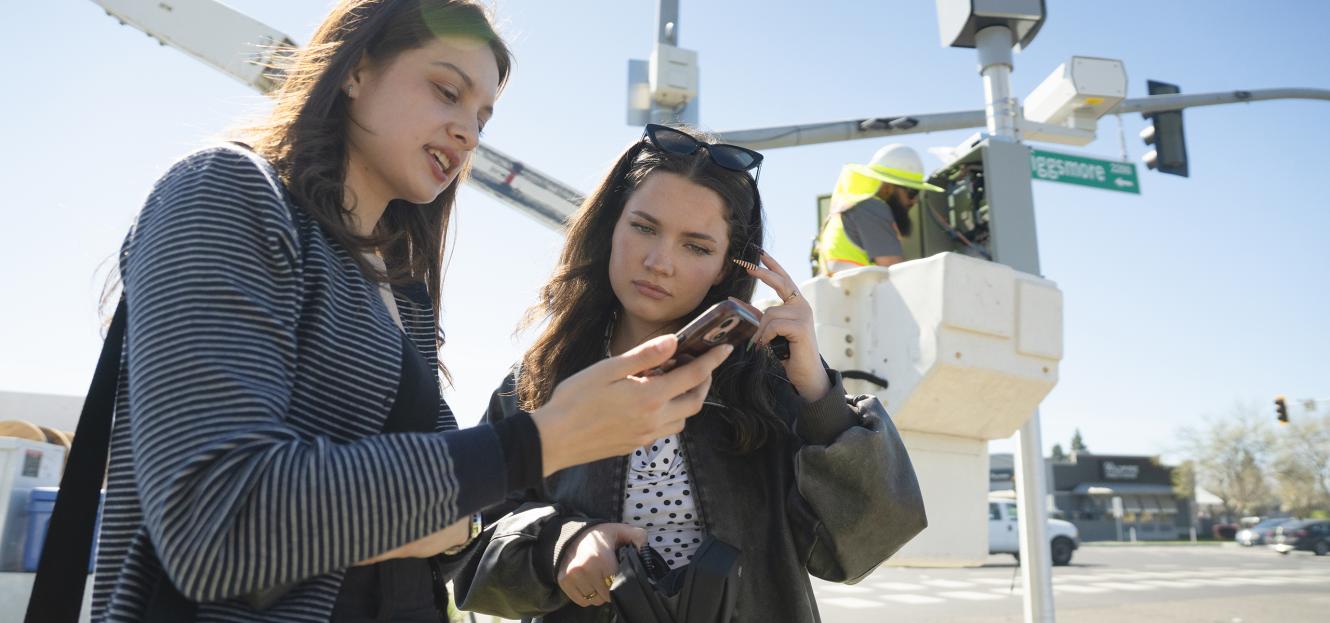
students covering newly activated red-light camera in Modesto

At a busy Modesto intersection, Ella Adams stood near the corner of Briggsmore Avenue and Coffee Road, camera in hand, watching cars stream through a newly activated red-light camera zone.

The recent Stanislaus State graduate wasn’t there for a class assignment. She was there to talk with drivers, gather reactions and shoot video for The Modesto Focus, the nonprofit news organization launched in August 2025 to help fill the gaps left by the steady decline of local journalism in Stanislaus County.

Would the cameras change drivers’ behavior? Would they avoid the intersection? Did they support the cameras or resent them?

Adams moved through the story assignment the way reporters do: approaching strangers, asking questions, gathering details, listening.

For Adams and three other Stan State student journalists, this internship is a chance to learn about the craft in real time, not from a textbook or classroom lecture, but by reporting in the communities they know best.

And for the region, it represents something larger: an effort to help rebuild local journalism at a moment when the Central Valley needs it more than ever.

Into the Field

The first cohort includes two recent Stan State graduates and two current students: Adams, an Escalon native; Teisy Zavala-Cortez, a recent graduate from Modesto; Natalie Mejia, a senior from Riverbank; and Katherine Zagone of Modesto.

All four have worked with The Signal, Stan State’s student newspaper. But at The Modesto Focus, they have stepped into a different kind of journalism environment — one where they are working alongside professional journalists and contributing to a news organization serving the broader community.

For Zavala-Cortez, the internship has meant discovering where she sees herself in journalism. She arrived interested in storytelling but wasn’t sure what role she wanted. Then she began working alongside Focus reporters in the field.

Zavala-Cortez shot video and photos for a story on the impact of Del Monte’s decision not to process local fruit this season. She later edited a social media reel tied to the story herself.

“Before this internship, I thought I wanted to be in front of the camera,” she said. “Now I know I want to be behind it.”

The experience helped her realize she wants to pursue documentary filmmaking or eventually become an executive producer.

“There’s something really powerful about helping tell someone else’s story,” Zavala-Cortez said.

That sense of purpose is something Marijke Rowland sees often.

The former Modesto Bee reporter now leads The Modesto Focus through the Central Valley Journalism Collaborative.

For Rowland, the internship program is both practical and deeply hopeful.

“It doubled our staff,” she said with a laugh.

But more than that, she said, the students bring energy, perspective and a reminder that journalism still matters.

“They bring a lot of energy and a lot of excitement about reporting in our region,” Rowland said. “They obviously bring a younger perspective to our newsroom. We have some younger reporters, but we also have veteran reporters, so it helps balance our mix. They’re really excited to get working, so that excitement rubs off on us.”

The students have contributed in a variety of ways.

Some have shadowed reporters in the field, shooting video and taking photographs. Others have helped produce social media coverage or contributed to specific projects.

During Women’s History Month, interns created a series of social posts highlighting historical women from the region in partnership with the McHenry Museum and Historical Society. Zagone, who is interested in arts reporting, helped produce The Modesto Focus’ monthly arts roundup. Adams and Mejia have contributed to social media and field reporting assignments.

The internships are designed to match students’ interests while exposing them to the realities of modern journalism.

That means learning to shoot video, edit reels, report for digital audiences and create content that reaches people where they are.

“News isn’t just print anymore,” Adams said. “You have to know how to do a little bit of everything.”

The internship also has reinforced something else for Adams: that local journalism can still make a difference.

It means more when you’re reporting on your own community. You care more because these are your people.
— Ella Adams ’25, Psychology

Growing up in Escalon and studying at Stanislaus State, Adams had spent years hearing people say journalism was disappearing.

But reporting in the Valley — and reporting on issues that affect the people around her — made the work feel more urgent and more personal.

“It means more when you’re reporting on your own community,” Adams said. “You care more because these are your people.”
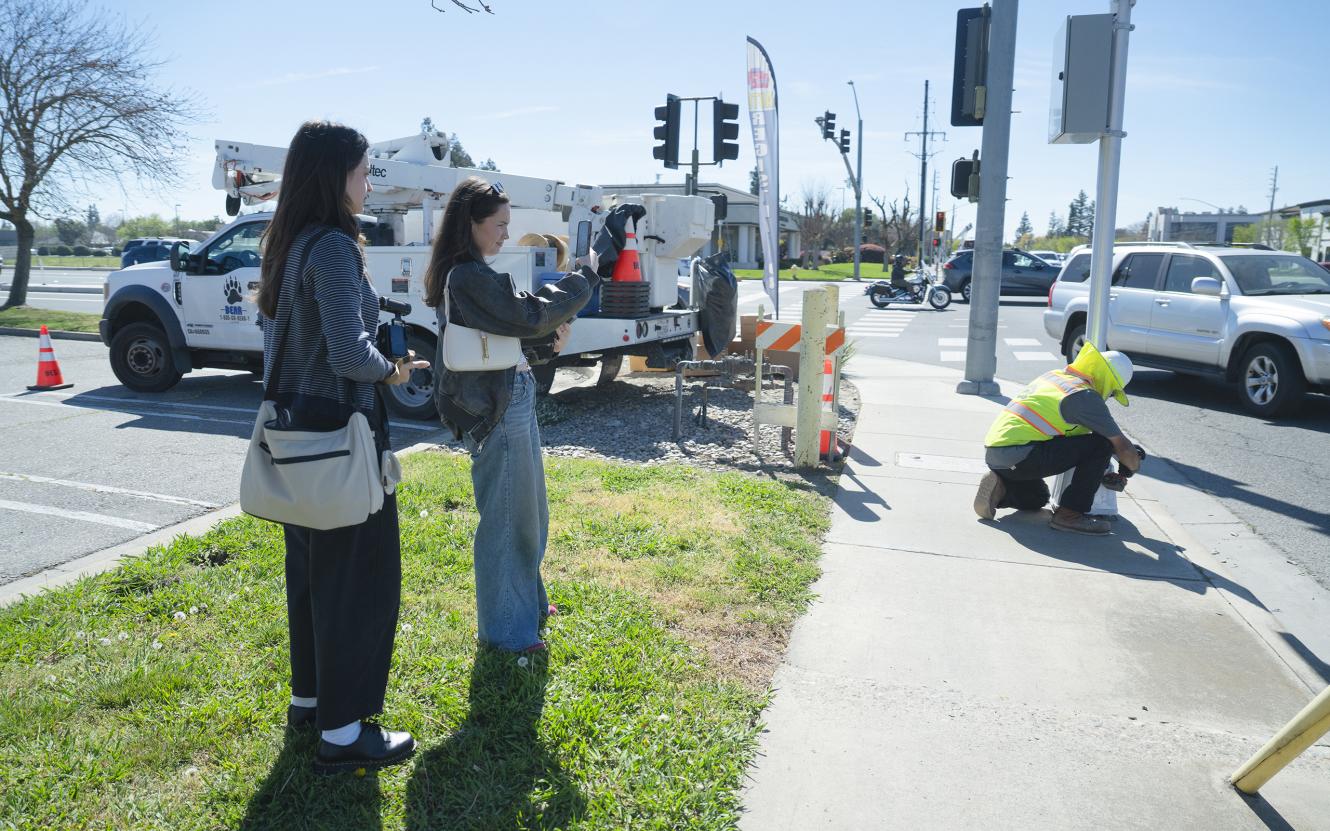
students covering newly activated red-light camera in Modesto
Telling the Valley’s Story

That idea resonates strongly with Shannon Stevens, co-director of Stan State’s Creative Media program.

Stevens helped develop the partnership between the University and The Modesto Focus and has watched the first cohort of interns step into the field. For her, there is something powerful about students reporting on the places and people they already know.

“They’re not parachuting into a community,” Stevens said. “They’re already part of it.”

That matters, she said, because the Central Valley has often been overlooked or misunderstood by larger media markets.

Residents frequently see their communities defined by crime, poverty or political division. The stories of everyday people — and the complexity of life in the Valley — are often left untold.

The Foundation’s media landscape study reached a similar conclusion.

The report found that many Stanislaus County residents feel overshadowed by larger media markets and that too many local stories focus only on crisis and negativity. The study identified a need for more coverage that reflects the region’s diversity, culture, challenges and successes.

For Stevens, the internship program gives students an opportunity to help tell those stories.

Democracy and journalism are inexorably intertwined. One does not exist without the other. People need information they can trust.
— Shannon Stevens, Professor of Communication Studies and Co-Director, Creative Media

“Democracy and journalism are inexorably intertwined,” Stevens said. “One does not exist without the other. People need information they can trust. They need to see themselves and their communities reflected in that information.

“When students start to understand the connection between their daily lives, the things happening around them, and how that affects our government, our resources, our culture and our society — and the vital role journalists play in helping all of that stay healthy and grow, that’s a gift.”

That mission is central to The Modesto Focus.

Unlike a traditional daily newspaper, the nonprofit outlet is not trying to cover every city council meeting or breaking news event. Instead, it focuses on deeper, more community-centered reporting.

Rowland describes it as helping fill the gaps left by shrinking newsrooms.

“Maybe that means longer features or following an issue over time instead of just covering one meeting,” she said. “We’re trying to help fill in what local daily news publications can no longer do.”

The nonprofit model also allows The Modesto Focus to prioritize stories that might otherwise go uncovered, including recent reporting on arts and culture, agriculture and other community issues.

Fighting for Local News

That is one reason the Foundation chose to invest in local journalism.

“Community-driven journalism is the backbone of an informed society,” Kaanon said. “Residents rely on trusted, relevant information to stay connected and engaged. When they have access to timely, community-centered reporting, they are better equipped to engage in local decision-making, participate in civic life and hold local institutions accountable.”

The Foundation also saw the internships as an investment in the future.

“Representation matters, and all voices deserve to be heard,” Kaanon said. “By creating opportunities for Stanislaus State students to gain hands-on reporting experience, this partnership will help cultivate the next generation of journalists.”

For students like Zavala-Cortez, that future suddenly feels possible. She had worried, at times, about whether there was still a place for young journalists. The headlines about layoffs and shrinking newsrooms are impossible to ignore.

But working at The Modesto Focus has shown her another model — one built on collaboration, community and a belief that local stories still matter.

“This could change everything for us,” Stevens said. “It’s a viable pathway forward for journalism.”

“You know, there’s been a lot of doom and gloom in the news industry for a long time now,” Rowland said, “and it’s always wonderful and hopeful to watch young people who want to embark on careers in this field. The need for journalists doesn’t change.”

Back at the intersection, Adams kept asking questions.

Cars rolled through the light. Drivers offered opinions. A camera recorded the scene.

It was a small assignment on an ordinary day, but it carried the weight of something larger: a young journalist learning the work in the community she calls home, at a moment when local journalism is still being rebuilt.

“You see all the bad news about it,” Zavala-Cortez said. “Then you come here and realize there are still people fighting for journalism.”

Natalie Perreira contributed to this article.